 Whalesbook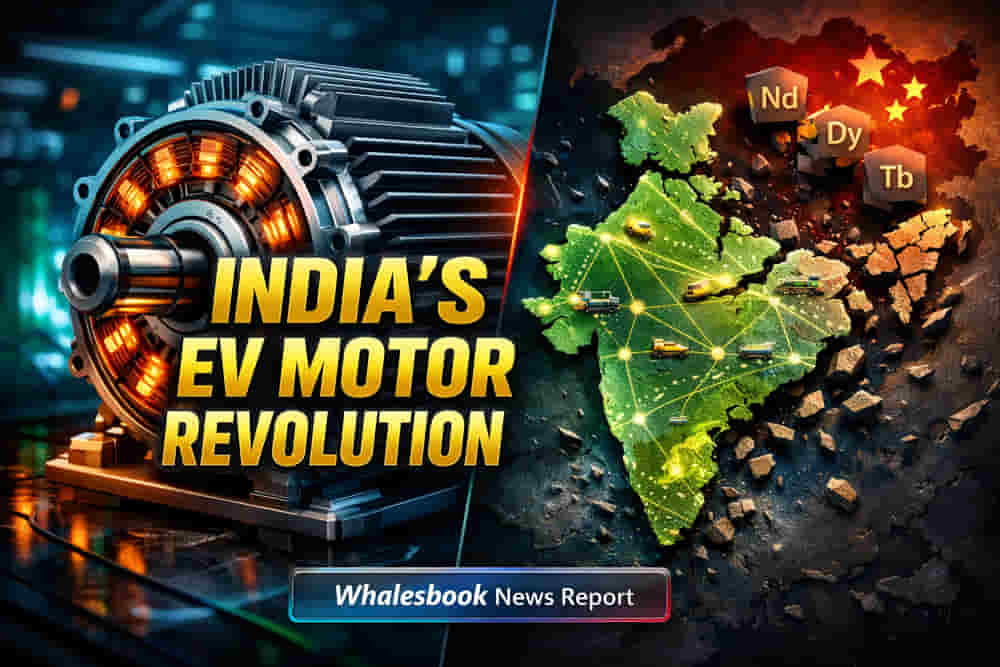
The Rare Earth Bottleneck
India's burgeoning electric vehicle industry is confronting a significant vulnerability: its dependence on rare earth permanent magnet motors, a critical component for electric cars.
These motors rely on materials like neodymium and dysprosium, where global supply is overwhelmingly dominated by China, reportedly controlling nearly 90%. This concentration creates a strategic risk, exposing Indian automakers and fleet operators to volatile input costs and potential supply disruptions. The International Energy Agency projects global demand for these magnets could double by 2030, driven by EV growth, potentially reaching 8,000 to 10,000 tonnes annually for India alone.
Magnet-Free: A Strategic Alternative
The article advocates for a shift towards magnet-free motor architectures, such as Reluctance, Induction, and Electrically Excited Synchronous Motors (EESM). These designs leverage more abundant materials like electrical steel and copper, creating inherently stable and predictable supply chains. This approach could lead to 10-15% lower lifetime motor costs by avoiding the price volatility of rare earth magnets.
Operationally, magnet-free motors offer advantages including improved thermal stability, lower maintenance, and greater suitability for demanding duty cycles. Localized manufacturing also shortens lead times and enhances vehicle uptime, crucial factors for commercial fleet adoption.