 Whalesbook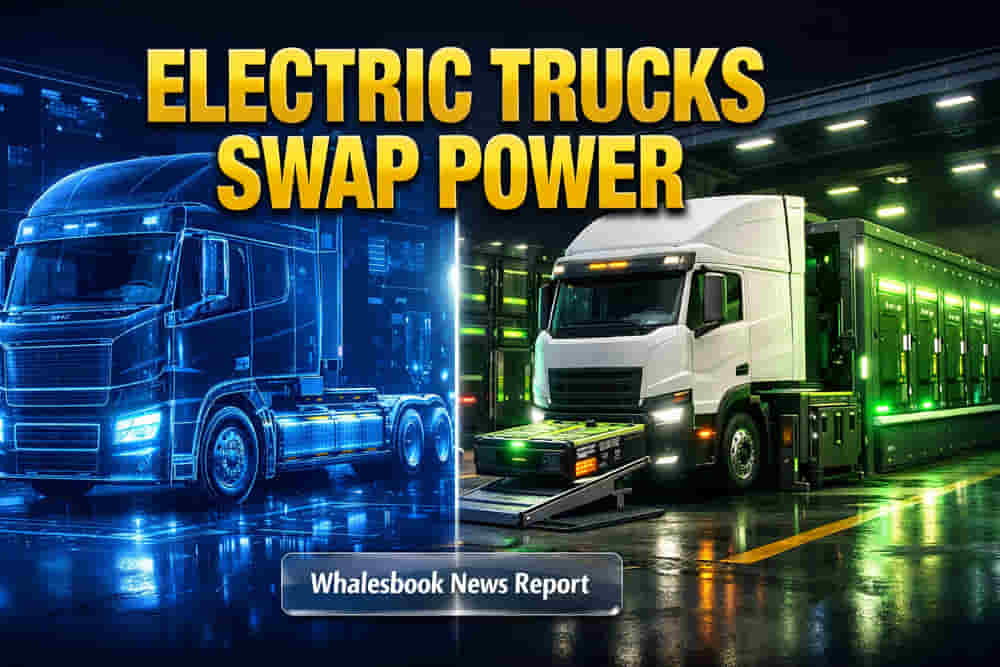
Electric Trucks Embrace Battery Swapping for a Greener Future
India's burgeoning electric vehicle sector is witnessing a significant expansion as battery swapping technology makes its debut in the heavy-duty truck segment. Companies like Pune-based Blue Energy Motors and Murugappa Group's Montra Electric are pioneering the rollout of 55-tonne electric trucks compatible with this innovative swapping system.
This strategic move targets the critical need for decarbonizing India's substantial freight sector, which is a major contributor to transport-related emissions. By leveraging battery swapping, manufacturers aim to bridge the price gap between electric and traditional internal combustion engine (ICE) vehicles, a key barrier to widespread commercial EV adoption.
The Core Issue
Heavy electric trucks, often exceeding 12 tonnes gross weight, typically carry a hefty price tag ranging from ₹1 crore to ₹1.5 crore. This is substantially higher than their diesel counterparts, which cost between ₹25 lakh and ₹50 lakh. For commercial operators, the Total Cost of Ownership (TCO) is paramount. Battery swapping addresses this by allowing the vehicle to be sold without the battery pack, which accounts for nearly half of an EV's cost. This significantly lowers the upfront investment.
Financial Implications
Montra Electric's Chief Business Officer, PV Satyanarayana, highlighted that by removing the battery cost from the vehicle purchase, manufacturers can achieve price parity more readily. "The more you sweat the asset, the more you lower the TCO," he explained, emphasizing that reduced charging times enabled by quick battery swaps allow vehicles to operate more hours per day, thereby improving asset utilization and lowering the overall cost of ownership.
Market Reaction and Growth Potential
While direct market reactions are still emerging, the industry anticipates a surge in demand for battery swapping services. The Indian EV battery-swapping industry, valued at approximately $10.2 million in 2022, is projected to reach $61.57 million by 2030, growing at a Compound Annual Growth Rate (CAGR) of 25.2%. This growth is crucial as trucks, though only 3% of vehicles in India, generate about 40% of the transport sector's emissions.
Official Statements and Responses
The Indian government is actively supporting this transition. The PM E-Drive scheme offers incentives for both electric trucks and battery swapping stations, covering 80% of the upstream cost for station setup. This policy support is seen as a critical enabler for accelerating the adoption of electric trucks.
Historical Context
Battery swapping has historically been more prevalent in the two- and three-wheeler segments. Its expansion into heavy-duty trucks signifies a maturation of the technology and infrastructure, making it viable for larger, more demanding commercial applications.
Future Outlook
Energy in Motion (EIM), a battery-swapping company collaborating with Chinese firm Foton, is optimistic about commercial rollouts, reporting better-than-expected initial customer response. EIM plans to expand its network of swapping stations, aiming to build a nationwide system. This model, where a network operator owns and deploys batteries, offers a financial solution for truck operators, allowing them to invest only in the vehicle.
Blue Energy Motors is establishing five battery swapping stations along the Mumbai-Pune corridor as part of its 'energy-as-a-service' model. This approach, combining swapping stations with energy services, allows customers to purchase vehicles without batteries, halving the purchase cost and significantly narrowing the gap with diesel trucks. Swapping takes about 6-10 minutes, compared to 10 minutes for refueling diesel trucks.
Expert Analysis
Domain experts like Deepali Thakur from Smart Freight Centre India note that while battery swapping is ideal for short, high-utilization routes, direct-current fast-charging remains essential for long-haul operations. However, for heavy-duty e-trucks requiring minimal downtime, swapping is a compelling solution. The technology allows for controlled, off-peak charging and decouples vehicle operations from grid constraints.
Impact
This development is poised to revolutionize India's logistics sector by making electric trucks more affordable and operationally efficient. It offers a significant pathway to reduce carbon emissions from heavy transport, potentially transforming the industry into a leader in green mobility. The initiative also stimulates growth in EV infrastructure and battery technology. The impact rating for this news is 8/10.
Difficult Terms Explained
- Price Parity: When the cost of two different products or services becomes equal.
- ICE (Internal Combustion Engine): Traditional engines that burn fuel to produce power.
- Total Cost of Ownership (TCO): The total cost of owning an asset over its lifecycle, including purchase price, operating costs, and maintenance.
- Sweating the Asset: Using an asset as much as possible to maximize its return on investment.
- Decarbonize: To reduce the amount of carbon dioxide emitted.
- Compound Annual Growth Rate (CAGR): The average annual growth rate of an investment over a specified period of time.
- Upstream Cost: The costs associated with the initial setup and connection to essential services, like connecting to the power grid.
- Energy-as-a-Service: A business model where energy supply and related services are provided as a package, often on a subscription or pay-per-use basis.