 Whalesbook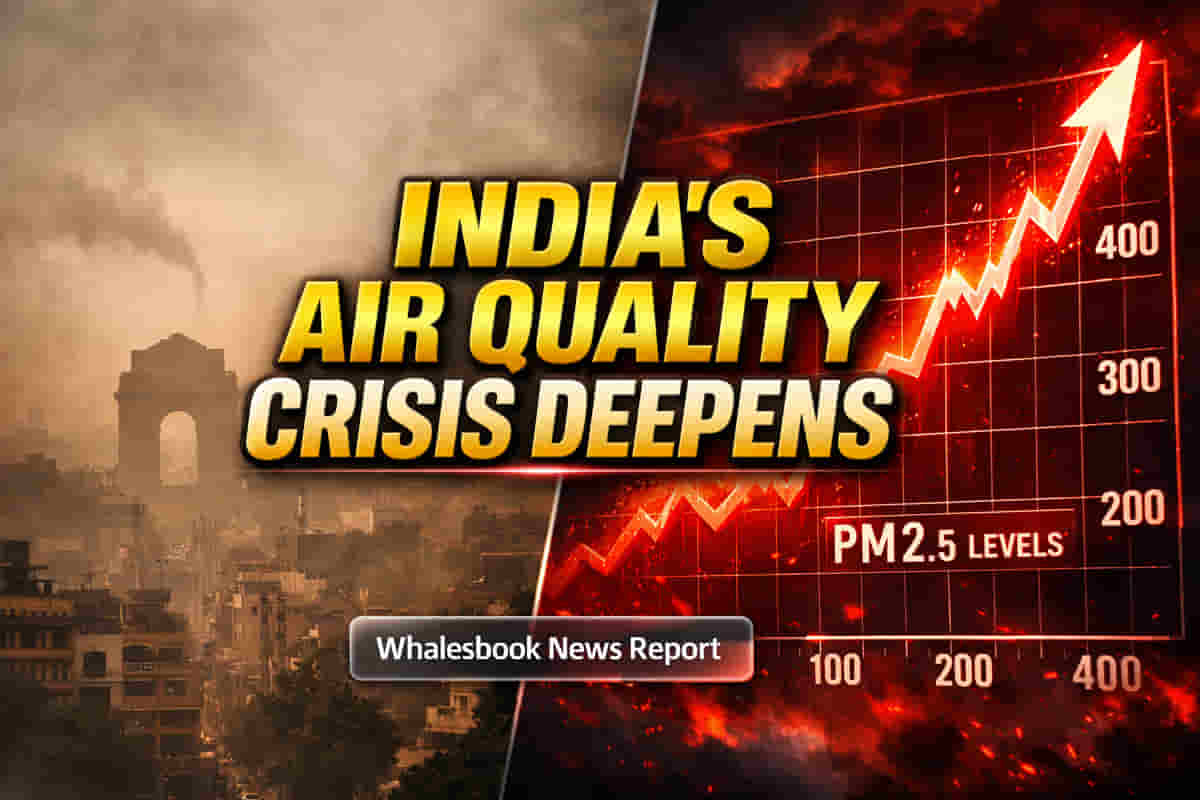
The Economic Drag of Polluted Air
The Centre for Research on Energy and Clean Air's January 2026 report detailing widespread PM2.5 non-compliance across Indian cities serves as a stark reminder of a pervasive environmental issue with profound economic implications. Beyond the immediate health consequences, the persistent air pollution crisis exacts a severe financial penalty on the Indian economy. Research indicates that these elevated pollution levels cost Indian businesses approximately $95 billion annually, a figure equivalent to about 3% of the nation's GDP. This economic burden is multifaceted, stemming from factors such as lost worker productivity, estimated to cost up to $24 billion, and extensive absenteeism, which accounts for an additional $6 billion in lost revenue. Consumer spending also suffers, with reduced footfall and purchasing activity contributing an estimated $22 billion to the annual economic deficit. The IT sector alone faces an annual loss of $1.3 billion due to pollution-induced productivity decline. Furthermore, healthcare expenditures related to air pollution-induced illnesses add another layer to the economic strain, estimated at $11.9 billion annually.
Regulatory Environment and Investor Scrutiny
India's National Clean Air Programme (NCAP), launched in 2019 with targets to reduce particulate pollution, faces ongoing challenges in achieving comprehensive improvements. While some cities have reported PM10 reductions, the overall efficacy is debated, particularly concerning the allocation of funds, with a disproportionate amount directed towards road dust mitigation rather than industrial or vehicular emission controls. The national standards for PM2.5, set at an annual average of 40 µg/m³ and a 24-hour average of 60 µg/m³, are frequently breached, underscoring the scale of the challenge. Compared to the World Health Organization's (WHO) 2021 guidelines, which recommend a daily average of 5 µg/m³ and an annual average of 15 µg/m³, India's standards are significantly less stringent, although many cities still fail to meet even these domestic benchmarks. This persistent pollution crisis is increasingly drawing the attention of investors, who are integrating ESG (Environmental, Social, and Governance) factors into their decision-making processes. The demand for ESG-compliant investments is rising, with India's ESG fund AUM reaching ₹9,753 crore by March 2024, signalling a growing recognition of sustainability risks and opportunities by corporate India. Companies that fail to address climate risks could face losses exceeding ₹7.14 lakh crore, while proactive mitigation efforts present potential gains.
Sectoral Impacts and Regional Disparities
The impact of air pollution is not uniform across sectors or regions. While the CREA report indicated cities like Bengaluru maintained PM2.5 levels below national standards in January 2026, others like Ghaziabad and Delhi registered critically high monthly averages of 184 µg/m³ and 169 µg/m³, respectively [cite: Source A]. However, external reports conflict with CREA's assessment for other megacities; a January 30, 2026 report indicated Mumbai's Air Quality Index (AQI) reached 222 ('Severe') with PM2.5 at 146 µg/m³, a stark contrast to the CREA assertion that it remained below national standards. Such discrepancies highlight the complexities in air quality monitoring and reporting, but the underlying trend of severe pollution in many urban centers persists. Sectors reliant on physical operations, such as manufacturing and construction, face direct challenges from reduced worker productivity, increased absenteeism, and potential operational disruptions due to stringent pollution control measures. The IT sector, while less physically exposed, is impacted through productivity losses. Conversely, sectors focused on environmental solutions, healthcare, and renewable energy may find new growth avenues driven by the imperative for cleaner air and increased regulatory compliance.
Forward Outlook
The ongoing air pollution crisis in India presents a critical juncture for businesses and investors. The quantifiable economic costs associated with degraded air quality underscore the financial imperative for robust environmental management and policy enforcement. As ESG integration becomes more prevalent in investment strategies, companies operating in India must prioritize sustainability to mitigate risks, enhance their corporate reputation, and attract capital. The path forward requires a more aggressive and comprehensive approach to pollution control, aligning domestic standards more closely with international benchmarks and ensuring effective implementation of programs like the NCAP. Failure to address this issue comprehensively will continue to impede economic growth, strain public health resources, and deter investment, highlighting that clean air is not just an environmental goal but a fundamental economic necessity.