 Whalesbook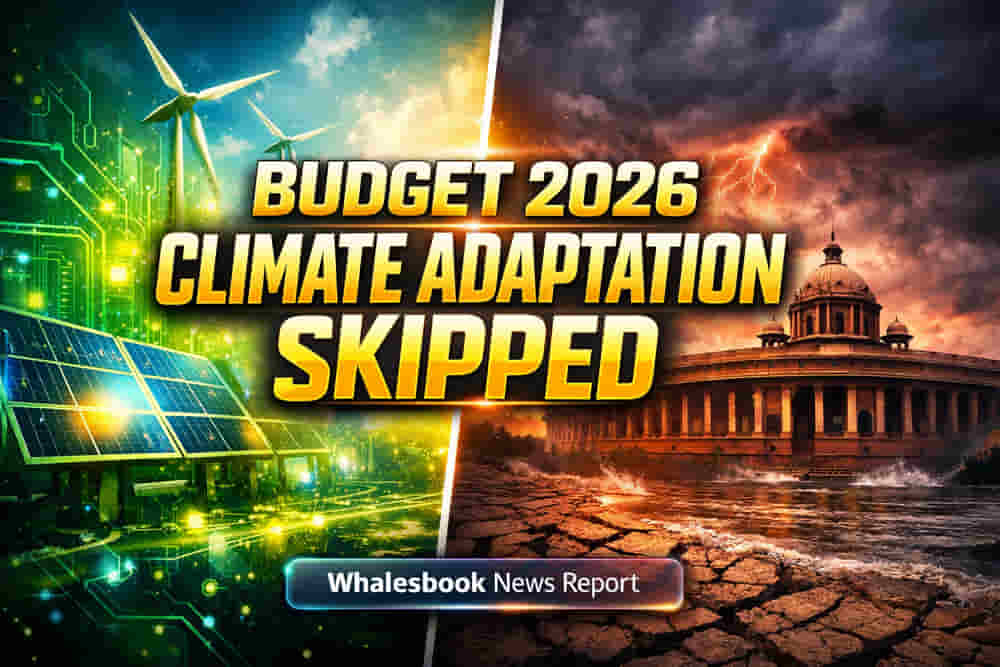
The Seamless Link
The Indian Union Budget for 2026-2027, presented on February 1, 2026, signals a decisive shift towards fortifying the nation's energy transition infrastructure. Union Finance Minister Nirmala Sitharaman outlined initiatives aimed at securing battery ecosystems and critical minerals to invigorate green manufacturing. The budget emphasizes the "nuts and bolts" of this transformation, allocating resources and policy support for sectors critical to decarbonization and energy security [2, 10].
Green Manufacturing and Critical Minerals Take Center Stage
The budget introduced several measures to bolster India's green industrial base. These include customs duty exemptions on capital goods for lithium-ion cells and battery energy storage systems, alongside duty waivers on inputs for solar glass, aiming to reduce project costs and accelerate deployment of renewables and storage solutions [2, 4]. A significant Rs 20,000 crore outlay over five years is earmarked for carbon capture, utilization, and storage (CCUS) technologies, targeting hard-to-abate sectors like steel and cement [23]. Furthermore, the establishment of Rare Earth Corridors in Odisha, Andhra Pradesh, Kerala, and Tamil Nadu addresses input security for renewables, storage, and electric mobility [4]. Experts anticipate these moves will compress project costs and unlock private capital, driving the deployment of storage-backed renewables [2]. Historically, budgets have shown a growing emphasis on green energy, with allocations for the Ministry of New and Renewable Energy (MNRE) seeing substantial increases in recent years [13, 21, 35]. Global trends also underscore the strategic importance of critical minerals, with demand projected to double by 2030, prompting nations to diversify supply chains away from concentrated sources like China [14, 20, 29].
Adaptation Deficit and Community Vulnerability
Despite the robust focus on mitigation, the budget speech conspicuously lacked direct mentions of climate change adaptation or specific strategies to buffer against the escalating impacts of global warming [10]. Climate activist Harjeet Singh criticized this oversight, stating that while the industry's infrastructure is being built, the strategy for protecting human lives and livelihoods remains fragile [2, 10]. The budget did not detail measures to protect communities and infrastructure from extreme weather events such as heatwaves, droughts, wildfires, floods, or landslides, particularly in vulnerable regions like the Himalayas [10]. Reports highlight that India's infrastructure expansion is increasingly occurring in climate-vulnerable areas, even as climate risks like floods and cyclones strain insurance coverage and potentially push some regions towards uninsurability [12, 17, 27]. The call for dedicated adaptation finance is growing, as India cannot solely rely on external flows to safeguard its population from rising climatic disasters [9].
Water Management and Integrated Reservoir Systems
One announcement touching upon adaptation was the proposed integrated development of 500 water reservoirs and Amrit Sarovars, intended to strengthen the fisheries value chain in coastal areas [7, 10]. This initiative builds on the Amrit Sarovar project, which has developed over 68,000 water bodies nationwide, supporting local livelihoods through fisheries and agriculture [7, 16, 30]. A specific example of proactive adaptation is the recent inauguration of Chennai's Integrated Reservoir Management Centre (IRMC) on January 6, 2026. This center employs data-driven technology for the coordinated management of key reservoirs, moving away from manual methods that often impede flood control [2, 10, 11, 26, 33]. While acknowledged as a step forward, experts emphasize the urgent need for a comprehensive safety net to build true resilience against increasingly severe climatic disasters [2, 10].
Future Outlook
The budget's strong emphasis on emission reduction and green industrial capacity signals a clear direction for India's energy future. However, the omission of dedicated climate adaptation measures raises concerns about the nation's preparedness for inevitable climate shocks. The prevailing strategy appears heavily weighted towards mitigation, leaving a critical gap in safeguarding vulnerable populations and infrastructure. The long-term success of India's development goals will likely depend on bridging this adaptation deficit and integrating resilience more directly into fiscal policy and infrastructure planning.