 Whalesbook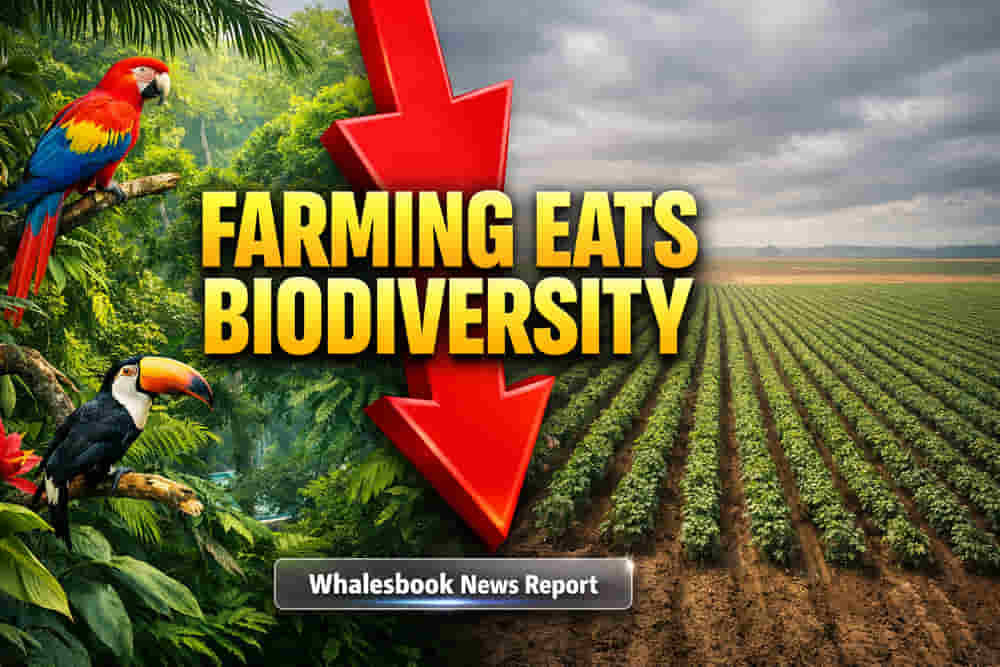
Global Study Warns of Alarming Biodiversity Loss Due to Farming
A new global study has found that agricultural expansion is responsible for a devastating 26% decline in species richness within the world's most vital biodiversity hotspots. Published on December 26, 2025, the research highlights the severe impact of converting wild landscapes into farms to meet escalating global food demand.
Ecosystems Under Pressure
Researchers from institutions including the Chinese Academy of Sciences and the University of Cambridge examined data from wildlife surveys worldwide. They discovered that areas converted to farmland within biodiversity hotspots show significantly fewer species, individual animals, and plants compared to natural habitats. Cropland within these critical zones expanded by 12% between 2000 and 2019, outstripping the global average.
Vulnerable Species at Risk
The study focused on vertebrates like small mammals, birds, and amphibians, which are particularly vulnerable to habitat loss. Their decline can trigger cascading effects, disrupting entire ecosystems. Many of these species reside outside protected areas, making them more susceptible to land-use changes.
India's Western Ghats Example
The situation is starkly illustrated in India's Western Ghats, a critical biodiversity hotspot. Land-use changes are accelerating, with traditional farming systems breaking down and land increasingly converted into orchards and plantations. This fragmentation slices natural habitats, hindering wildlife movement and survival.
Proposed Solutions for Sustainability
Authors of the study advocate for a multi-pronged approach. This includes strategically expanding protected areas, strengthening management within existing reserves, and improving farm productivity on already cultivated land. International cooperation on food trade is also crucial to prevent economically struggling nations from sacrificing their ecosystems. Engaging local communities in conservation efforts is deemed essential for sustainable solutions.
Market Implications
This environmental crisis presents significant long-term risks for global agriculture, supply chains, and resource-dependent industries. Investors are increasingly scrutinizing companies based on their environmental impact, potentially driving demand for sustainable agriculture technologies and ESG-focused investments. Regions like India's Western Ghats face challenges in balancing development with conservation, impacting local economies and industries. The findings suggest a future where trade may favor sustainably sourced products, penalizing those from high-risk agricultural frontiers.