 Whalesbook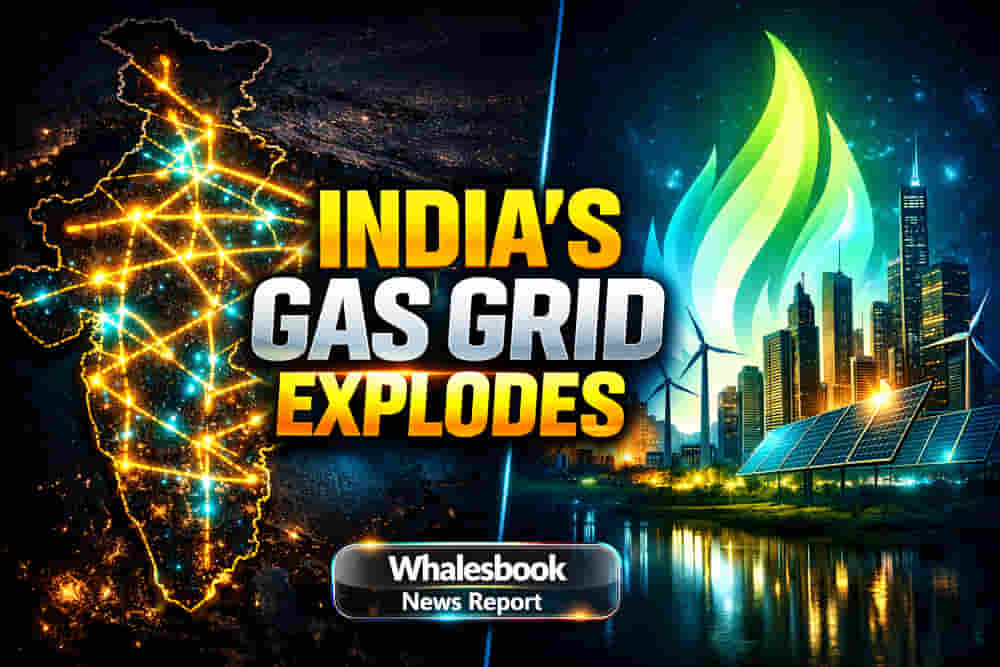
India's National Gas Grid Surpasses 25,000 Kms, Paving Way for Energy Security
India has achieved a significant milestone in its energy infrastructure development, with its operational natural gas pipeline network now extending over 25,429 kilometers. This remarkable expansion is a cornerstone of the nation's ambitious plan to establish a fully connected national gas grid, bolstering energy security and ensuring the widespread availability of cleaner fuel sources across all regions.
National Gas Grid Expansion
The Ministry of Petroleum & Natural Gas announced that beyond the existing operational network, the government is actively engaged in constructing an additional 10,459 kilometers of pipelines. This continuous development underscores a strategic commitment to modernizing the country's energy transport infrastructure and meeting the growing demand for natural gas.
Fair Pricing Initiative
To promote equitable access and prevent regional price disparities, the Petroleum and Natural Gas Regulatory Board has introduced a pioneering system known as "One Nation, One Grid, One Tariff." This initiative standardizes transportation charges across approximately 90 percent of the nation's pipelines, ensuring that consumers do not face higher costs simply due to geographical distance from supply sources.
Pradhan Mantri Ujjwala Yojana Progress
Ensuring universal access to clean cooking fuel remains a central priority. Under the flagship Pradhan Mantri Ujjwala Yojana (PMUY), the number of beneficiaries has surged to approximately 10.35 crore as of December 1, 2025. To further expand LPG access and serve pending applications, the government has approved the release of an additional 25 lakh LPG connections during the fiscal year 2025-26.
Simplified Access and Increased Consumption
The eligibility process for PMUY has been streamlined through a simplified Deprivation Declaration, replacing the previous multi-point self-declaration system, thereby facilitating faster and more inclusive access. Financial support for LPG affordability is provided through a targeted subsidy of ₹300 per 14.2 kg cylinder for up to nine refills annually for PMUY beneficiaries. This support has led to a notable increase in LPG consumption, with average per capita consumption rising from about three refills in 2019-20 to 4.47 refills in FY 2024-25 and a projected 4.85 refills per annum in FY 2025-26.
Petroleum Marketing Infrastructure
The Ministry has also focused on enhancing petroleum marketing infrastructure. Over 90,000 retail outlets have been equipped with digital payment facilities, supported by more than 2.71 lakh POS terminals. To improve accessibility in remote areas, door-to-door delivery services have been expanded with the commissioning of over 3,200 bowsers. Furthermore, in line with the Swachh Bharat Mission, nearly all retail outlets now provide toilet facilities, many with separate provisions for men and women.
Safety and Fuel Sector Advancements
Consumer safety is paramount, with the ministry conducting over 12.12 crore free safety checks for fuel consumers. In the broader fuel sector, India has achieved an ethanol blending rate of 19.24 percent in petrol. Additionally, 172 blocks have been awarded for oil and gas exploration, aiming to boost domestic production.
Impact
This extensive development of the natural gas pipeline network is poised to significantly enhance India's energy security by diversifying fuel sources and potentially reducing reliance on imported fossil fuels. The expansion of clean fuel infrastructure, including LPG access, contributes positively to environmental goals and public health. The "One Nation, One Grid, One Tariff" policy promises more predictable and equitable energy costs for industries and households across the country, fostering economic development and improving the quality of life. Companies involved in pipeline construction, engineering, procurement, and gas distribution are likely to benefit from these large-scale infrastructure projects. The sustained increase in LPG consumption indicates a successful transition towards cleaner cooking fuels.
Impact Rating: 7/10
Difficult Terms Explained
- Natural gas grid: A network of interconnected pipelines designed to transport natural gas from production sites to various consumers, including industries and households.
- Energy security: The assurance of a stable, sufficient, and reliable supply of energy resources to meet a nation's economic and social needs.
- Petroleum and Natural Gas Regulatory Board (PNGRB): An autonomous statutory body established by the Indian government to regulate the oil and gas sector, including the transportation and distribution of petroleum products and natural gas.
- One Nation, One Grid, One Tariff: A policy framework by the PNGRB that aims to establish a uniform transportation tariff for natural gas across the entire country, simplifying pricing for consumers.
- Pradhan Mantri Ujjwala Yojana (PMUY): A flagship scheme of the Indian government providing financial assistance to women from below-poverty-line households to secure free LPG (Liquefied Petroleum Gas) connections, thereby promoting clean cooking fuel.
- LPG (Liquefied Petroleum Gas): A flammable hydrocarbon gas mixture, commonly used as a fuel for cooking and heating, which is liquefied under pressure for storage and transport.
- Ethanol blending: The process of mixing ethanol, an alcohol-based biofuel, with petrol. This practice aims to reduce the consumption of fossil fuels and lower greenhouse gas emissions.