 Whalesbook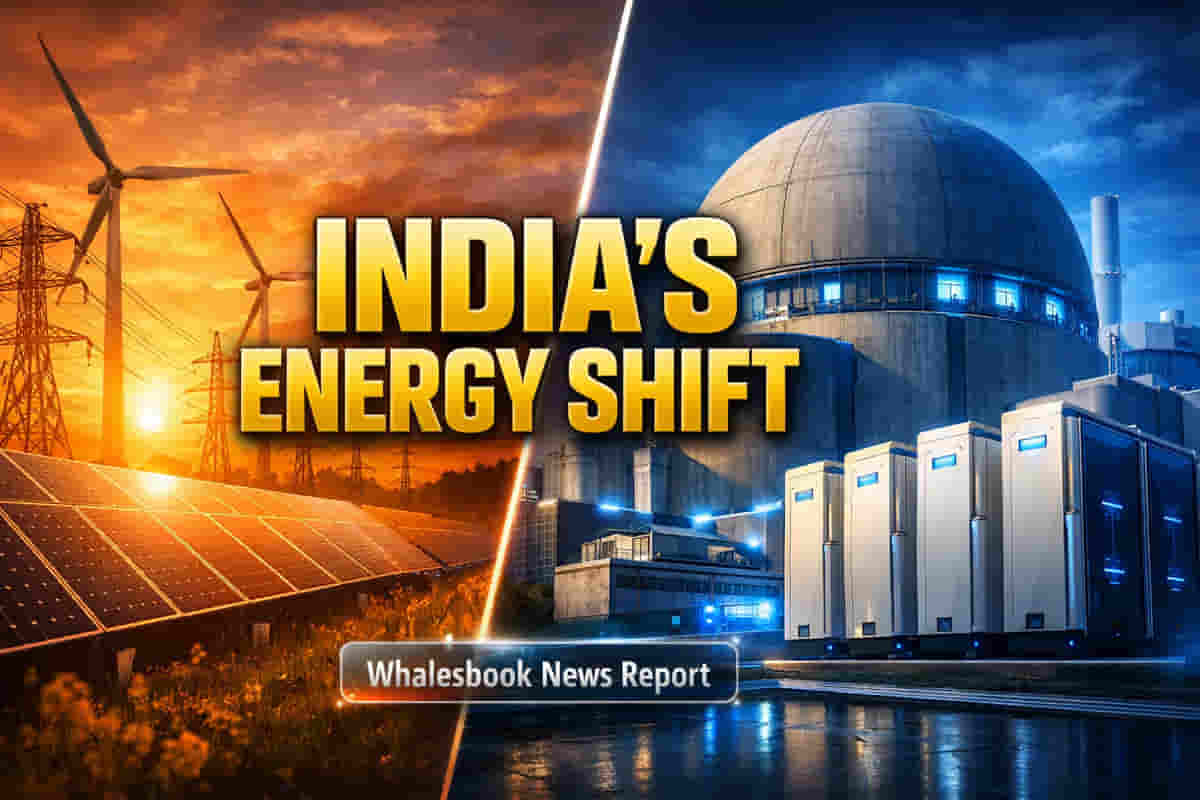
India Pivots Energy Strategy: Storage and Nuclear Power Take Center Stage
India's ambitious journey towards a green energy future is entering a new, critical phase. While the nation has impressively achieved 50% of its electricity generation from non-fossil sources, primarily solar and wind, a significant challenge remains: integrating these intermittent sources effectively into the national grid. This strategic pivot, expected to gain momentum in 2026, will see policymakers and industry stakeholders prioritizing the development of robust energy storage capacity and expanding into more stable, dispatchable non-fossil alternatives like nuclear power.
The Core Issue: Beyond Capacity Addition
The current success in adding renewable energy capacity has highlighted inherent limitations. Solar and wind power, while clean, are weather-dependent, leading to a low capacity utilization factor and inconsistent energy output. This has resulted in persistent challenges such as delays in signing power purchase agreements and the curtailment of renewable power generation due to inadequate transmission infrastructure. The focus is now shifting from merely increasing installed capacity to ensuring this capacity can be reliably absorbed and utilized by the grid.
The Rise of Energy Storage
Energy storage is emerging as a cornerstone of India's future energy infrastructure. Experts emphasize that grid-scale storage solutions are vital for anchoring a resilient power system, guaranteeing round-the-clock reliability as the penetration of renewables increases. Storage will play a key role in optimizing the use of solar power, especially during peak evening demand, firming up variable solar and wind generation, and managing seasonal energy variations. Advancements in lithium-ion battery costs, the revival of pumped hydro storage, and the future potential of long-duration storage and green hydrogen are expected to facilitate a higher share of renewable energy beyond current levels.
Nuclear Power: A Stable Non-Fossil Future
Simultaneously, India is set to significantly expand its nuclear power capacity. The government plans to open the nuclear power sector to private companies by amending existing laws, aiming to achieve a massive 100 GW of nuclear power capacity by 2047, a substantial increase from the current approximately 9 GW. The Sustainable Harnessing and Advancement of Nuclear Energy for Transforming India Bill, 2025 (SHANTI Bill), introduced in Parliament, aims to allow private entities to construct, own, and operate nuclear power plants. This move is expected to attract significant foreign and private investment, bolstering India's energy security and supporting its climate objectives. Nuclear power is recognized for its role in providing steady, round-the-clock baseload supply and low-carbon heat for industrial processes.
Transmission: The Unsung Hero
A robust transmission network remains critical. The lag in expanding transmission capacity is a primary reason for the curtailment of renewable energy generation and the accumulation of unsigned power purchase agreements. Recent data shows a significant decrease in the addition of transmission lines in FY25 compared to FY24, highlighting the urgent need for accelerated grid expansion. High Voltage Direct Current (HVDC) networks are deemed essential for efficiently transporting large amounts of electricity over long distances with minimal losses, connecting renewable-rich areas to demand centers.
Impact
This strategic shift promises to enhance India's energy security, improve grid stability, attract substantial private and foreign investment into the storage, nuclear, and transmission sectors, and accelerate the achievement of national climate targets. Companies poised to benefit include those in energy storage solutions, nuclear power generation, and transmission infrastructure development.
Impact rating: 9/10
Difficult Terms Explained
- Capacity Utilization Factor (CUF): The ratio of actual energy produced by a power plant over a period to the maximum possible energy it could have produced if it operated at its full installed capacity during that period.
- Curtailment: The intentional reduction of output from a power plant or renewable energy source, often due to grid congestion, lack of demand, or system instability.
- Power Purchase Agreement (PPA): A contract between an electricity generator and a buyer (usually a utility or distribution company) that sets the terms for the sale of electricity.
- High Voltage Direct Current (HVDC): A system for transmitting electrical power using direct current (DC) at high voltage, which is more efficient for long-distance power transmission than alternating current (AC).
- Baseload Power: The minimum level of electricity demand on an electrical grid over a span of time. Baseload power plants are designed to run continuously.