 Whalesbook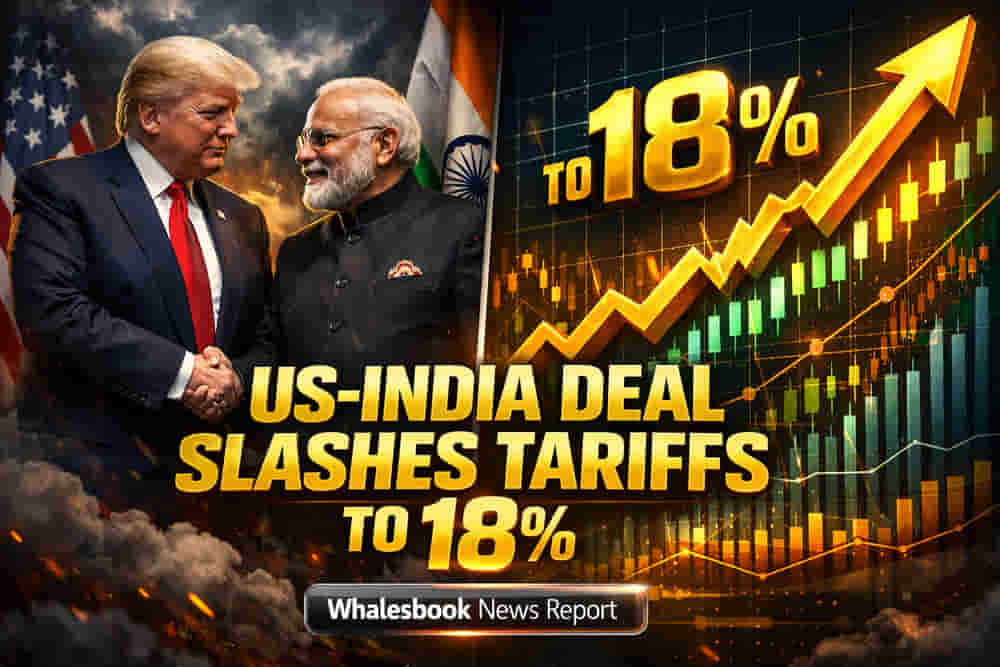
1. THE SEAMLESS LINK (Flow Rule)
This accord signifies a substantial recalibration of the bilateral trade relationship, moving beyond simple tariff adjustments. The integration of geopolitical considerations, particularly concerning energy sourcing, underscores a new era of conditionality in international commerce.
Geopolitical and Energy Realignments
The U.S. reciprocal tariff on Indian goods has been reduced from 25% to 18%, effective immediately, a move President Trump stated was made as a gesture of friendship and respect for Prime Minister Modi [2, 7]. This tariff reduction appears intrinsically tied to India's reported agreement to cease purchasing oil from Russia, a move the U.S. has advocated for amid ongoing international tensions [2, 7, 32]. Russia has been a significant supplier of crude oil to India, with its share in India's import basket peaking near 40% [3, 24]. However, the appeal of discounted Russian oil has diminished as global prices have stabilized and sanctions pressure has increased [15, 20, 24]. Switching to U.S. or other mainstream crude sources is projected to increase India's annual fuel import bill by billions of dollars, potentially by 5-10% per barrel [2]. This energy trade realignment is a critical component, influencing not only bilateral economic ties but also global energy market dynamics and the geopolitical landscape surrounding the Ukraine conflict [2, 30].
Tariff Revisions and Market Access
As part of the agreement, India has committed to eliminating all reciprocal tariffs and non-tariff barriers against U.S. products, effectively creating zero-tariff access for American goods [3, 5, 6, 7]. This reciprocal easing of trade restrictions follows a period where U.S. tariffs on Indian goods had escalated, reaching up to 50% on certain items, partly due to India's continued procurement of Russian oil [3, 12, 13, 16, 33]. The U.S. goods trade deficit with India stood at $45.8 billion in 2024 [14]. This agreement aims to rebalance that trade relationship and enhance market access for U.S. exporters. India has historically utilized tariffs to protect domestic industries, including its agricultural sector, which has been a point of contention in trade discussions [8, 31, 34].
Sectoral Commitments and "BUY AMERICAN"
A cornerstone of the pact is India's commitment to substantial purchases of U.S. products, exceeding $500 billion. This includes significant investments in American energy, technology, agricultural, and coal sectors, aligning with a "BUY AMERICAN" initiative [2, 6, 7, 32]. This broad commitment suggests potential boosts for various U.S. industries, from energy suppliers to agricultural producers and technology firms [18]. The deal encompasses increased market access for U.S. agricultural products, though specific agricultural tariffs have been a persistent negotiation hurdle [31, 34]. India's technology sector, a significant recipient of U.S. revenue, faces indirect impacts from broader tariff policies, but this deal may foster collaboration [18, 26].
Broader Economic and Diplomatic Context
This trade accord arrives amidst a broader global trend of nations seeking to solidify trade relationships. India recently finalized a landmark trade agreement with the European Union on January 27, 2026, which aims to deepen ties and diversify its trade partnerships [9, 11, 21]. This move, alongside India's efforts to diversify export markets away from over-reliance on the U.S. due to prior tariff impositions, highlights a strategic rebalancing in global trade flows [11, 16]. The assumption of duties by U.S. Ambassador to India Sergio Gor shortly before the announcement also adds to the recent diplomatic momentum [2, 7]. While the U.S. administration had previously imposed significant tariffs on Indian goods, citing trade imbalances and India's energy dealings with Russia, this agreement marks a de-escalation. India's economic growth, projected to become the world's fourth largest in 2026, provides it with increased leverage in such negotiations [11].