 Whalesbook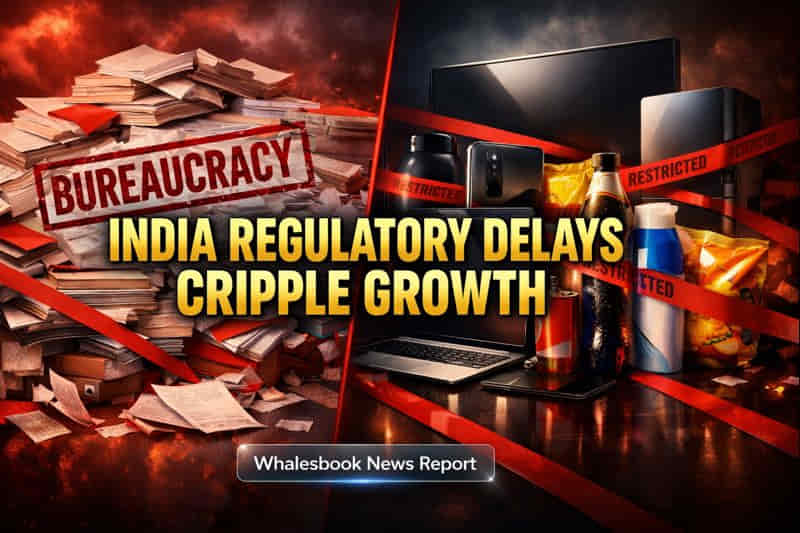
Regulatory Hurdles Stall Indian Businesses
New Delhi – A growing number of Indian companies are grappling with significant operational setbacks owing to protracted delays in securing essential regulatory approvals. Crucial certifications, including Bureau of Indian Standards (BIS) quality control orders and Food Safety and Standards Authority of India (FSSAI) licenses, are proving to be major bottlenecks, disrupting production timelines, hindering imports, and postponing product launches across key industries.
A recent survey conducted by consulting firm JR Compliance highlights the severity of the issue, indicating that over 40% of surveyed companies have experienced delays stretching to several months in their business plans due to pending certifications.
Financial Implications and Missed Opportunities
The impact is particularly acute in fast-moving consumer goods (FMCG), electronics, and telecommunications sectors. These industries often rely on timely product introductions and availability to capitalize on specific market windows, especially during festive seasons and peak demand periods. Delays in obtaining necessary approvals mean businesses are missing these critical sales opportunities, directly translating into potential revenue losses and reduced market share.
Companies are finding their carefully planned strategies stymied by what are often described as long-drawn and cumbersome bureaucratic procedures. This administrative drag not only affects profitability but also impacts inventory management and supply chain predictability.
Broader Economic Context
Beyond routine operational delays, the report suggests that regulatory processes have sometimes been employed as tools in managing diplomatic relations. Such instances can lead to the avoidable suspension of imports for vital components, consequently stalling the manufacturing of finished goods, from consumer electronics to apparel.
Rishikesh Mishra, CEO of JR Compliance, emphasized the link between regulatory preparedness and business outcomes. "India remains a high-growth and attractive market, but 2025 highlighted how regulatory preparedness directly impacts business outcomes," Mishra stated, noting the firm's work with numerous multinational corporations in affected sectors.
In a move aimed at alleviating some of these pressures and boosting domestic manufacturing, the government in November withdrew 14 BIS Quality Control Orders (QCOs) related to chemicals, polymers, and fibre-based materials used in industries like garments and fertilizers. However, the broader challenge of navigating complex and time-consuming certification processes persists for many businesses.
Market Reaction and Future Outlook
While the article does not detail specific stock market reactions, the widespread nature of these delays across major consumer-facing sectors suggests a potential negative impact on the financial performance of companies within these segments. Investors may watch for earnings reports that reflect the costs associated with these delays or revised sales forecasts.
The situation underscores a need for streamlined regulatory processes to ensure India's continued attractiveness as an investment destination and to support the growth ambitions of its domestic industries. Enhancing the efficiency and predictability of certification mechanisms will be key to unlocking the full potential of sectors like electronics and FMCG.
Impact Rating: 7/10
Difficult Terms Explained
- BIS quality certifications: Standards and certifications set by the Bureau of Indian Standards for product quality, safety, and reliability.
- FSSAI licences: Licenses issued by the Food Safety and Standards Authority of India, ensuring food products meet safety and hygiene standards.
- FMCG (Fast-Moving Consumer Goods): Products that are sold quickly and at a relatively low cost, such as packaged foods, beverages, toiletries, and over-the-counter drugs.
- Peak-season sales: The periods during the year when consumer demand for certain products is highest, often coinciding with festivals or holidays.
- QCOs (Quality Control Orders): Government orders mandating specific quality standards that products must meet before they can be sold in the market.
- Domestic manufacturing: The production of goods within India's own borders.