 Whalesbook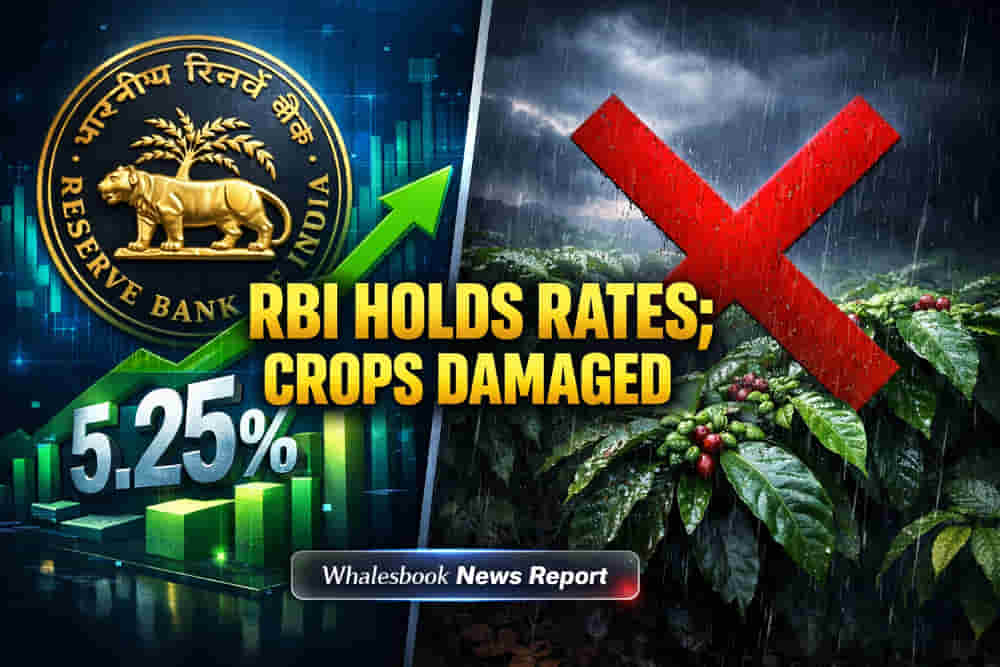
RBI's Steady Hand Amidst Shifting Economic Currents
The Reserve Bank of India's Monetary Policy Committee (MPC) concluded its February 2026 meeting by maintaining the policy repo rate at 5.25%, a decision largely in line with market expectations and reflecting a cautious stance on the economic outlook. Governor Sanjay Malhotra indicated that the current rate is deemed appropriate for balancing growth support with price stability, even as the committee revised its inflation projections upward. The forecast for Consumer Price Index (CPI) inflation has been adjusted to 3.2% for the fourth quarter of fiscal year 2026 and is projected to reach 4.0% and 4.2% in the first and second quarters of fiscal year 2027, respectively. This recalibration is influenced by anticipated price pressures from precious metals and persistent global geopolitical uncertainties, which continue to create volatility in international commodity and energy markets. Despite these external pressures, the Indian economy's domestic strength is projected to drive robust growth, with the GDP forecast for FY2025-26 revised upwards to 7.4%. The MPC's neutral policy stance suggests a data-dependent approach, with future monetary policy actions contingent on evolving inflation dynamics and growth momentum.
Plantation Sector's Forex Shield Erodes Under Climate Pressure
The agricultural sector, a critical component of India's economy contributing approximately 17-18% to GDP, is currently confronting significant challenges. Unseasonal and prolonged rains have severely impacted key plantation crops, including Robusta coffee, arecanut, and rubber. The Karnataka Planters' Association estimates a reduction in coffee output by up to 30,000 tonnes for the 2025-26 crop year due to adverse weather conditions. Similarly, arecanut production faced a drastic decline of nearly 50% in 2025, attributed to diseases and extreme weather. This vulnerability is particularly concerning given the substantial foreign exchange earnings these crops generate; India's coffee exports alone are projected to exceed $2 billion. The current challenges underscore a long-standing demand for specialized crop insurance tailored to the unique risks faced by plantation crops. Existing schemes like Pradhan Mantri Fasal Bima Yojana (PMFBY) are considered impractical for these specific agricultural segments, leaving farmers exposed to climate-related production shocks and impacting their livelihoods, as well as the nation's forex reserves. The industry's resilience is being tested, with experts calling for enhanced risk mitigation strategies to safeguard this vital export sector against increasing climatic variability.
Historical Context and Future Outlook
The RBI's decision to maintain the repo rate echoes a period of monetary policy consolidation seen in late 2025, where rates were gradually reduced to support economic activity while managing inflation. Historical data shows a trend of rate adjustments aimed at balancing inflation control with growth, though the current environment presents a more complex interplay of domestic demand and global uncertainties. Analysts anticipate continued stability in policy rates through 2026, though vigilance on inflation and growth will be paramount. For the agricultural sector, the path forward involves not only adapting to climate change through resilient farming practices but also urgently addressing the insurance gap. The government's focus on broad economic stability, as evidenced by the Union Budget 2026-27, must extend to sector-specific interventions that enhance the financial security of plantation crop farmers and protect crucial foreign exchange earnings from unpredictable weather events.