 Whalesbook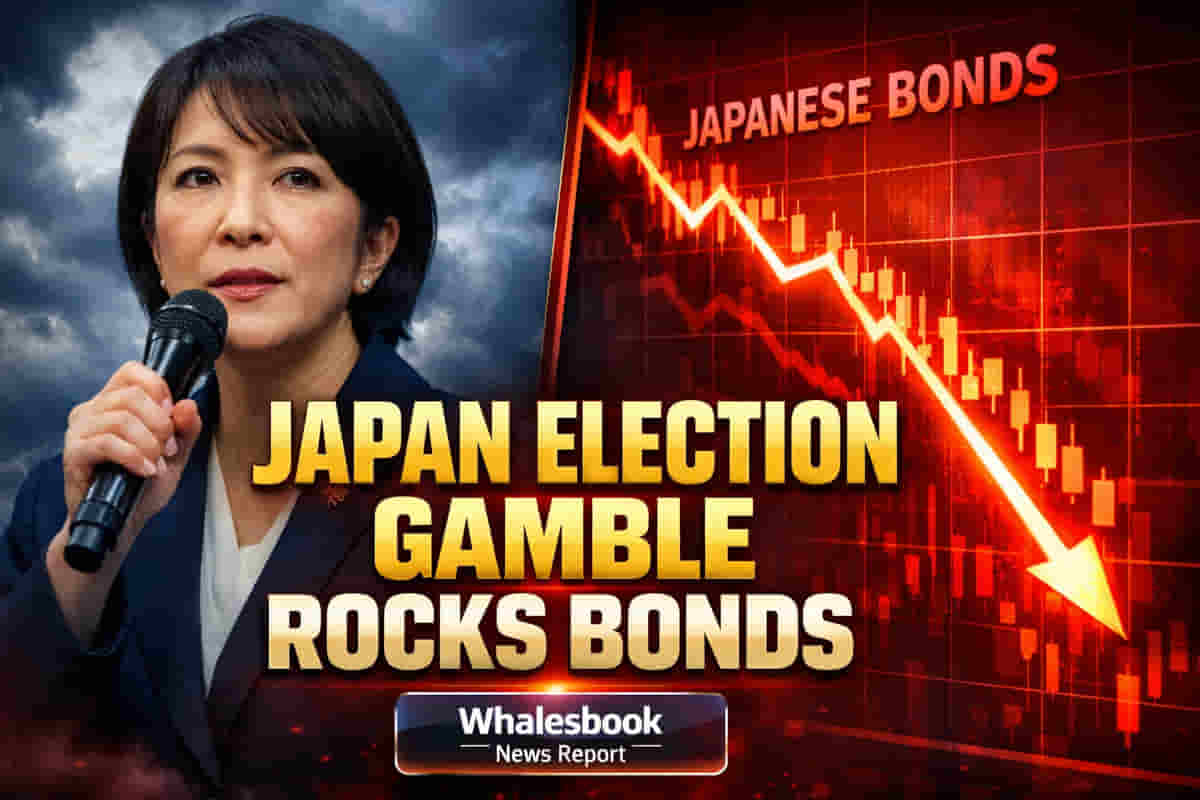
Political Uncertainty Rattles Japanese Bonds
Japanese government bonds saw a significant sell-off on Tuesday. Investors' apprehension regarding fiscal policy resurfaced as political threats intensified. Rumors surfaced that Prime Minister Sanae Takaichi might dissolve parliament to call for early elections, sparking widespread concern.
The yield on 30-year Japanese government bonds jumped by 12 basis points, reaching 3.52%. Simultaneously, 10-year bond futures experienced a notable drop, declining by 71 ticks. This movement signals a clear investor reaction to perceived political instability and its potential economic ramifications.
Fiscal Fears and Yen Pressure
A greater parliamentary mandate for Prime Minister Takaichi would likely empower an expansionary fiscal policy. Such a direction is anticipated to place considerable pressure on both government bonds and the Japanese yen. This fiscal outlook adds to existing worries about the currency's stability.
Adding to market jitters, U.S. Treasury Secretary Scott Bessent and Japan's Finance Minister Satsuki Katayama voiced concerns over the weakening yen during a bilateral discussion in Washington. The yen briefly climbed 0.2% to 157.90 per dollar following these remarks, but its overall trend remains precarious.
Yen's Decline and Intervention Watch
Media speculation about a swift election had previously pushed the yen below the 158 per dollar mark, its lowest point in over a year. Over the past year, the yen's performance against the U.S. dollar has lagged behind most of its Group of 10 counterparts, gaining only about 0.3%. In response to this prolonged slide, Japanese officials have escalated warnings against speculative trading. Markets are now closely monitoring for signs of potential government intervention aimed at bolstering the currency.