 Whalesbook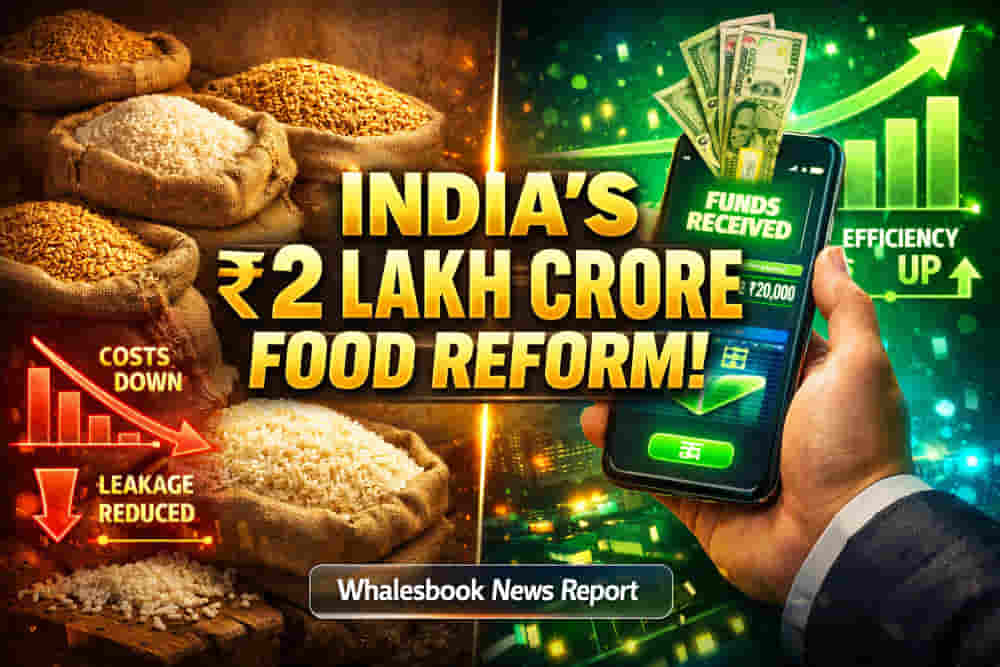
The Mammoth Cost of 'Free' Food
India's Public Distribution System (PDS) feeds over 800 million people, but at an astonishing fiscal cost. The government estimates the economic cost per kilogram at ₹28–₹40, translating to a massive food subsidy bill of approximately ₹2.05 lakh crore for FY2024–25 alone. This expenditure underpins the provision of staples, originally designed to ensure access during scarcity.
PDS: From Safety Net to Fiscal Strain
The PDS, legally mandated by the National Food Security Act of 2013, guarantees specific monthly cereal entitlements to priority and Antyodaya families, covering a large portion of the rural and urban population. Since January 2023, the Pradhan Mantri Garib Kalyan Anna Yojana (PMGKAY) has made these grains free for beneficiaries. The scale is immense, with the Food Corporation of India distributing 36–38 million tonnes of rice and 18–20 million tonnes of wheat annually.
The Pervasive Problem of Leakage and Wastage
Despite its noble intent, the PDS suffers from significant inefficiencies. Studies indicate that approximately 28 per cent of subsidized grain never reaches its intended beneficiaries, leading to diversion or loss. Valued at the government's economic cost, this amounts to an annual loss of ₹69,108 crore. This ongoing fiscal hole highlights structural weaknesses in a system designed for a bygone era of scarcity.
Skyrocketing Logistics and Storage Costs
Beyond direct diversion, the physical distribution of grains incurs substantial costs. Transportation and storage form expensive and vulnerable links in the supply chain. Foodgrains move from procurement centres to warehouses and then to over five lakh fair price shops, with each step adding to the subsidy burden. Storage itself poses quality risks, with reports of thousands of tonnes rotting in warehouses and significant quantities stored in vulnerable open conditions, risking spoilage, fungus, and contamination.
A Bold Proposal: Direct Income Support
Given these persistent issues, a transformative idea is gaining traction: replacing the physical PDS with Direct Benefit Transfer (DBT). If the government already covers the full economic cost of grain delivery (₹28–₹40 per kg), proponents argue it could transfer an equivalent inflation-indexed cash amount directly into Aadhaar-linked beneficiary accounts monthly. This would align with NFSA entitlements and strip away the complex, leakage-prone logistics chain.
Benefits of a Cash-Based System
Shifting to DBT promises greater transparency, transforming an opaque supply-chain subsidy into a clear consumer subsidy. It aims to drastically reduce leakages and empower vulnerable families with the agency to make their own consumption choices. Evidence from Karnataka's Anna Bhagya cash transfer initiative suggests beneficiaries used funds for better-quality grains and diversified diets, while also fostering financial inclusion by opening new bank accounts.
Phased Transition and Future Vision
Experts suggest a phased, opt-in approach for beneficiaries to choose between grain and cash for 12–18 months, protecting vulnerable regions during the transition and strengthening local markets. Indexing benefits to cereal inflation would safeguard purchasing power. Rationalizing procurement and aligning food stocks with buffer norms could further reduce carrying costs. This reform is not about dismantling the PDS but reimagining it for efficiency and empowerment, freeing resources for nutrition diversification and sustainable agro-logistics.
Impact
This proposed reform carries significant implications for India's fiscal health, consumer welfare, and the efficiency of its social security programs. A successful transition to DBT could lead to substantial savings, empower millions of beneficiaries, and potentially stimulate local economies by increasing cash circulation. The government's fiscal space could expand, allowing for investments in other critical areas like nutrition and infrastructure. However, challenges in ensuring complete beneficiary coverage, managing inflation impacts, and strengthening retail infrastructure in remote areas need careful consideration.
Impact Rating: 9/10
Difficult Terms Explained
- Public Distribution System (PDS): A government-launched network to distribute essential commodities like food grains at subsidized prices to vulnerable sections of society.
- National Food Security Act (NFSA): A landmark Indian law enacted in 2013 that guarantees food and nutrition security for the population, ensuring access to adequate quantity of quality food at affordable prices.
- Food Corporation of India (FCI): A government-owned corporation established under the FCI Act, 1964, responsible for procurement, storage, movement, and distribution of food grains.
- Pradhan Mantri Garib Kalyan Anna Yojana (PMGKAY): A scheme providing free food grains to the poor and vulnerable during the COVID-19 pandemic and beyond, integrated with the PDS.
- Antyodaya families: Households identified as the poorest among the poor, entitled to higher subsidies or free provisions under various government schemes.
- Economic Cost: The total cost incurred by the government for procuring, storing, transporting, and distributing food grains, including interest and incidental charges.
- Direct Benefit Transfer (DBT): A system to transfer subsidies or benefits directly into the bank accounts of beneficiaries, eliminating leakages and improving efficiency.
- One Nation, One Ration Card: A system that allows beneficiaries to collect their food entitlements from any fair price shop in the country, ensuring portability.