 Whalesbook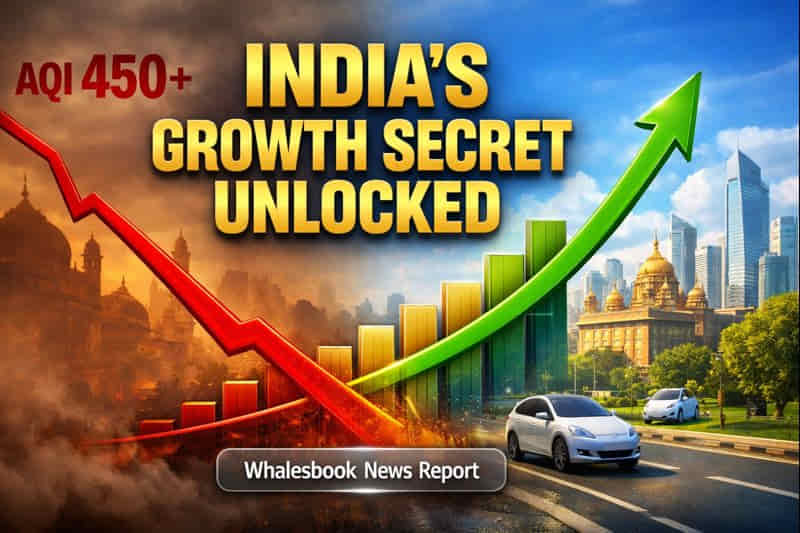
India's Path to Cleaner Air and Stronger Growth
India grapples with critically high air quality index (AQI) levels across many regions, creating a dilemma for policymakers. The prevailing concern is that stringent environmental regulations necessary to combat pollution could impede the nation's pursuit of robust economic growth. This article argues that this fear is largely unfounded, presenting a roadmap for achieving both cleaner air and sustained GDP expansion.
The Core Issue
The severity of India's air quality problem is undeniable, particularly in its major urban centers. Policymakers often find themselves at a crossroads, hesitant to implement aggressive environmental measures due to the perceived threat to economic development. This inertia has led to a near-standstill on meaningful AQI improvements, driven by an aspiration for high GDP growth.
Financial Implications
A shift towards Electric Vehicles (EVs) offers a tangible solution. In China, EV prices are nearing parity with petrol vehicles, with EVs forming a significant portion of new vehicle sales. For India, policy intervention is crucial. Subsidizing EVs and expanding charging infrastructure can foster economies of scale, driving down prices. Simultaneously, increasing taxes on petrol and diesel vehicles can be revenue-neutral, effectively restructuring the automobile industry within the GDP rather than diminishing it. The long-term economic benefit of reducing stunted growth in children due to poor air quality, allowing them to contribute more effectively to GDP later, is substantial.
Urban Development Strategy
The article also proposes a long-term solution: decentralizing urban populations. The concentration of people and economic activity in massive cities like the National Capital Region (NCR) exacerbates AQI issues through increased commuting, construction, and infrastructure demands. Developing new, smaller urban areas or expanding existing ones away from mega-cities can alleviate this pressure. While construction is costly, land is significantly cheaper in smaller cities, making housing and commercial spaces more affordable. Policy can enable experienced developers to create integrated ecosystems in these new areas, reducing the population and pollution burden on existing metropolises.
Future Outlook
This dual approach of promoting clean mobility and strategic urban planning offers a path where economic growth and environmental protection are mutually reinforcing. By developing differently, India can create new economic opportunities while simultaneously improving air quality and public health. The emphasis is on enabling policies rather than direct government construction, fostering a sustainable development model.
Impact
This news could significantly impact the automotive sector through increased demand for EVs and potential regulatory shifts. The real estate sector could see a boost in areas designated for new urban development. Investors looking at long-term policy trends and sustainable growth will find this relevant. The overall impact on India's economy and its citizens' health is potentially very positive if these policies are effectively implemented.
Impact Rating: 7/10
Difficult Terms Explained
- Air Quality Index (AQI): A number used to describe the quality of air. Higher numbers mean worse air quality.
- GDP (Gross Domestic Product): The total value of all goods and services produced in a country in a specific period.
- Electric Vehicles (EVs): Vehicles that run on electricity instead of gasoline or diesel.
- NCR (National Capital Region): A metropolitan region surrounding Delhi, India's capital, encompassing parts of multiple states.
- Land Acquisition Act, 2013: A law in India that governs the process and compensation for acquiring private land for public projects.