 Whalesbook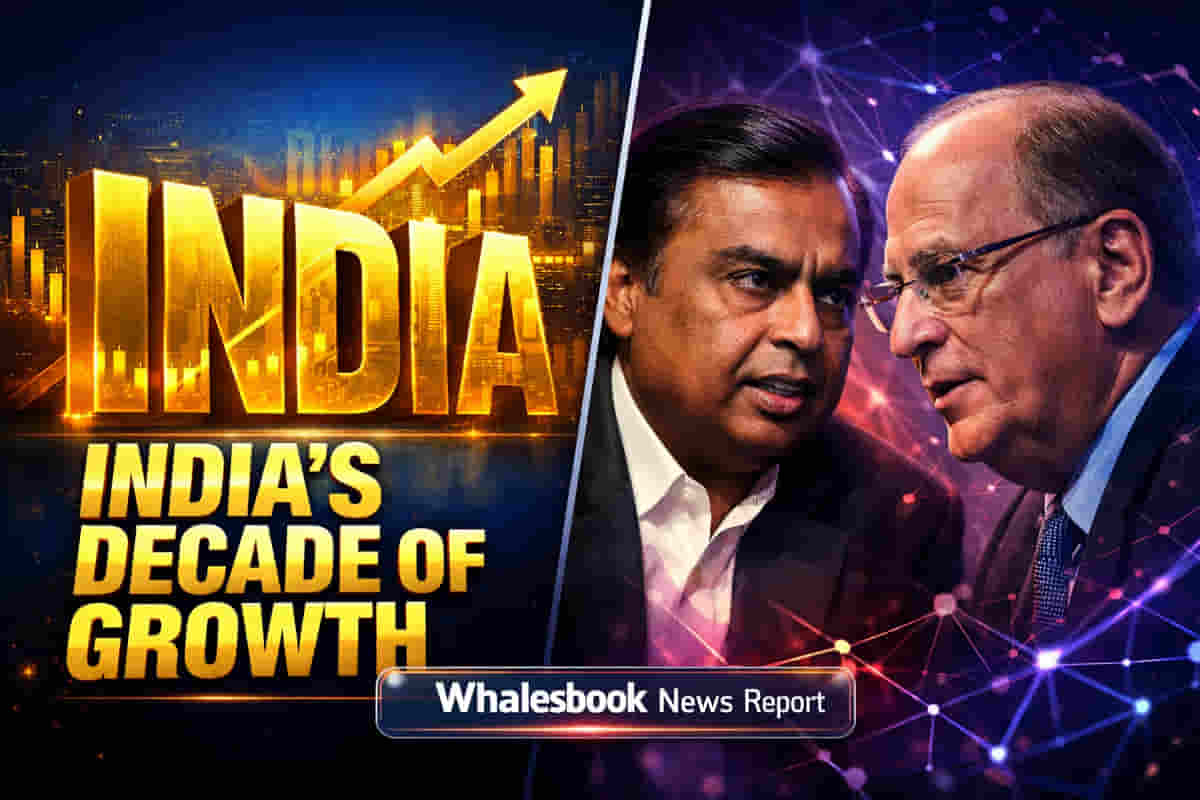
India's Capital Markets Ascent: Bridging the Savings Gap Amidst Record Retail Inflows
India stands at a critical juncture, poised for an economic expansion defined not by market whims but by sustained domestic investment. Visionaries like Mukesh Ambani and Larry Fink are championing a transition from passive saving to active capital market participation, heralding a potential 'Era of India.' This grand narrative is underpinned by a dramatic surge in retail investors, a phenomenon that has reshaped the domestic financial landscape.
The Influx and the Imbalance
Over the past decade, India has witnessed an exponential rise in retail investor engagement. Demat accounts have ballooned, with unique investors nearing 136 million by late 2025 [10]. Retail investors now command a significant portion of daily trading volumes, comprising over 52% [2]. This growth, fueled by digital platforms and increased financial awareness, signifies a fundamental shift. Yet, despite this robust participation, India's equity market penetration remains relatively low at approximately 8%, significantly below developed economies like the U.S. [7]. Compounding this is the vast pool of household savings, estimated to be largely tied up in unproductive assets such as gold. Reports indicate imports of gold and silver valued in the tens of billions annually [25, 46], representing capital that could be redirected towards productive investments.
Catalysts for Capital Mobilization
Favorable macroeconomic conditions are providing a fertile ground for this capital mobilization. Inflation has receded to historic lows, averaging 1.7% in April-December 2025, while monetary policy remains supportive with a repo rate of 5.25% [20]. Economic growth projections remain strong, with the GDP expected to expand by 7.4% in FY26 and maintain robust figures in subsequent years [20, 27, 30]. This stable economic environment, coupled with ongoing infrastructure development and digital transformation, positions India as an attractive investment destination. Furthermore, Artificial Intelligence (AI) is being viewed not merely as a trend but as a multi-decade opportunity that could enable India to leapfrog in critical sectors, driving productivity and social outcomes [Source A]. Indian businesses exhibit high confidence in AI, with 93% expecting positive returns and significant investments being made in talent and technology [34].
Navigating the Nuances: The Literacy and Infrastructure Challenge
Despite the optimism and growing participation, significant hurdles remain. A critical challenge is the persistent low level of financial literacy, with only 27% of Indian adults considered financially literate, far below the average in advanced economies [18]. This deficit is particularly pronounced in rural areas, where limited access to education, low income, and digital illiteracy exacerbate the problem [24, 37]. To truly achieve mass participation and 'patient capital,' concerted efforts are required to enhance financial education and demystify complex investment products. The ambition to convert savings culture into productive investment necessitates addressing these foundational issues, ensuring that the expanding investor base is well-equipped to navigate market dynamics and make informed decisions.
Valuation Landscape and Forward Outlook
The valuation metrics for key sectors offer a mixed picture. The Nifty Financial Services index trades at a P/E of approximately 17.9 [17], while the Nifty IT sector's P/E stands around 25.8 [19]. These figures suggest that while some sectors might be reasonably valued, the overall narrative of India's growth potential continues to attract capital. As India aims to leverage its demographic dividend and technological advancements, its ability to convert latent savings into active investment through enhanced financial literacy and robust market infrastructure will be paramount in defining its long-term economic success.