 Whalesbook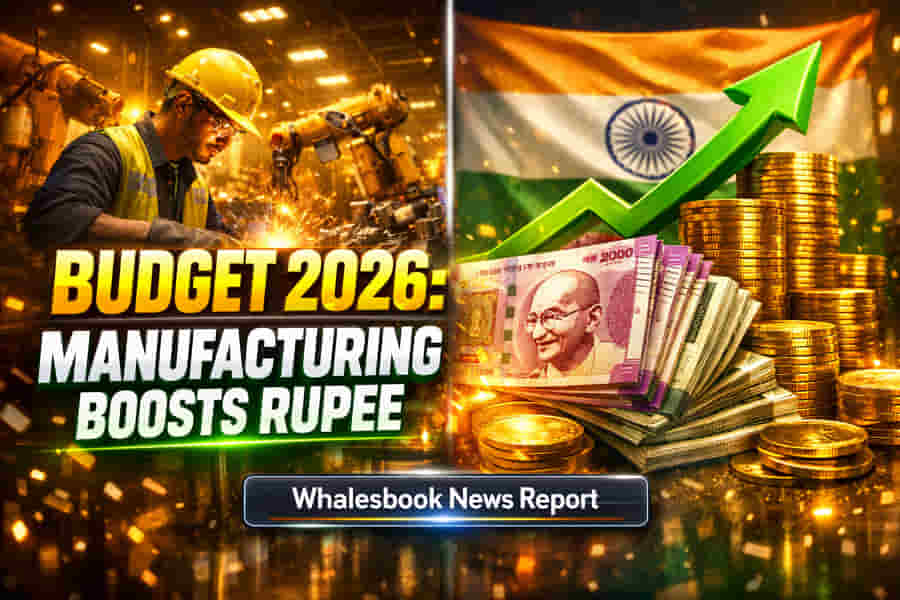
The Current Economic Climate and India's Response
The global economy is navigating a period of increased fragmentation, prompting a strategic re-evaluation of supply chains and economic dependencies. In this evolving landscape, India's Union Budget 2026 has strategically placed manufacturing at the forefront of its long-term economic agenda. This focus is designed not merely for growth, but as a critical lever to build national resilience, fortify the currency's value, and reduce the overall cost of capital for domestic industries. Chief Economic Adviser V. Anantha Nageswaran emphasized that this strategy is a direct response to the reality of a less predictable global marketplace, anticipating that such conditions may persist for years, if not decades.
Pillars of Industrial Self-Reliance
The budget's thrust towards manufacturing is manifested through targeted interventions across sectors deemed vital for industrial independence. Initiatives include the development of a proposed rare earths corridor for mining, processing, and manufacturing, alongside bolstering domestic production of construction and infrastructure equipment, chemicals, and advancing the biopharma mission. These efforts collectively aim to decrease reliance on imports and deepen India's industrial base, thereby enhancing its capacity to withstand external shocks. The Economic Survey 2025-26 highlights that high-tech activities now constitute a significant portion of manufacturing value added, signaling a move towards more sophisticated production.
Driving Down Input Costs and Enhancing Competitiveness
A key component of the manufacturing push involves systematically reducing input costs for industries. Reforms extend beyond the immediate budget cycle, addressing structural issues. The Economic Survey had previously flagged how cross-subsidisation inflates industry costs, a concern being tackled through measures like the proposed Electricity Amendment Bill aimed at phasing out such practices. Within the budget itself, reductions in customs duties and exemptions on components and electronics form part of this strategy, benefiting both labor-intensive and high-tech manufacturing segments. The India-EU Free Trade Agreement is also poised to reduce tariffs on key industrial sectors like chemicals, machinery, and pharmaceuticals, integrating Indian firms into European value chains and boosting competitiveness.
Manufacturing's Macroeconomic Significance: Currency and Capital
Beyond direct industrial support, Nageswaran underscored manufacturing's crucial role in macroeconomic stability. He argued that strengthening the rupee's medium-term value is intrinsically linked to boosting manufacturing output. International evidence suggests countries with deep manufacturing capabilities tend to possess stronger, more stable currencies, whereas those that lose their industrial base experience currency depreciation. Furthermore, becoming a robust domestic manufacturer is posited as the most effective way to meaningfully lower the cost of capital. This long-term process requires persistent effort from both government and the private sector, particularly amidst less favorable global economic conditions. Projections indicate the manufacturing sector is set for robust growth, with forecasts suggesting a 7% expansion in FY26.
Strategic Outlook in a Fragmented World
The current budget's emphasis on manufacturing reflects a deliberate strategy to build 'strategic resilience'—the capacity for the nation to function even when global supply chains falter. This approach is vital as global trade patterns continue to be reshaped by geopolitical considerations, moving away from purely efficiency-driven models towards resilience and diversification. The policy aims to secure India's position as a reliable manufacturing hub, capable of contributing to global value chains while ensuring domestic self-sufficiency. This long-term vision necessitates sustained effort and collaboration to navigate external volatilities and secure India's economic future.