 Whalesbook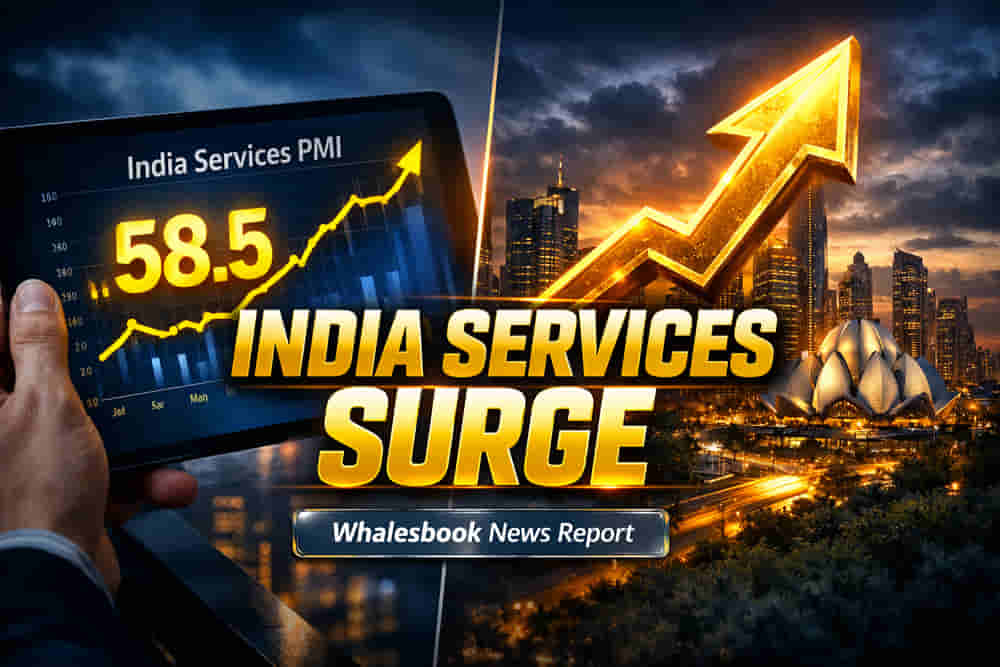
The Shifting Services Landscape
India's services sector commenced 2025 with notable momentum, as indicated by a climb to a two-month high in activity during January. The HSBC India Services PMI Business Activity Index reportedly reached 58.5, an increase from December's 58.0, signaling accelerated output and new business growth. This expansion was fueled by buoyant demand conditions, a steady influx of new orders, and strategic investment in technology. Respondents highlighted gains in both domestic and international markets, with notable new business originating from South and Southeast Asia, among other regions. Business confidence also saw a rise, reaching a three-month high, attributed to efficiency gains and client acquisition. Nevertheless, the interpretation of the January PMI data presents a complex picture. While the provided survey data suggests an uptick to 58.5, some contemporary reports indicated a decline to 58.5 from a higher figure in the previous month, or a different overall index value for January, suggesting a divergence in reported figures and adding a layer of complexity to the assessment of the sector's precise growth rate.
Despite these reporting variations, the underlying drivers of growth appear consistent. Service providers expanded their operational capacity and increased staffing levels in response to rising business volumes. Future activity sentiment improved, although price pressures, particularly in consumer services, saw moderate increases, while the finance and insurance sector experienced stronger selling price rises.
Benchmarking and Macroeconomic Context
Globally, the economic expansion accelerated at the end of 2024, though with regional disparities. Developed markets saw improved growth, while emerging markets experienced a deceleration, with India noted as a leader among BRIC economies. In contrast, the U.S. services PMI indicated slower expansion in January 2026. India's manufacturing sector also demonstrated strength, with its Purchasing Managers' Index (PMI) reaching a six-month high in January 2025, driven by robust domestic and export demand, and significant job creation. While the manufacturing PMI in February 2025 saw a slight moderation, overall industrial activity remained a positive contributor. India's overall economic trajectory for fiscal year 2025-2026 was projected to be robust, with GDP growth estimates ranging between 7.5% and 7.8%. This was supported by strong domestic demand and policy reforms. Inflation, a key macroeconomic indicator, saw a marked decline, with CPI inflation falling to 4.31% in January 2025 and further to 3.61% in February, creating a favorable environment for sustained economic activity and potentially allowing for further monetary easing.
Analyst Outlook and Future Trajectory
Analysts maintain a largely optimistic view on India's services sector and the broader economy. The consistent expansion in services, a sector contributing approximately 55% to India's Gross Value Added (GVA), is seen as a stabilizing force. Projections suggest continued growth, driven by technological adoption, digital integration, and increasing export-oriented services models. Pranjul Bhandari, Chief India Economist at HSBC, emphasized the robust output growth driven by new orders and international demand. The forward-looking sentiment among service providers, buoyed by efficiency gains and new client acquisitions, suggests sustained positive momentum. The economic survey for 2025-26 highlighted the services sector's role as a key engine for growth and innovation amidst global uncertainties. While the data ambiguities around the January PMI figures warrant careful monitoring, the underlying economic fundamentals, coupled with positive analyst sentiment, point towards continued expansion for India's services sector.