 Whalesbook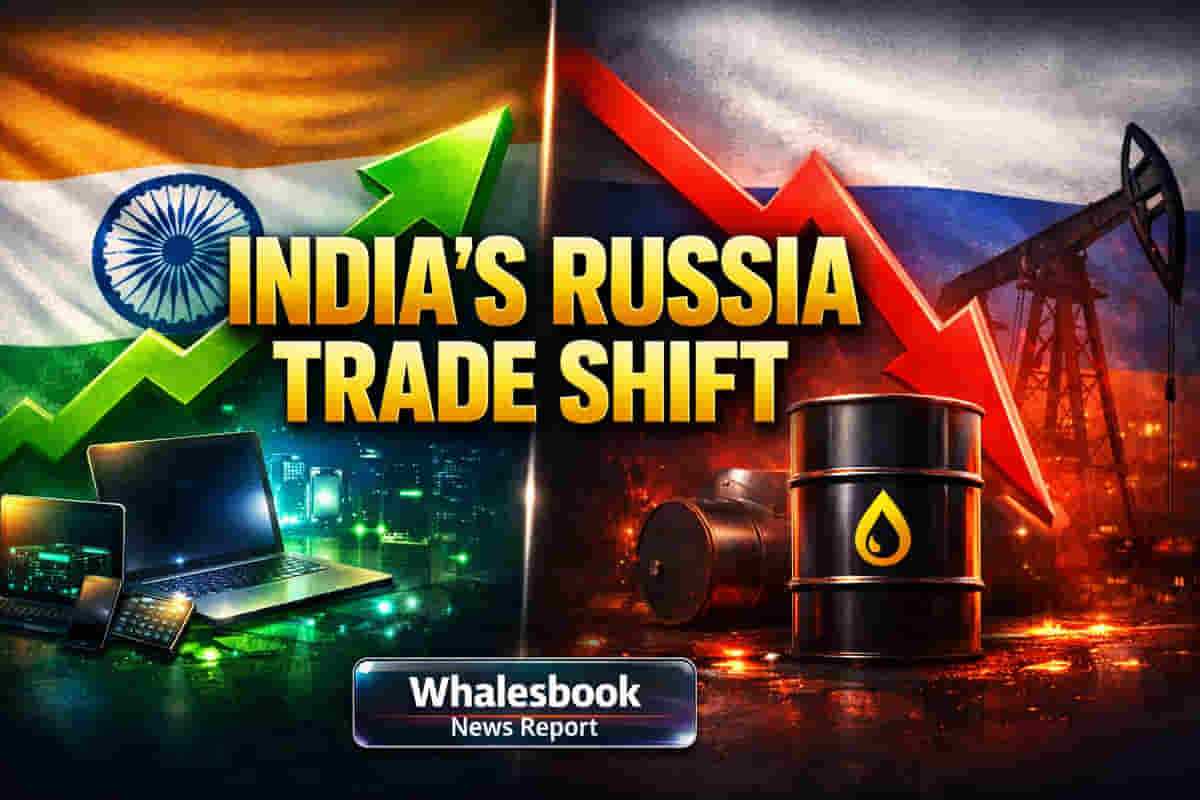
India's Strategic Pivot: Shifting Away from Russian Crude Oil
India is set to significantly alter its long-standing trade relationship with Russia, particularly concerning energy imports. As the new year approaches, a notable shift is underway, with crude oil imports from Russia anticipated to face a sharp reduction starting from December 2025. This strategic move signals India's intent to diversify its energy sources away from a single major supplier.
New Horizons for Energy Supply
Indian refiners are actively pivoting towards alternative suppliers, looking towards the Middle East, Latin America, West Africa, Canada, and the United States. This diversification strategy has already seen results, with the United States emerging as India's fourth-largest crude supplier in October 2025, surpassing the United Arab Emirates. While Russian crude volumes may not disappear entirely, they are expected to become less dominant, potentially flowing through intermediaries and more complex trade channels.
The future volume of Russian oil imports could also be influenced by external factors, such as potential US tariffs on Russian energy purchases or any future geopolitical developments that alter the existing sanctions landscape.
Trade Dynamics Beyond Energy
While energy remains a dominant factor, India and Russia are broadening their economic engagement across other sectors. Bilateral goods trade has experienced remarkable growth, achieving a staggering 70% compound annual growth rate between fiscal years 2021 and 2025. In the last fiscal year, this trade reached $68.7 billion.
However, this surge in trade has been accompanied by a significant imbalance. India's trade deficit with Russia has widened considerably, increasing nearly twentyfold to $58.9 billion in fiscal year 2025. This widening gap is primarily driven by energy imports, which constitute 89% of India's total imports from Russia, including crude oil, petroleum products, and coal.
Diversifying Exports and Defence Ties
On the export front, India's basket of goods sent to Russia is showing early signs of evolution. Shipments of computers and laptops have risen dramatically from negligible levels in FY2021 to account for 11% of India's total exports to Russia by FY2025. This indicates a gradual diversification, although the overall trade remains overwhelmingly energy-dependent.
Defence cooperation continues to be a central pillar of the bilateral relationship. India has a history of licensed production of Russian military equipment, such as over 200 Su-30MKI fighter jets manufactured by Hindustan Aeronautics Limited (HAL). The joint venture BrahMos Aerospace remains active, and discussions are ongoing for potential co-development projects and the acquisition of advanced defence systems.
Impact
This strategic recalibration in India's trade with Russia could significantly impact India's energy security, its balance of payments, and its geopolitical positioning. While diversifying energy sources may lead to more stable supply chains and potentially better pricing, it also necessitates strengthening relationships with new partners and managing the growing trade deficit. The defence sector's continued strength highlights the enduring strategic ties between the two nations, irrespective of energy trade shifts. The potential for indirect Russian energy flows adds a layer of complexity to the evolving trade landscape.
Impact Rating: 7/10