 Whalesbook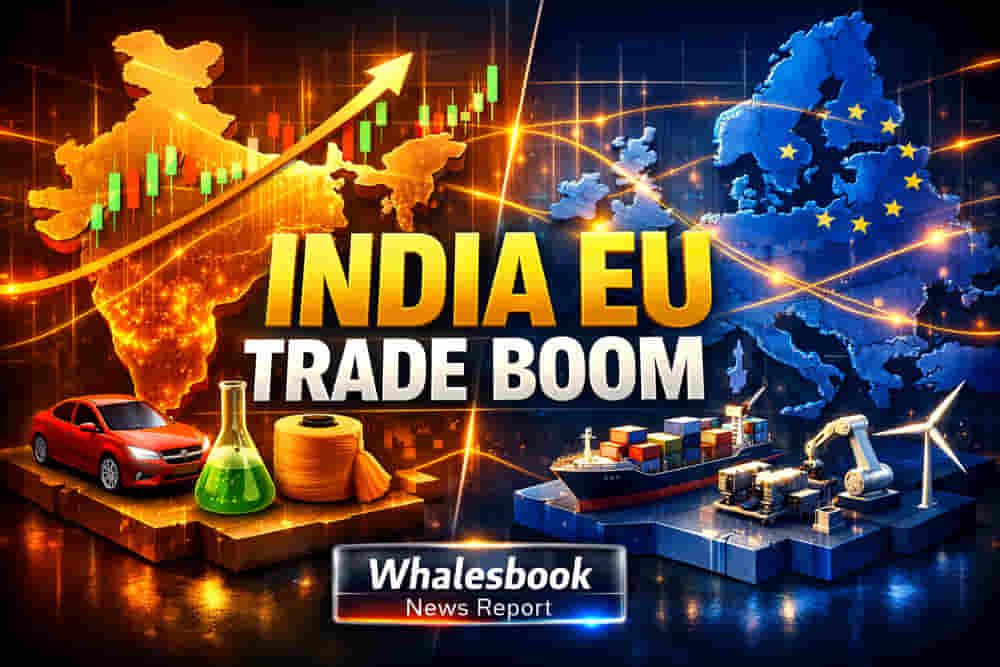
1. THE SEAMLESS LINK (Flow Rule):
The agreement's primary impetus is an "export-first" bias, designed to leverage India's manufacturing capabilities by dramatically reducing import duties for its goods into the European Union. This trade reset, after two decades of negotiation, aims to propel India's export economics, particularly in manufacturing-heavy sectors. While tariff cuts are substantial, their full impact will be modulated by phased implementation and the ongoing challenge of non-tariff barriers.
2. THE STRUCTURE (The 'Smart Investor' Analysis):
The Export Imperative: Sectoral Gains and Parity
The India-EU Free Trade Agreement (FTA) positions numerous Indian industries for enhanced global competitiveness. For the textile sector, zero-duty access to the EU market corrects a long-standing disadvantage, placing Indian apparel and home textile exporters on equal footing with rivals like Bangladesh and Vietnam, who previously benefited from preferential treatment while Indian goods faced tariffs up to 9.6%. In automotive components, the FTA is poised to deepen India's integration into European supply chains by easing market access, building on historical EU tariffs that often ranged between 2% and 5% for such parts. The chemical and pharmaceutical sectors are also set to gain significant pricing advantages, especially as the EU represents nearly a quarter of India's organic chemical exports and serves as a major destination for its pharmaceutical products. While the pact includes provisions to lower tariffs on select European luxury vehicle imports via quotas, its immediate effect on India's mass-market automobile segment and electric vehicles remains limited for the initial five-year period.
Navigating New Headwinds: CBAM and Market Realities
Despite the broad tariff reductions, certain Indian exports face significant non-tariff barriers. Steel producers are particularly vulnerable to the EU's Carbon Border Adjustment Mechanism (CBAM), a carbon pricing system for imported goods that operates outside the FTA's scope. CBAM is designed to equalize the cost of carbon emissions between domestic and imported products, potentially offsetting any tariff benefits for Indian steel exports based on their production's carbon footprint. Adding to this complexity, forecasts for early 2026 suggest a cautious European consumer spending environment, influenced by stabilized but still sensitive inflation rates and potential energy price volatility. This macro backdrop necessitates that Indian exporters not only meet tariff objectives but also adapt to evolving global sustainability standards and demand patterns.
Historical Echoes and Competitor Footprints
Past trade agreements negotiated by India, such as those with ASEAN and the UAE, have demonstrated a positive correlation with increased bilateral trade volumes and export growth in specific sectors. However, these pacts also sometimes exposed domestic industries to intensified import competition, underscoring the importance of phased liberalization and robust domestic sector support. Analyst consensus remains cautiously optimistic regarding the FTA's potential to boost India's manufacturing export trajectory. Their outlook emphasizes the need for diligent execution, scaling of production capacity, and proactive adaptation to meet the stringent quality and sustainability benchmarks demanded by European markets, alongside navigating potential global economic slowdowns and geopolitical risks. The overall bilateral trade, already standing at approximately USD 137 billion and growing at a 7% CAGR, has substantial room for further expansion as these tariff cuts materialize.
3. THE FUTURE OUTLOOK:
The India-EU FTA marks a strategic commitment to elevating India's manufacturing export profile. Its success hinges on the nation's agility in addressing non-tariff barriers like CBAM, leveraging comparative advantages in key sectors, and aligning production with global sustainability imperatives. While the agreement provides a stronger foundation for engagement with the European market, proactive industrial strategy will be crucial to fully capitalize on the opportunities and mitigate emerging challenges.