 Whalesbook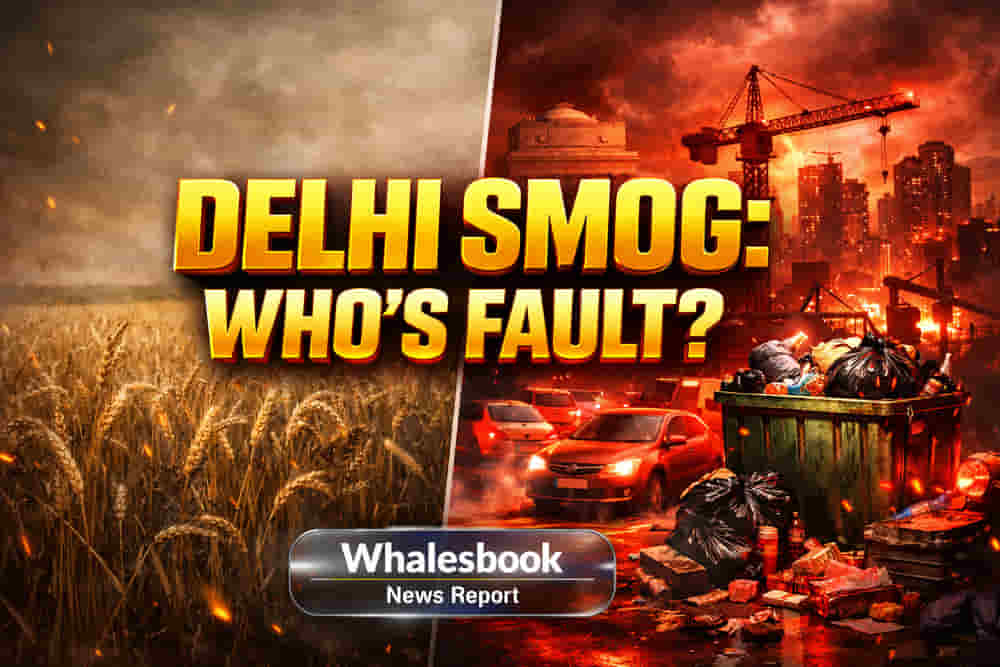
Urban Governance Failure Exacerbates Delhi's Air Crisis
Delhi's air quality has plunged in recent weeks, contradicting the notion that crop residue burning by farmers in neighboring states is the primary cause of pollution. This aligns with a November 15, 2021, Supreme Court observation suggesting stubble burning is not the main driver of Delhi's smog.
Official data and satellite monitoring reveal a significant decline in crop residue burning incidents in Punjab and Haryana this year. Stricter oversight and increased availability of residue-management machinery have substantially reduced these fires compared to peak periods in the late 2010s.
Vehicular Emissions Dominate Pollution Load
Pollution in Delhi is predominantly an urban governance issue. Vehicular emissions stand as the single largest contributor. The city's fleet of over 13 million registered vehicles, growing by 6-7 lakh annually, outpaces infrastructure development and public transport capacity. Transport-related emissions account for approximately one-third of the city's PM2.5 burden, fueled by diesel vehicles, nocturnal truck traffic, and lax emission norm enforcement.
Construction and Waste Burning Worsen Air Quality
Construction activities, spanning infrastructure, housing, and commercial projects, are another major polluter. Dust from these sites, along with road dust, contributes over 20 percent to particulate pollution. Compliance with dust-control measures remains inconsistent. Furthermore, open municipal waste burning and widespread use of diesel generator sets significantly degrade air quality.
Meteorology Amplifies, Not Creates, Pollution
Winter meteorological conditions, characterized by low wind speeds and temperature inversions, trap pollutants near the ground, leading to acute spikes in the Air Quality Index (AQI). However, these weather patterns merely amplify existing pollution levels generated within the city and its vicinity.
Political Convenience vs. Policy Reality
Studies indicate that stubble burning contributes only 10-20 percent to Delhi's PM2.5 levels, even during peak burning weeks. Blaming farmers offers a politically expedient deflection from difficult urban reforms, shifting blame to a less influential group compared to urban polluters. While stubble burning should not be ignored, farmers resort to it due to cost and time constraints within narrow sowing windows. Mechanized harvesting leaves stubble, and the short inter-harvest period can impact yields if missed.
The Path to Cleaner Air Lies Inward
For Delhi to achieve cleaner air, it must confront its internal pollution sources. Solutions include curbing private vehicle growth, discouraging diesel transport, phasing out older polluting vehicles, expanding public transit, strictly regulating construction, eliminating waste burning, and enforcing pollution norms universally. Shutting down nearby thermal power plants would also offer relief.
Long-term structural reforms are essential, superseding emergency measures like the Graded Response Action Plan. Pointing fingers across state borders or blaming wind conditions distracts from the core problem. Delhi's residents will continue to suffer unless the city accepts responsibility for its emissions and acts decisively. Consideration of a winter capital status could also alleviate pollution pressure during critical months.