 Whalesbook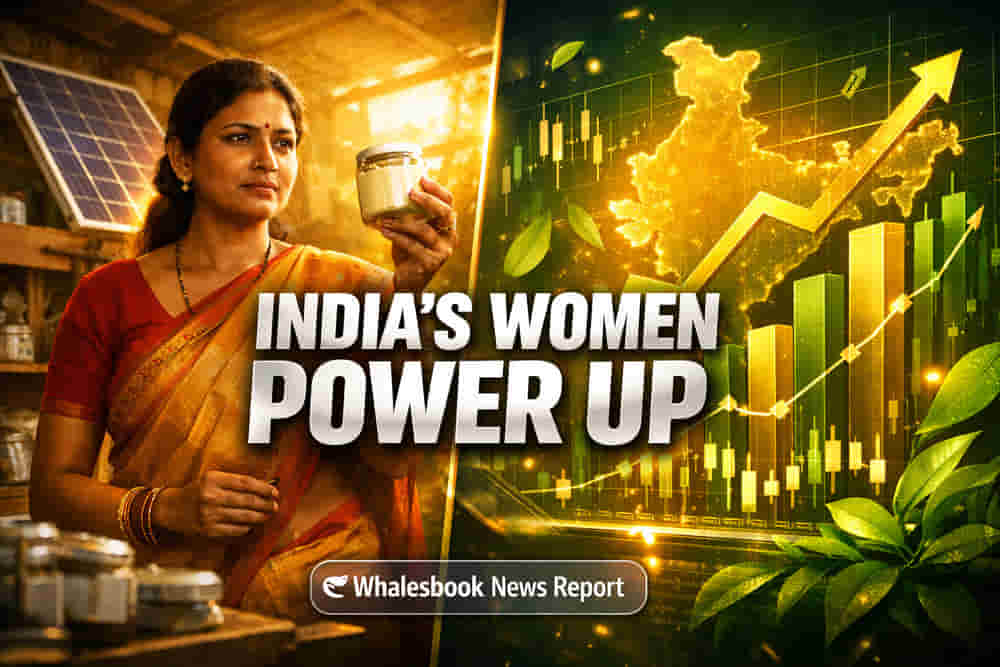
India's Economic Outlook Enhanced by Women Entrepreneurs Leveraging Clean Energy
The nation's drive towards developed status, encapsulated in the 'Viksit Bharat @ 2047' vision, hinges significantly on accelerating women's economic participation. For millions of women operating micro and small enterprises across India, reliable access to essential inputs like power has historically been a major impediment to growth. However, a discernible trend is emerging where decentralized clean energy solutions are acting as powerful catalysts, transforming individual businesses and contributing to broader economic resilience and climate goals.
The Productivity Surge
Women entrepreneurs in rural India are finding that overcoming energy constraints through solar power directly translates into tangible economic gains. Power cuts previously dictated business hours, inflated operational costs, and capped production potential. With dependable solar energy, units can operate longer and more consistently. For instance, some entrepreneurs have reported increased monthly incomes ranging from ₹7,000 to ₹8,000, while others have seen daily income rise by as much as 40%. This enhanced productivity allows for more timely order fulfillment, client satisfaction, and subsequent business expansion, effectively turning clean energy access into a vital business asset. India aims to achieve 500 GW of non-fossil fuel energy capacity by 2030, underscoring the national commitment to renewable energy expansion.
The Systemic Exclusion
Despite possessing the capability and facing market demand, a substantial majority of women-led enterprises, estimated at nearly 80%, remain concentrated in low-scale, low-return sectors. This stagnation is largely attributed to systemic exclusion, particularly in accessing formal finance. Globally, women-led businesses face an estimated $1.7 trillion credit gap. In India, this challenge is acute, with approximately 90% of women entrepreneurs never having accessed formal financing. Barriers include limited collateral, thin credit histories, restrictive social norms, and financial products that are not designed to cater to their specific needs, even when these enterprises demonstrate strong economic and environmental returns. Climate finance, in particular, has often failed to reach these entrepreneurs. The current women's labor force participation rate in India hovers around 23-24%, indicating a significant untapped economic demographic.
The Scalable Solution
Evidence from on-the-ground initiatives demonstrates that aligning clean energy access with finance and enterprise support yields immediate and measurable results. Programs like Uttar Pradesh's ‘Decentralised Energy for Women’s Economic Empowerment-DEWEE’ initiative, supported by local institutions and development partners, integrate clean energy deployment with livelihood enablement and gender-responsive financing. This model has been recognized in the Government of India’s Economic Survey, highlighting its effectiveness and relevance for national policy. Such community-based platforms, especially in rural areas, offer a pathway to simultaneously address energy reliability, enterprise productivity, and employment generation. Collaborations involving banks, microfinance institutions, non-banking financial companies, and climate funds are crucial for de-risking lending, lowering capital costs, and expanding financial access. Public-private-philanthropic partnerships can further de-risk lending and accelerate scale by demonstrating viability.
Broader Economic Imperatives
Unlocking the full potential of women's entrepreneurship could add significantly to India's GDP, with estimates suggesting up to $700 billion by 2025 could be realized. This economic upside is not merely a social objective but a core driver for national development, resilience, and achieving the 'Viksit Bharat' vision. By strategically aligning finance, decentralized clean energy, and enterprise support through existing national platforms, India can foster more inclusive, resilient, and sustainable growth. These solutions are moving beyond theory, delivering measurable gains and presenting a clear opportunity for accelerated national progress.