 Whalesbook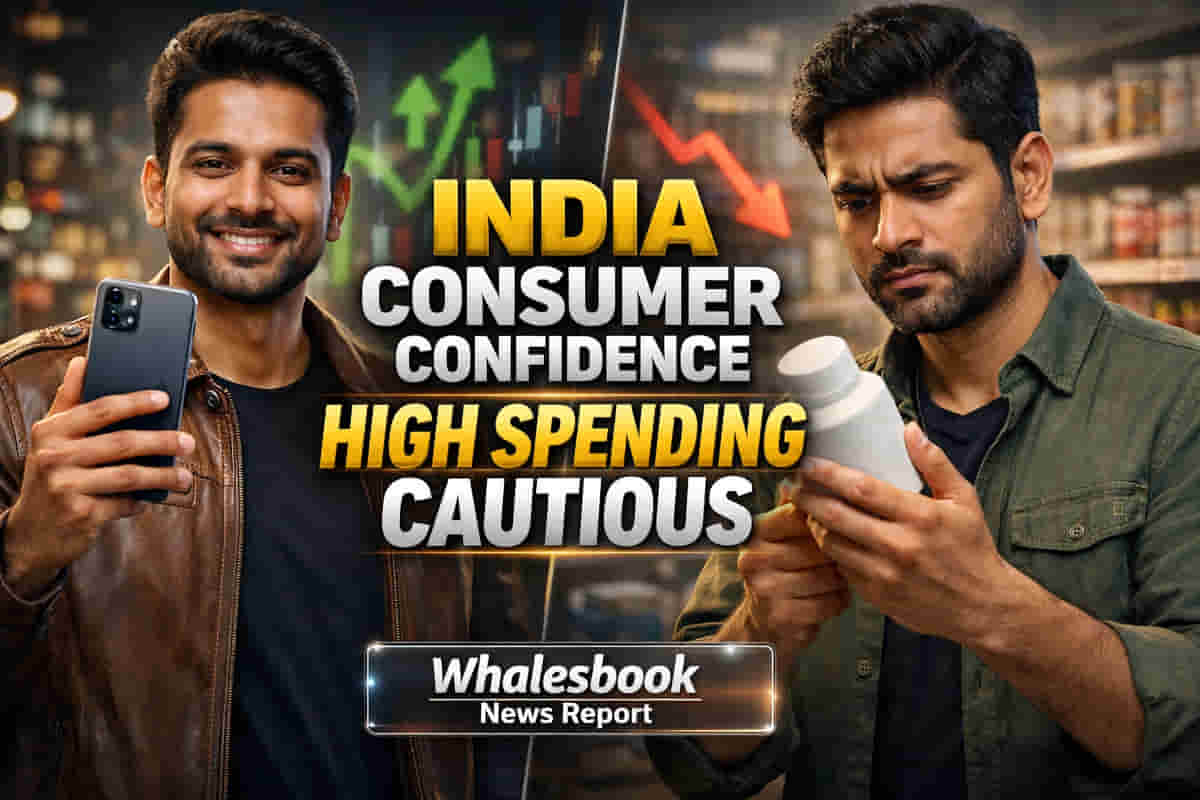
India's Consumption Narrative: Confidence High, Spending Cautious
India's consumption story shows a stark contrast as the year concludes: record consumer confidence globally is juxtaposed with cautious spending and an uneven recovery in mass markets. While premium categories are booming, especially in urban centers, broader sales growth has softened after a brief festival-season lift, raising concerns for the upcoming fiscal year.
The Core Issue
The festive optimism of October, which saw a slight uptick in same-store sales growth (SSSG) for discretionary items, has faded. Elara Securities reports that SSSG turned negative in November and December, slipping by 1-4%. This indicates a lack of material recovery, leading analysts like Karan Taurani to suggest that projected Q4 growth of 5.3% may be overly optimistic, potentially prompting a 2.4% cut in FY26 revenue estimates.
The Premiumization Trend
A significant undercurrent is the ongoing trend of premiumization, particularly in urban discretionary spending. Consumers are increasingly opting for higher-value items. Data from Croma reveals a substantial shift, with a third of smartphones sold costing between ₹20,000 and ₹30,000, and nearly a fifth being high-end or flagship models. Price segments above ₹50,000 saw over 300% year-on-year growth. This pattern extends to laptops, which posted strong double-digit growth, with gaming laptops surging over 25%. Even in appliances, smart ACs constituted 32% of sales, and all-season models gained traction due to efficiency benefits.
Consumer Sentiment vs. Spending
Consumer sentiment remains exceptionally strong, with 61% of Indians expecting "continuous good times," according to BCG. Only 17% fear geopolitical tensions impacting growth. Furthermore, 60% anticipate increased household spending in the next six months. However, this high confidence has not broadly translated into volume growth for all sectors. Value-driven categories, such as fashion, have experienced noticeable slowdowns, with like-for-like growth decelerating over the past 12-18 months.
Rural Hopes and Innovation
FMCG companies like Dabur India are pinning their hopes on a gradual pickup in rural demand. CEO Mohit Malhotra notes improvements driven by better farm incomes and distribution. He anticipates India's consumption outlook will be fueled by rising affluence, rural strength, demographic advantages, and technological advancements. Companies like HSIL Limited are focusing on sophisticated, IoT-enabled, and energy-efficient appliances, reflecting a consumer shift towards design, hygiene, and long-term value over basic functionality.
Future Outlook
The outlook for FY26 remains cautiously optimistic. HSIL Limited CEO Nirupam Sahay expects growth in premium bathroom fittings and connected kitchen appliances, primarily driven by Tier 1 and Tier 2 cities benefiting from housing activity and rising aspirations. Dabur India sees a progressive uptick led by rural resurgence.
Impact
This uneven consumption pattern creates a bifurcated market. Companies focused on premium, tech-enabled, and aspirational products are likely to benefit, while those reliant on mass-market volume growth might face headwinds. The rural segment presents a significant opportunity for volume-led expansion. Investors will need to closely watch which companies can effectively tap into premiumization and rural demand while managing cost efficiencies.
Impact Rating: 7/10
Difficult Terms Explained
- Same-Store Sales Growth (SSSG): A measure of sales growth for stores that have been open for at least one year, used to assess performance without the influence of new store openings.
- Premiumization: The trend where consumers increasingly opt for higher-priced, higher-quality, or more sophisticated versions of products and services.
- Flagship/Super-Flagship: Refers to the highest-end, most advanced, and often most expensive models in a product line, such as smartphones or laptops.
- IoT-enabled: Internet of Things, meaning devices that can connect to the internet and communicate with each other or be controlled remotely.
- FMCG: Fast-Moving Consumer Goods, everyday items like packaged foods, toiletries, and beverages that are sold quickly and at relatively low cost.
- GST 2.0: Goods and Services Tax reform, potentially referring to further refinements or changes to the existing tax structure aimed at improving efficiency.
- Like-for-like growth: Similar to SSSG, it measures growth in revenue from existing operations, excluding new acquisitions or expansions.