 Whalesbook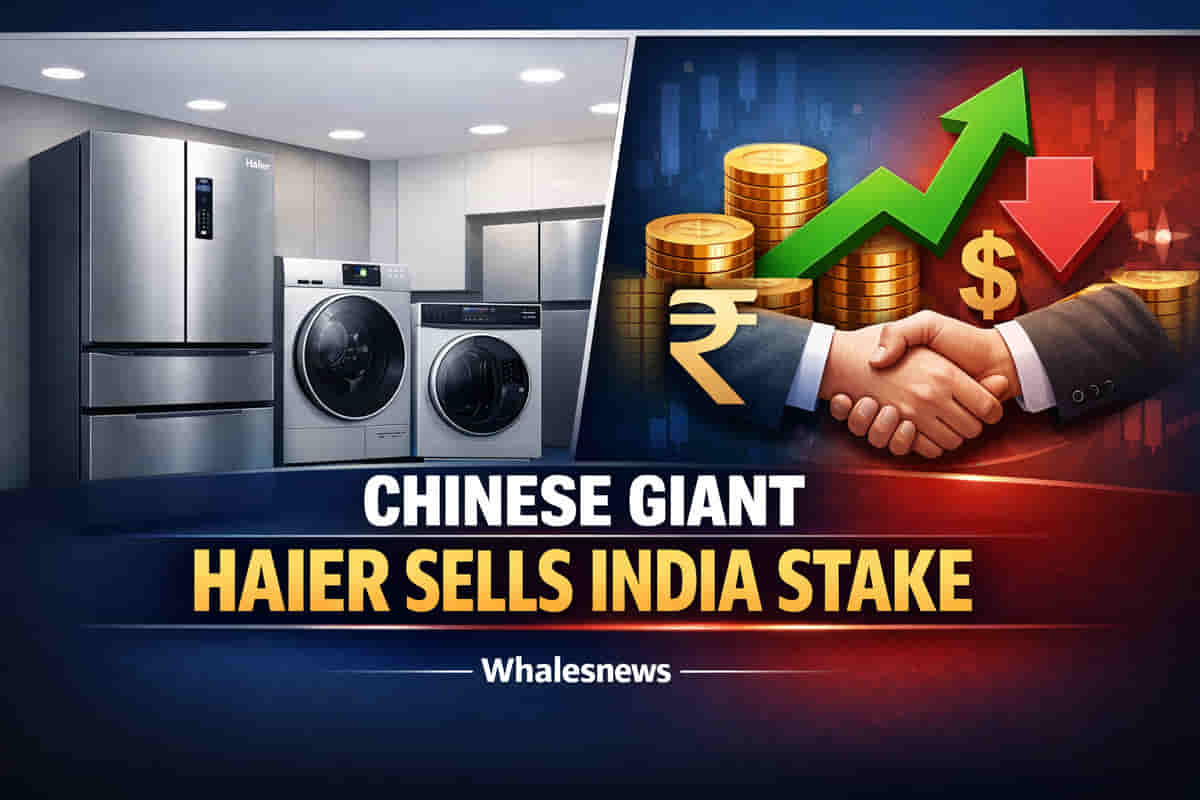
Haier India Sells Majority Stake in Landmark $1.5 Billion Deal
A significant shift in foreign investment strategy is unfolding in India, as Chinese appliance major Haier has divested a 49 percent stake in its Indian subsidiary, Haier India. The transaction, valued at $1.5 billion, sees the Bharti-Warburg Pincus consortium taking a majority ownership, leaving Haier with a minority stake of 49 percent in its Indian operations.
The Core Issue: Trading Control for Market Access
This deal echoes global trends observed recently, notably with the US-China TikTok situation. It highlights a growing acceptance among Chinese firms of surrendering control over their overseas subsidiaries in exchange for vital market access. This strategy is particularly relevant as China faces economic pressures, including a need to transition towards consumption-led growth and manage excess manufacturing capacity.
Financial Implications and Private Equity's Role
The $1.5 billion valuation for Haier India underscores the subsidiary's growing market share in the competitive household appliances segment, which includes freezers, refrigerators, washing machines, and air conditioners. The deal also emphasizes the increasing role of private equity firms like Warburg Pincus, which often act as geopolitical buffers, facilitating complex cross-border transactions and providing stability amidst international tensions.
Regulatory Navigation and Policy Questions
Haier India's deal was reportedly achieved through the strategic withholding of bureaucratic approval for capital infusion under India's Press Note 3, a Foreign Direct Investment (FDI) screening mechanism introduced during the Covid-19 era. This approach contrasts with the legislative action seen in the TikTok case. The move has raised questions about India's policy framework for foreign investment, particularly from Chinese entities.
Broader Geopolitical and Economic Context
From a bilateral perspective, the Haier deal can help stabilize India-China economic ties, which have been gradually improving. China's government approval suggests a pragmatic acknowledgement of India's importance in the global market share of certain industries for Chinese players. This development also provides some relief to countries concerned about China's massive trade surplus and its impact on global manufacturing.
Future Outlook and Investor Confidence
Experts suggest that such "Trump-style bargains" may become more common for Chinese companies with international ambitions. However, the tactics employed in the Haier deal, keeping the FDI application in abeyance for an extended period, might raise concerns among foreign investors regarding India's investment attractiveness and policy predictability. There is a call for India to develop a more rigorous and transparent model for engaging with Chinese industries, learning from global best practices while pursuing its own nation-building ambitions.
Impact
This news could influence investor sentiment towards Indian subsidiaries of foreign companies, particularly those with Chinese parentage. It highlights the complex interplay of economic opportunity, geopolitical considerations, and regulatory frameworks in foreign direct investment. The effective use of Press Note 3 could signal a more assertive stance by Indian policymakers in managing FDI, potentially impacting future cross-border deals. The deal also indirectly affects the Indian consumer appliance market by potentially altering competitive dynamics and capital flows.
Impact Rating: 7/10
Difficult Terms Explained
- FDI (Foreign Direct Investment): An investment made by a firm or individual in one country into business interests located in another country.
- Press Note 3: A clause under India's FDI policy that requires government approval for investments from countries sharing a land border with India, primarily aimed at screening Chinese investments.
- Private Equity (PE): Investment funds that are privately held and not publicly traded, often used by institutional investors to invest in companies.
- Geopolitical Buffer: An entity or mechanism that helps mitigate risks arising from political tensions or disputes between countries.
- Multilateral Trade and Investment Frameworks: International agreements and organizations that govern global trade and investment, such as the World Trade Organization (WTO).
- Consumption-Led Growth: An economic strategy where consumer spending drives overall economic expansion.
- Export Growth Model: An economic strategy where increased production for export markets is the primary driver of economic growth.
- Bilateral Perspective: The viewpoint or relationship between two specific countries.
- National Security: The protection of a nation's interests against threats from other nations or entities.
- Self-Reliance: The ability of a country to meet its own needs without external help.