 Whalesbook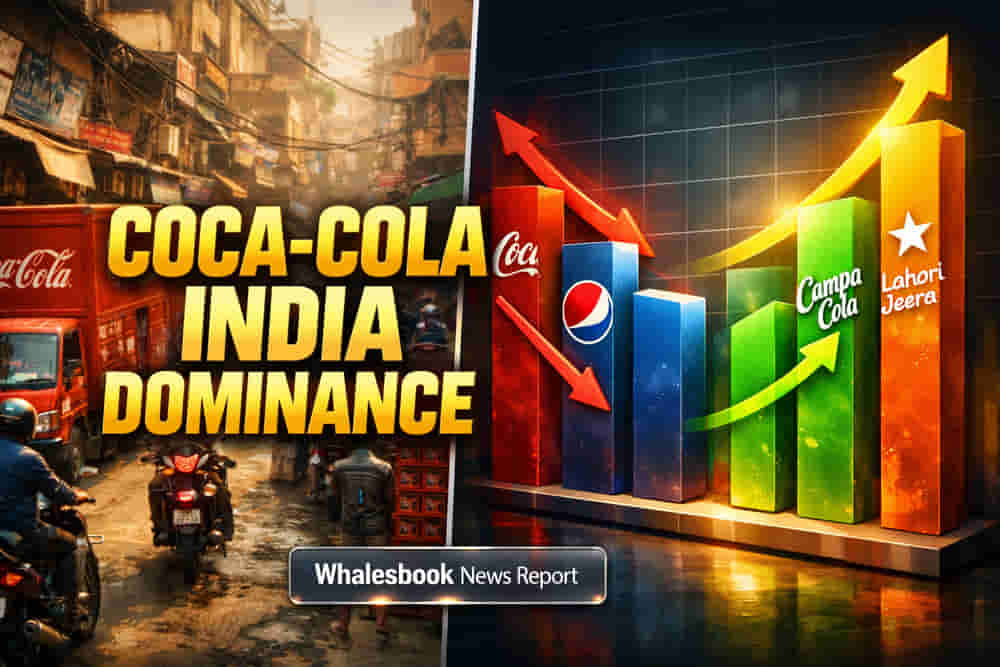
Coca-Cola Mobilizes Micromobility for India Expansion
Coca-Cola India is significantly boosting its direct distribution network, employing a fleet of smaller vehicles including bikes, electric vans, and other micromobility options. This initiative targets direct delivery to retail stores, especially in India's dense, narrow lanes and hard-to-access neighborhoods, aiming to sharpen its last-mile reach.
The strategy is designed to reduce reliance on traditional wholesale channels, providing the beverage giant with greater control over operational costs and profit margins. While rapid quick commerce growth remains a complementary, smaller segment of its distribution, Coca-Cola stated it is "investing heavily" to bolster its direct access capabilities, though specific financial figures were not disclosed.
Scale and Ambition in a Competitive Market
With a vast footprint in India, Coca-Cola serves nearly six million retail outlets and utilizes a fleet exceeding 5,000 electric vehicles for distribution. John Murphy, the company's chief financial officer, highlighted the substantial opportunity for expanded direct reach in untapped retail locations, expecting significant traction in the coming year. He also noted the broader digitization of the Indian economy as a beneficial trend for their business.
This intensified focus on direct-to-store routes coincides with a surge in competition from local challengers. Brands like Reliance-backed Campa Cola and Lahori Jeera have rapidly increased their combined market share in the carbonated soft drinks segment. NielsenIQ data indicates their share grew to nearly 15% in January-September 2025, up from about 7% a year prior.
Market Share Shifts and Industry Response
The rise of these local competitors has notably eroded the dominance of incumbents. The combined market share of The Coca-Cola Company and PepsiCo in India's ₹60,000-crore soft drinks market declined from approximately 93% to around 85% over the same period. This competitive pressure forces established players to innovate and adapt their strategies swiftly.
Other fast-moving consumer goods (FMCG) companies are also reassessing their distribution models. ITC Ltd., for instance, recently discontinued its in-house e-commerce platform, opting instead to leverage third-party platforms to optimize reach and costs. This broader trend reflects a dynamic retail environment where agility and efficiency are paramount.
Financial Outlook and Healthier Choices
The operational landscape for Coca-Cola's Indian bottler, Hindustan Coca-Cola Beverages (HCCB), has seen fluctuations. HCCB reported revenues of ₹12,751 crore for FY25, a 9% year-on-year decline, partly due to the sale of several manufacturing plants. Despite this, HCCB is preparing to tap capital markets with plans to raise approximately $1 billion through an Initial Public Offering (IPO) this summer.
Furthermore, Coca-Cola is adapting to the growing consumer preference for healthier options. The visibility and sales of low- and zero-calorie beverages like Diet Coke and Coke Zero are increasing, supported by innovation in offerings such as Thums Up XForce and Sprite Zero. This strategic adjustment aligns with broader market trends and evolving consumer demands in India.