 Whalesbook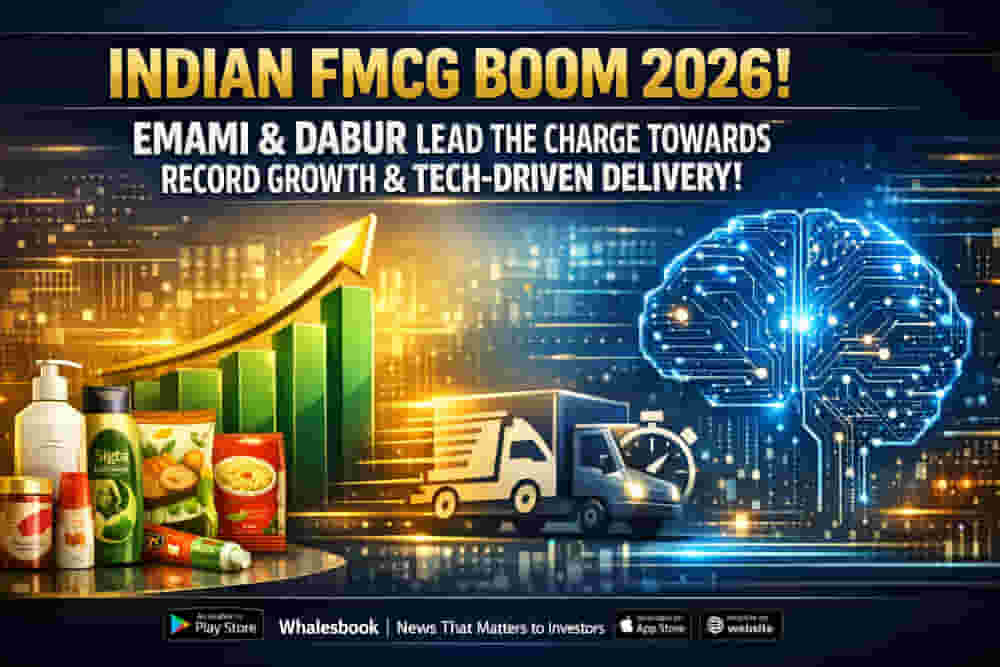
Indian FMCG Poised for Strong Comeback in 2026 Amid Policy Tailwinds and Tech Adoption
The Indian Fast-Moving Consumer Goods (FMCG) industry is gearing up for a promising 2026, with expectations of high single-digit volume growth, enhanced profit margins, and a significant recovery in urban demand. Analysts and industry leaders point to supportive policy measures, benign commodity prices, and substantial investments in technology as key drivers for this anticipated rebound.
Optimistic Outlook for 2026
Industry experts foresee 2026 as a favourable year for Indian FMCG companies. This optimism is largely fueled by policy tailwinds, including anticipated tax reliefs and Goods and Services Tax (GST) reforms, alongside stable commodity prices. Companies are looking forward to a substantial improvement in gross margins, which will empower them to increase investments in advertising and brand building.
Driving Growth Through Technology
A significant shift is underway as FMCG firms are increasingly investing in new technologies. These investments span automation, advanced analytics, and Artificial Intelligence (AI) for sophisticated demand forecasting. Enhancements in supply chain optimisation and the implementation of AI for personalized consumer engagement are also high on the agenda. The rise of same-day and 10-30 minute quick-commerce deliveries is becoming a critical component of omnichannel growth strategies, catering to evolving consumer needs for speed and convenience.
Evolving Consumer Preferences and Media Strategies
The trend of premiumisation is expected to continue, with consumers showing a preference for quality, indulgence, and wellness products. Categories offering unique benefits are anticipated to outperform. However, companies must adapt their media strategies as traditional channels are losing ground to digital platforms. Emami Vice Chairman & MD Harsha Vardhan Agarwal noted that digital-first, personalized, and performance-led platforms are gaining prominence, necessitating a rethink of media mix and engagement strategies.
Challenges in Volume Growth
Despite the positive outlook, concerns linger regarding the pace of volume growth. Godrej Consumer Products MD & CEO Sudhir Sitapati expressed puzzlement over the FMCG sector's volume growth averaging 4-5% while GDP grows at 7-8% over the past few years. While rural demand has shown recovery, urban consumption has been relatively slow, though proponents believe GST 2.0 and income tax reductions could significantly boost urban spending.
Policy Support and Market Drivers
Government initiatives like GST reforms and income tax reductions are expected to provide a substantial boost to consumption. Dabur India CEO Mohit Malhotra highlighted growing affluence, rural demand, India's rich demographic dividend, and technological advancements as major forces reshaping FMCG consumption. The young demographic, favouring experiential and lifestyle purchases, alongside a growing middle class willing to pay a premium for high-quality products, will continue to drive demand.
Company-Specific Projections
Leading companies are outlining ambitious plans. Emami anticipates recovery in the latter half of FY26, paving the way for double-digit growth in FY27. DS Group has already surpassed a ₹10,000 crore turnover milestone and expects robust revenue growth in 2026, supported by recovering urban demand and resilient rural consumption, despite competition and monsoon risks.
Impact
The expected resurgence in the Indian FMCG sector is poised to positively impact listed companies, potentially leading to increased revenues, improved profitability, and higher stock valuations. For consumers, this translates to greater product availability, enhanced shopping experiences through digital channels and quick commerce, and potentially a wider range of premium products. The overall Indian economy stands to benefit from strengthened consumption, a key driver of GDP growth.
- Impact Rating: 8/10
Difficult Terms Explained
- FMCG (Fast-Moving Consumer Goods): Products that are sold quickly and at a relatively low cost. Examples include packaged foods, beverages, toiletries, and other expendable household items.
- GST (Goods and Services Tax): A comprehensive indirect tax levied on the supply of goods and services, replacing multiple indirect taxes.
- Gross Margins: The profit a company makes after deducting the costs associated with making and selling its products, before accounting for operating expenses, interest, and taxes.
- AI-driven Demand Forecasting: Using artificial intelligence algorithms to predict future customer demand for products or services with greater accuracy.
- Supply Chain Optimisation: Improving the efficiency and effectiveness of the entire process of producing and distributing goods, from raw materials to the final customer.
- Quick-Commerce Deliveries: A rapid delivery service, typically for groceries and convenience items, promising delivery within a very short timeframe, often 10-30 minutes.
- D2C (Direct-to-Consumer): A business model where a company sells its products directly to the end consumer, bypassing traditional retail intermediaries.
- Premiumisation: A trend where consumers opt for higher-priced, higher-quality, or more luxurious versions of products or services.