 Whalesbook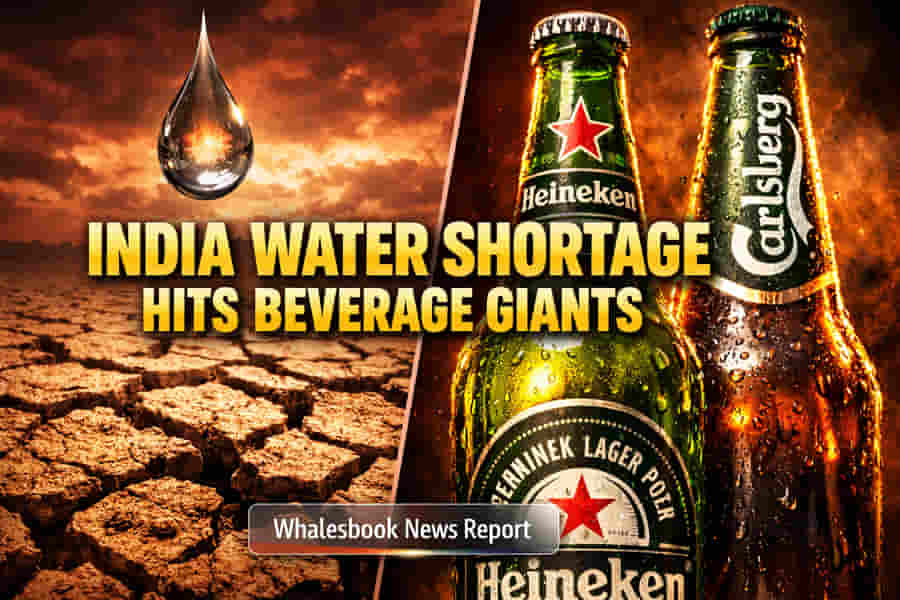
The Brewing Storm: Beverage Giants Battle India's Water Crunch
Global beverage leaders Heineken, Carlsberg, and Diageo are confronting a critical challenge in India: securing sufficient water for their operations. This issue is particularly acute in Rajasthan, a state grappling with extreme water stress and complex regulatory landscapes. Companies must navigate dwindling groundwater, stringent government rules, and local community concerns over water access.
Rajasthan's Arid Reality
Rajasthan, largely covered by the Thar Desert, faces severe water scarcity. Its groundwater extraction ranks among the highest in India, creating immense pressure to balance the needs of its 85 million residents, a booming tourism sector, agriculture, and burgeoning industry. Laws mandating production within each state for liquor sales force these global giants to maintain factories even in water-stressed regions like Rajasthan to serve the local market.
Financial and Operational Pressures
The scarcity directly impacts operational costs and future expansion plans. Companies are compelled to invest heavily in water efficiency technologies and water replenishment programs. For instance, Coca-Cola anticipates its annual water procurement costs could rise by up to $2.7 million in water-stressed Indian regions.
Corporate Water Stewardship
Heineken, Carlsberg, and Diageo emphasize their commitment to sustainability. They aim to achieve 100% water replenishment for their factory usage and are implementing advanced technologies to reduce consumption. These efforts include wastewater recycling and innovative rinsing methods.
Community Relations and Scrutiny
Local communities in areas like Alwar report severe difficulties obtaining water, sometimes blaming industrial users. While court inspections have found companies compliant with regulations, environmental courts are enforcing stricter monitoring of groundwater abstraction and prohibiting new permits in over-exploited zones.
Wider National Crisis
The situation in Rajasthan mirrors a broader water crisis across India. The nation, home to 17% of the world's population, possesses only 4% of its freshwater resources. This growing demand strains essential services, having previously led to power plant shutdowns due to water shortages.
Future Outlook
Experts suggest that while corporate sustainability initiatives are vital, significant investment in larger water infrastructure projects is necessary. Addressing India's escalating water challenges will require concerted efforts from both industry and government to ensure sustainable growth.
Impact
The increasing water scarcity poses a moderate risk to the profitability and operational stability of beverage companies in India. It could lead to higher production costs, potentially translating to increased consumer prices. This situation highlights the broader environmental challenges that businesses face in India's rapidly developing economy.
Impact Rating: 6/10
Difficult Terms Explained
Groundwater extraction: The process of pumping water from underground reserves.
Aquifers: Underground geological formations capable of storing and yielding water.
Water replenishment: Initiatives to restore or augment water sources, often by returning used water or enhancing natural recharge.
Over-exploited areas: Regions where the rate of groundwater extraction significantly exceeds the natural rate at which aquifers are recharged.
Rainwater harvesting: Collecting and storing rainwater for later use.