 Whalesbook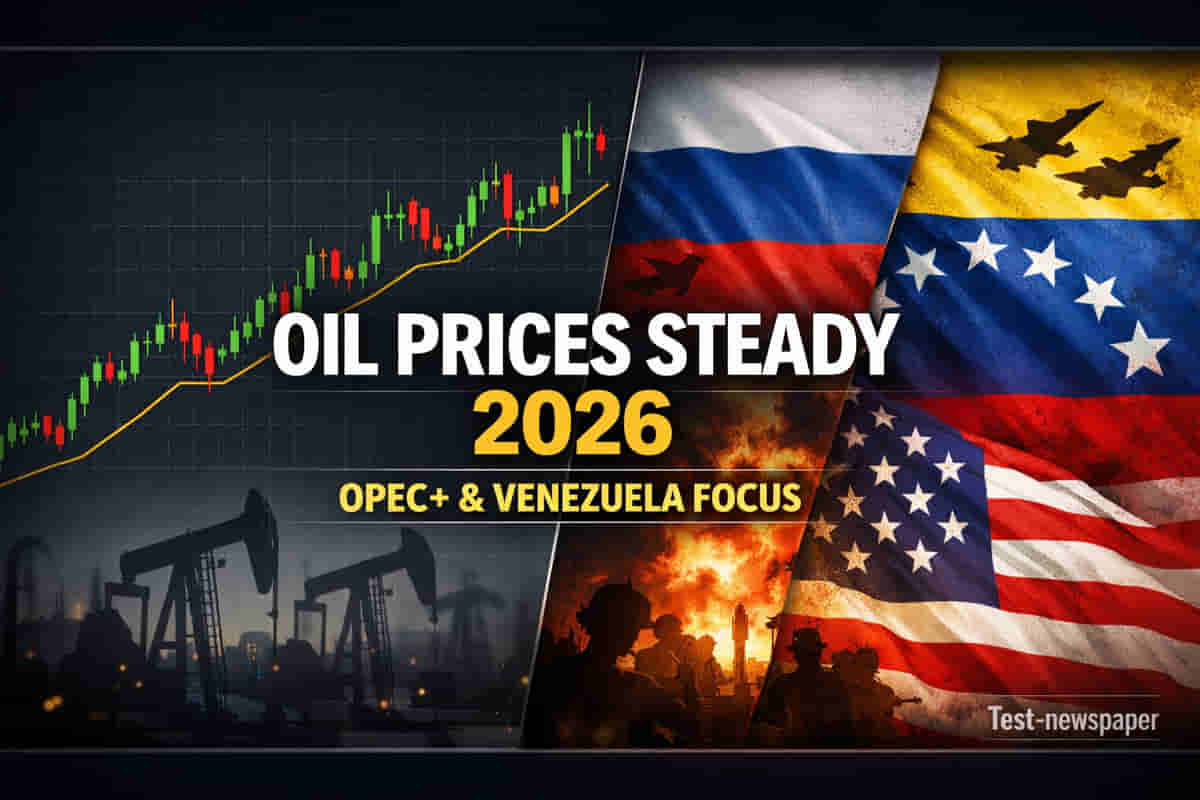
Oil Prices Stabilize Amid Geopolitical Crosscurrents
Oil prices began 2026 with stability, recovering from their largest annual drop since 2020. The market is now keenly observing the first OPEC+ meeting of the year and persistent geopolitical concerns that continue to shape supply dynamics.
West Texas Intermediate futures traded above $57 a barrel as the year opened, following declines heading into the New Year break. The global benchmark, Brent crude, concluded its initial trading session of 2026 below $61 per barrel.
OPEC+ Meeting in Focus
Key members of the Organization of the Petroleum Exporting Countries and its allies (OPEC+), notably Saudi Arabia and Russia, are scheduled for a video conference on January 4. Market expectations suggest they will adhere to a decision made in November to halt any further increases in oil supply. This strategy aims to balance the market amidst concerns over potential oversupply.
Geopolitical Pressures Mount
Geopolitical factors are significantly influencing the oil market. The administration of President Donald Trump has escalated its campaign against Venezuela's oil exports. This includes imposing sanctions on companies located in Hong Kong and mainland China, as well as on vessels accused of evading existing curbs.
Adding to the complex situation, Russia and Ukraine exchanged strikes on each other's Black Sea ports during the New Year period. This conflict resulted in damage to critical infrastructure, including at least one refinery.
Historical Context and Oversupply Concerns
Last year saw crude oil prices retreat by approximately one-fifth. This sharp decline was largely driven by mounting concerns about a worldwide surplus. The surplus stemmed from earlier supply hikes by OPEC+ and increased output from rival oil-producing nations.
The International Energy Agency has projected a substantial glut for the current year, forecasting a surplus of around 3.8 million barrels per day.
Expert Outlook and Venezuela Standoff
Analysts predict that geopolitical events will offer short-term support to crude prices. However, Robert Rennie, head of commodity and carbon research at Westpac Banking Corp, anticipates lower prices throughout the first quarter. This forecast is attributed to ongoing oversupply worries and potential diplomatic progress in the Ukraine conflict.
In a related development concerning Venezuela, Russia has formally requested the U.S. to cease its pursuit of a tanker named Bella 1. The vessel, which originated in Iran, was en route to Venezuela to collect oil but is now reportedly fleeing U.S. Coast Guard efforts across the Atlantic Ocean, according to The New York Times.
Impact
The dynamics of global oil prices have a profound effect on economies worldwide, influencing inflation rates, transportation costs, and the profitability of energy companies. Geopolitical instability can lead to sudden supply disruptions and price surges, while oversupply can depress revenues for producing nations and corporations. For major oil importers like India, these fluctuations directly impact the trade deficit, consumer prices, and overall economic stability.
Impact Rating: 7/10
Difficult Terms Explained
- OPEC+: Organization of the Petroleum Exporting Countries and its allies, a cartel that coordinates oil production policies among member states.
- West Texas Intermediate (WTI): A specific grade of crude oil used as a U.S. benchmark for oil pricing.
- Brent crude: A global benchmark price for crude oil, often used to price oil produced in Europe, Africa, and the Middle East.
- Geopolitical: Relating to politics, especially international relations, as influenced by geographical factors.
- Sanctions: Penalties or restrictions imposed by countries on other countries, organizations, or individuals to exert pressure.
- Glut: An excessive supply of something, in this context, crude oil, leading to lower prices.
- IEA: International Energy Agency, an intergovernmental organization that provides data and analysis on the global energy sector.