 Whalesbook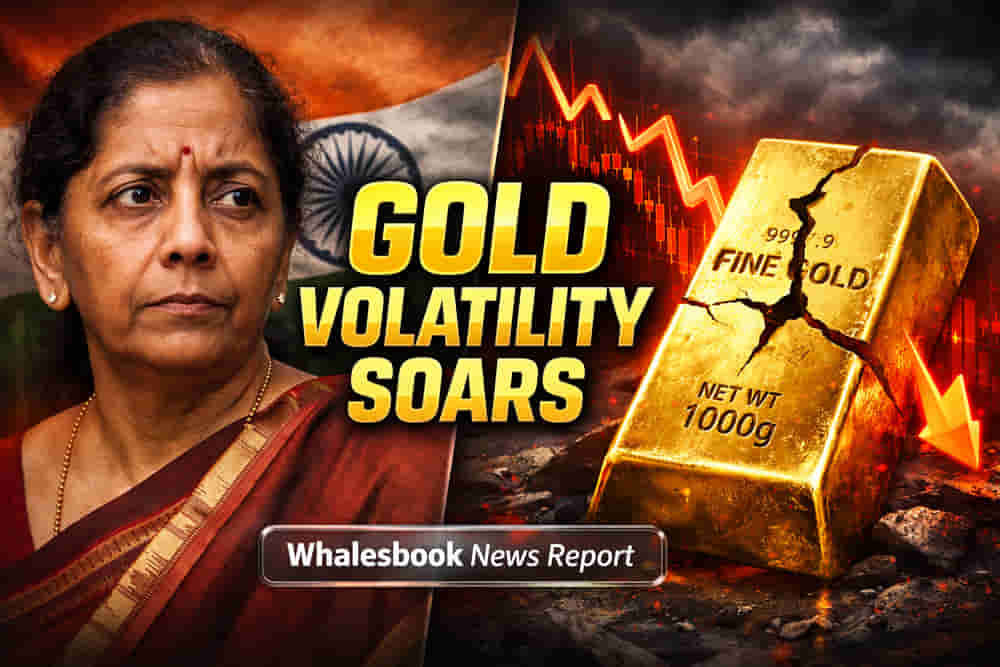
THE SEAMLESS LINK
The recent sharp downturn in gold and silver prices, described as a 'meltdown' by some market observers, has sent shockwaves through financial markets, prompting a reassessment of investor sentiment and the underlying drivers of precious metal value. This volatility directly echoes concerns voiced by Finance Minister Nirmala Sitharaman, who recently linked the swings in gold prices to a pervasive global uncertainty that erodes investor confidence in conventional currencies. Her remarks highlight a broader trend where central banks are increasingly turning to gold as a stable store of value amid unpredictable economic and geopolitical conditions. The dramatic price action, particularly the precipitous drop on January 30, 2026, followed by continued pressure, serves as a stark reminder of the speculative pressures and leverage within commodity markets.
The Catalyst and The Crash
Precious metals experienced their most significant daily decline in decades on January 30, 2026. Gold plunged as much as 12% from its recent highs, falling from near $5,600 per ounce to below $4,900 in some reports [1, 16]. Silver saw an even more dramatic collapse, dropping over 30% from its peak near $121 per ounce to levels below $85 [1, 10, 16]. This precipitous fall was primarily triggered by President Trump's nomination of Kevin Warsh as the next Federal Reserve Chair. Warsh's hawkish reputation, signaling a commitment to controlling inflation and maintaining tighter monetary conditions, strengthened the US dollar and reversed the 'debasement trade' that had propelled gold and silver higher [5, 13, 29]. The market's reaction was amplified by aggressive profit-taking following an extended parabolic rally and a series of CME Group margin requirement hikes. These increases, particularly those effective February 2, 2026, which raised gold margins to 8% and silver to 15% of contract value, forced leveraged traders to liquidate positions, creating a cascading effect of selling pressure [10, 23, 32].
Global Uncertainty and Central Bank Strategy
Finance Minister Sitharaman's observation that global uncertainties are compelling central banks to invest in gold underscores a critical market dynamic. This shift reflects a deep-seated lack of confidence in any single currency, driving a 'rush to buy gold' [Source A]. Central bank demand for gold has been a persistent, historically elevated trend since 2022, driven by a strategic imperative to diversify foreign exchange reserves away from the US dollar [12, 37]. In 2025, central banks added an estimated 863 tonnes to their reserves, and projections for 2026 suggest continued purchases around 800 tonnes [14, 26]. This institutional accumulation provides a structural underpinning for gold prices, independent of short-term speculative flows.
Market Re-evaluation and Future Outlook
While the dramatic sell-off on January 30 and subsequent price action on February 2, 2026, marked a harsh correction, many analysts believe the underlying bull market for precious metals remains intact. The fundamental drivers – geopolitical tensions, persistent currency concerns, and ongoing central bank diversification – have not fundamentally changed [12, 16]. J.P. Morgan maintains a bullish conviction, forecasting gold prices to reach $6,300 per ounce by the end of 2026, citing continued demand from central banks and investors [14]. Other forecasts vary, with some predicting averages around $5,055/oz for late 2026 [11], while more extreme long-term targets for gold exceed $20,000 per ounce from figures like Ron Paul [13]. For silver, predictions suggest potential for significant gains, with targets ranging from $65 to $100 per ounce in 2026 [22]. The market's immediate focus remains on managing volatility and assessing whether the recent correction represents a healthy technical adjustment or the beginning of a more prolonged downturn. However, the strategic demand from official institutions suggests a solid floor for gold and silver prices over the medium to long term.