 Whalesbook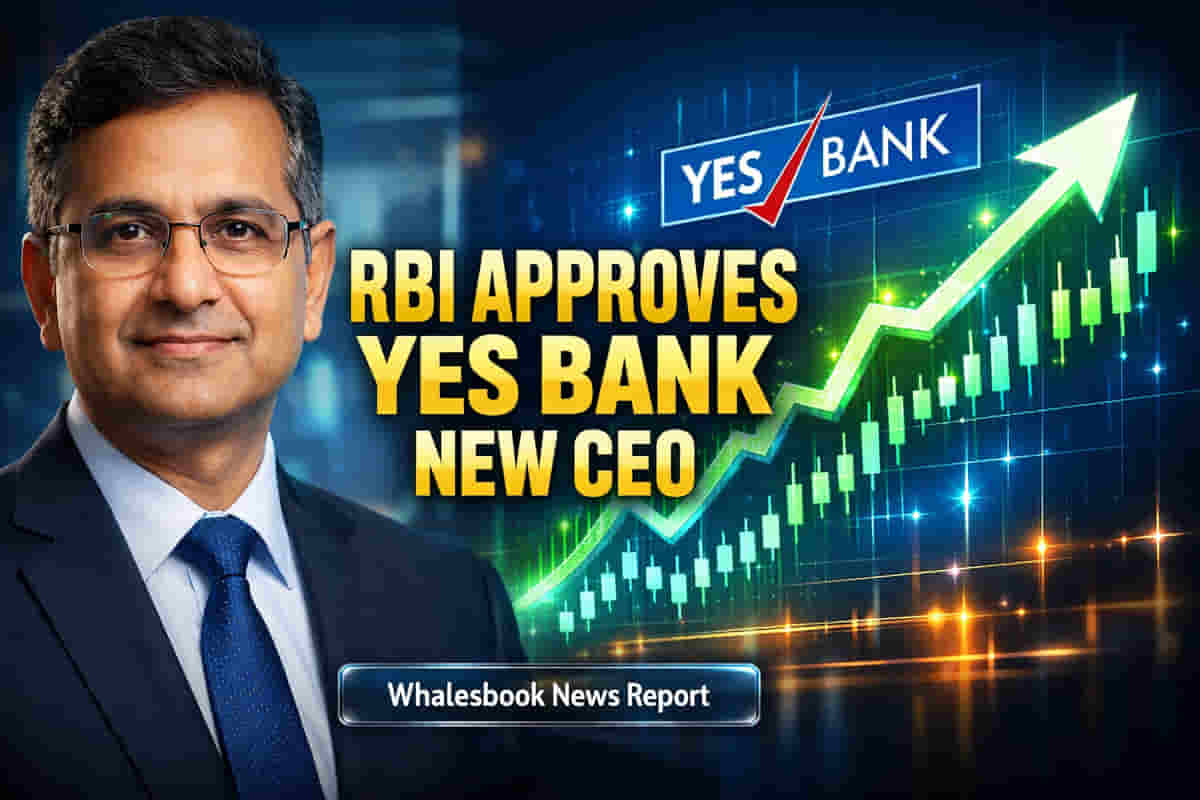
1. THE SEAMLESS LINK
The approval of Vinay Muralidhar Tonse as Yes Bank's new Managing Director and Chief Executive Officer by the Reserve Bank of India marks a significant leadership shift, occurring as the bank navigates a period of financial stabilization. This development arrives on the heels of a strong third-quarter performance, where net profit escalated substantially. The market's attention is now fixed on how this new leadership will steer Yes Bank's strategic direction, building upon the recent earnings momentum and addressing the bank's valuation relative to its peers and prevailing analyst expectations.
2. THE STRUCTURE (The 'Smart Investor' Analysis)
Leadership Transition and Market Reaction
The Reserve Bank of India's sanctioning of Vinay Tonse's appointment for a three-year tenure signals a new chapter for Yes Bank. This comes as the incumbent MD & CEO, Prashant Kumar, is nearing the end of his extended term. The stock traded around ₹21.31 on February 3, 2026, reflecting recent gains over the past six months but also volatility seen in January, with prices fluctuating between ₹20.68 and ₹23.99 in early 2026 [4, 5, 6]. The average daily trading volume approaches 93 million shares, indicating consistent investor interest [4]. This leadership change, coupled with solid Q3 results showing a 55.4% net profit increase to ₹951.6 crore and an 11% rise in Net Interest Income (NII) to ₹2,465.6 crore, presents a foundation for future growth [Original Text/Source A]. Gross NPAs have steadily declined to 1.5%, with net NPAs flat at 0.3% [3].
Valuation and Competitive Positioning
Yes Bank's Price-to-Earnings (P/E) ratio, hovering around 21-24x as of early February 2026, appears somewhat elevated compared to public sector giants like State Bank of India (SBI) at approximately 11-12x [19, 24, 33], but aligns more closely with private sector peers such as ICICI Bank (around 18-19x) and HDFC Bank (around 18-21x) [15, 25, 29, 32, 35]. Its market capitalization stands at roughly ₹66,500 crore, positioning it as a significant player but smaller than HDFC Bank (₹14.3-14.6 Lac Cr) and ICICI Bank (₹9.7-9.9 Lac Cr) [2, 7, 9, 30]. The Indian banking sector, according to Fitch Ratings, is set to benefit from enhanced regulatory oversight in 2026, which is expected to reduce systemic risks and foster a better operating environment [8]. While asset quality has improved across the sector, with Yes Bank showing steady NPAs, regulatory reforms are ongoing, including the expected credit loss framework [8, 23].
Analyst Sentiment and Future Outlook
Despite the positive operational developments, the analyst consensus for Yes Bank remains predominantly 'Sell', with an average 12-month price target of ₹20.27 from 11 analysts, suggesting a potential downside of nearly 5% [21]. Some brokerages have issued targets in the ₹20-24 range, citing high valuations and a gradual recovery [28]. Nomura maintains a 'Neutral' rating with a target of ₹22, while Emkay Global recommends 'Sell' with a target of ₹20 [28]. ICICI Securities holds a 'Hold' rating with a revised target of ₹24 [12]. The Indian banking sector, in general, is projected to see improved profitability in the fiscal year starting April 2026, driven by economic growth and favorable reforms [16, 20, 26]. However, potential headwinds include a slowdown in deposit growth and pressure on net interest margins from policy rate cuts [26]. The ability of Yes Bank's new leadership to navigate these sector-wide trends while executing its growth strategy will be critical for future performance.