 Whalesbook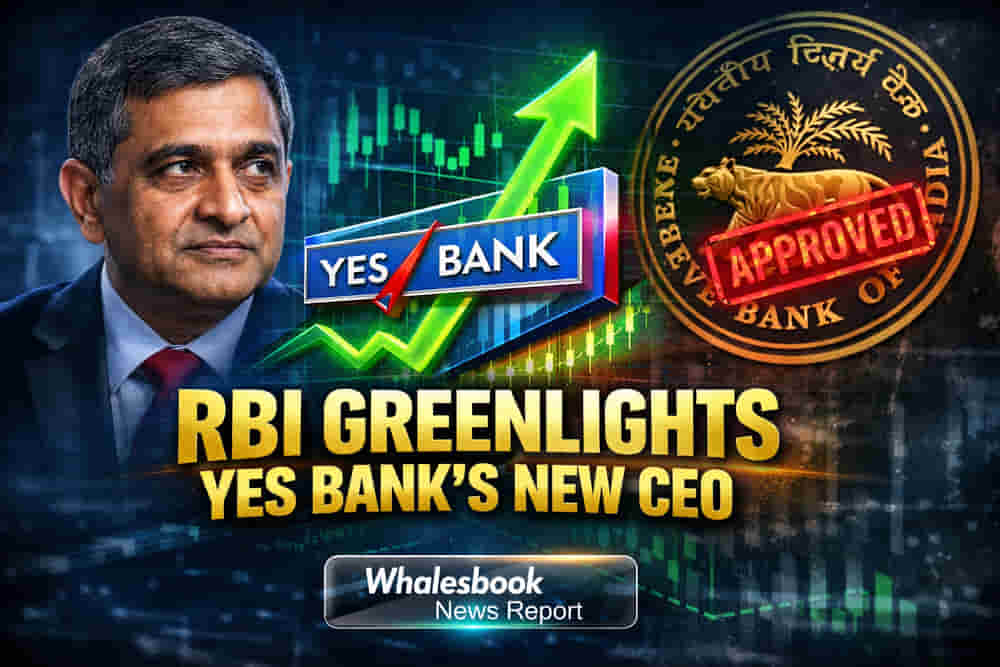
### Leadership Transition Signals Era of Operational Rigor
The Reserve Bank of India's approval for Vinay Muralidhar Tonse's appointment as Yes Bank's new Managing Director and Chief Executive Officer marks a significant leadership inflection point. Tonse, a former State Bank of India executive who headed its Retail Business and Operations until late 2025, brings a deep well of experience in large-scale public sector banking. His tenure, set for three years pending shareholder nod, aims to build upon the bank's ongoing recovery and reinforce its strategic direction. This move signals a potential pivot towards enhanced operational discipline and de-risking strategies as the bank charts its future course. The market is keenly observing how Tonse's leadership will navigate Yes Bank's complex financial landscape, especially following its recent period of reconstruction and turnaround efforts. The current MD & CEO, Prashant Kumar, has been serving an extended term which concludes in April 2026 [13, 24, 26].
### Profitability Gains Amidst Cautious Market Sentiment
Yes Bank's recent financial performance provides a foundation for its leadership transition. The bank reported a substantial 55.4% year-on-year increase in net profit to ₹952 crore for the third quarter of fiscal year 2026, bolstered by a significant reduction in provisions [2, 7, 11]. Net interest income (NII) saw a healthy 10.9% rise to ₹2,466 crore, supported by a 0.10% expansion in net interest margins (NIMs) to 2.6% and a 5.2% growth in loan advances [2, 7]. Asset quality also showed improvement, with gross non-performing assets (GNPAs) narrowing to 1.5% and net NPAs holding steady at 0.3% [7, 11]. Despite these operational strengths, the stock's recent performance has been modest, trading around ₹21.31 on February 3, 2026, reflecting a 0.57% gain that day and a 1.38% increase over five days [3, 25, 32]. The stock has gained 11.45% over the past year, within a 52-week range of ₹16.02 to ₹24.30 [25]. The average daily trading volume hovers around 93 million shares [3].
### Valuation Concerns and Sectoral Headwinds
Despite the improved financial metrics, analyst sentiment remains largely cautious. The prevailing 'Sell' consensus, with an average 12-month price target of ₹20.27 from 11 analysts, suggests potential downside, indicating that valuations are a key concern [3]. Some brokerages have noted that loan growth was "modest and underwhelming" in Q3FY26, and valuations at approximately 1.5 times FY26E P/ABV are not seen as attractive enough for a re-rating by all analysts [12]. Yes Bank's Price-to-Earnings (P/E) ratio stands between 20.71 and 24.3 [4, 5, 9, 27], with a market capitalization around ₹66,461 crore [9, 27].
Broader sector trends present both opportunities and challenges. While the Indian banking sector is projected to see improved profitability in the fiscal year starting April 2026, driven by economic growth, headwinds such as a slowdown in deposit growth and pressure on net interest margins from potential policy rate adjustments pose risks [3, 15]. Regulatory actions, like the RBI's directive for banks to identify and close dormant accounts from February 1, 2026, are also reshaping the operational environment for all lenders [20]. The bank's inclusion in the NIFTY BANK Index effective December 31, 2025, however, points to growing market recognition [7, 11].
### Future Outlook: Balancing Growth and Investor Confidence
The bank aims for an 8% loan growth for the current fiscal year [Original News]. Management has expressed confidence in accelerating growth, particularly in retail lending, and in building a more resilient, high-quality franchise [11]. However, the divergence in analyst views, ranging from 'Hold' to 'Sell' ratings with price targets that generally do not offer significant upside from current levels, highlights the ongoing investor skepticism regarding the pace and sustainability of Yes Bank's recovery and growth trajectory. The effectiveness of Tonse's leadership in translating operational improvements into sustained market confidence will be critical in the coming quarters. Analyst targets, such as Nomura's 'Neutral' rating with a target of ₹22 and Emkay Global's 'Sell' rating with a target of ₹20, reflect this mixed outlook [3].