 Whalesbook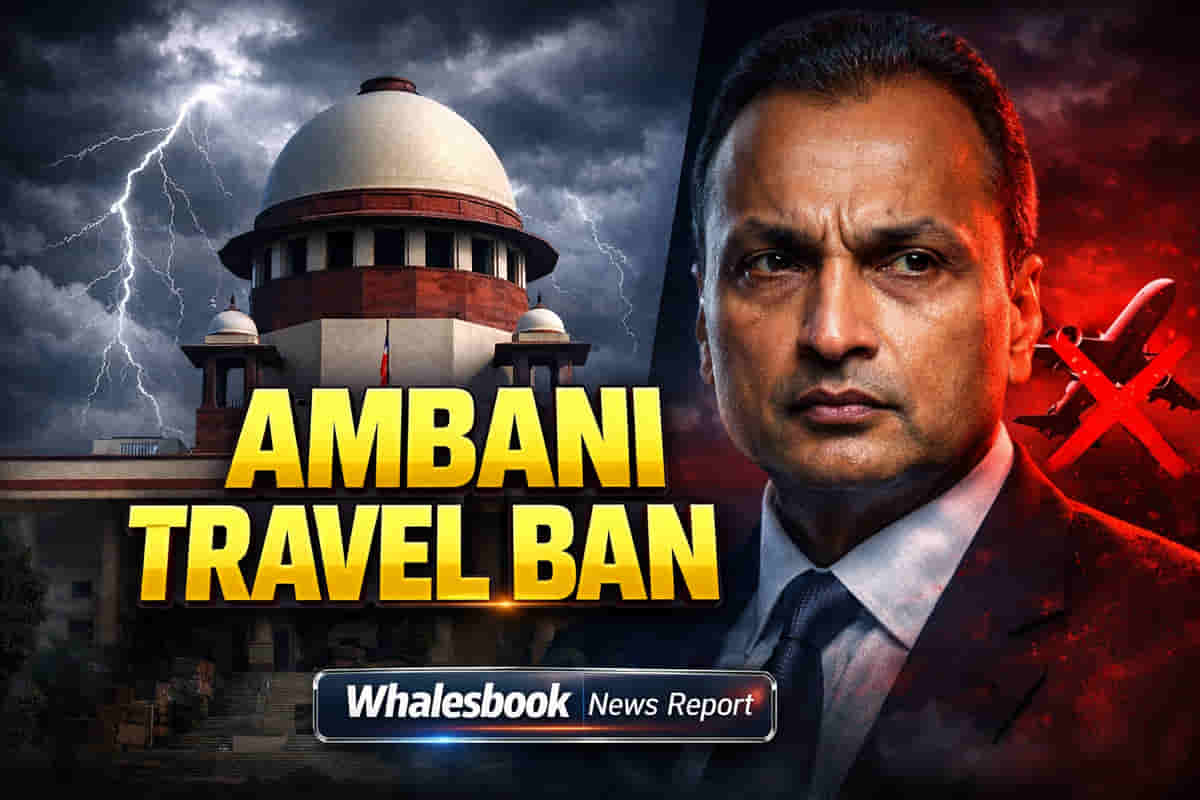
The Core Catalyst: Legal Escalation & Financial Pressure
The Supreme Court's intervention marks a significant deepening of the investigation into alleged large-scale bank fraud by Reliance Communications (RCom) and its associated entities, directly involving Reliance Group Chairman Anil Ambani. The directive to form a Special Investigation Team (SIT) by the Enforcement Directorate (ED) signals a heightened judicial imperative to unravel financial irregularities linked to loans totaling over ₹40,000 crore advanced between 2010 and 2012. The apex court's observation of past sluggishness from both the ED and the Central Bureau of Investigation (CBI) underscores a demand for a swift and thorough probe, with the CBI specifically tasked to identify any complicit bank officials. Anil Ambani's counsel has provided an undertaking that he will not leave the country without court permission, a move aimed at reassuring the judiciary that the investigation will not be hampered. This legal impetus adds considerable weight to existing regulatory pressures, including substantial asset attachments by the ED.
The Analytical Deep Dive: Debt, Scrutiny & Group-Wide Impact
Reliance Communications, which filed for bankruptcy in 2019, carried a debt burden of approximately ₹49,000 crore. Investigations have revealed defaults and alleged fraudulent diversions across various group entities, with figures ranging from ₹14,000 crore to over ₹78,000 crore in defaults for entities like Reliance Commercial Finance Ltd (RCFL) and Reliance Home Finance Ltd (RHFL). The Enforcement Directorate has been actively attaching assets, with total seizures across multiple cases now approaching ₹12,000 crore. These attachments include properties, bank balances, and shareholdings, significantly impacting the group's asset base. Anil Ambani himself has been questioned by the ED multiple times in connection with these alleged diversions and money laundering activities, facing travel restrictions as part of the ongoing probe. The systemic nature of the allegations, encompassing potential collusion by bank officials and a history of regulatory actions against group companies, including SEBI barring Anil Ambani from securities markets, creates a challenging financial and governance environment. While specific market capitalization or P/E ratios for the delisted RCom are not applicable, other Reliance Group companies like Reliance Power face liquidity challenges, and Reliance Infrastructure's credit profile indicates stretched liquidity despite potential capital raises. Competitors in the Indian telecom sector, such as Bharti Airtel and Reliance Jio, maintain robust market positions and financial health, highlighting a stark contrast with the ongoing financial and legal distress impacting RCom and related entities.
The Future Outlook: Regulatory Storm & Investor Sentiment
The Supreme Court's direct involvement and the formation of a dedicated SIT signal an increased risk of further stringent actions, potentially including more aggressive asset seizures or legal proceedings that could impede any recovery efforts for lenders. The repeated asset attachments by the ED, totaling over ₹12,000 crore, underscore the scale of the financial recovery efforts being undertaken by authorities. For the broader Reliance Group, the continued association with these extensive investigations and fraud allegations invariably impacts investor sentiment, potentially increasing borrowing costs and making it difficult to attract new capital for its diversified businesses. The focus on identifying complicit bank officials also suggests a broader cleanup of institutional practices may be underway. The group's future operational and financial stability will hinge on its ability to navigate this intensifying legal and regulatory storm, alongside demonstrating robust corporate governance and debt management across its remaining entities.