 Whalesbook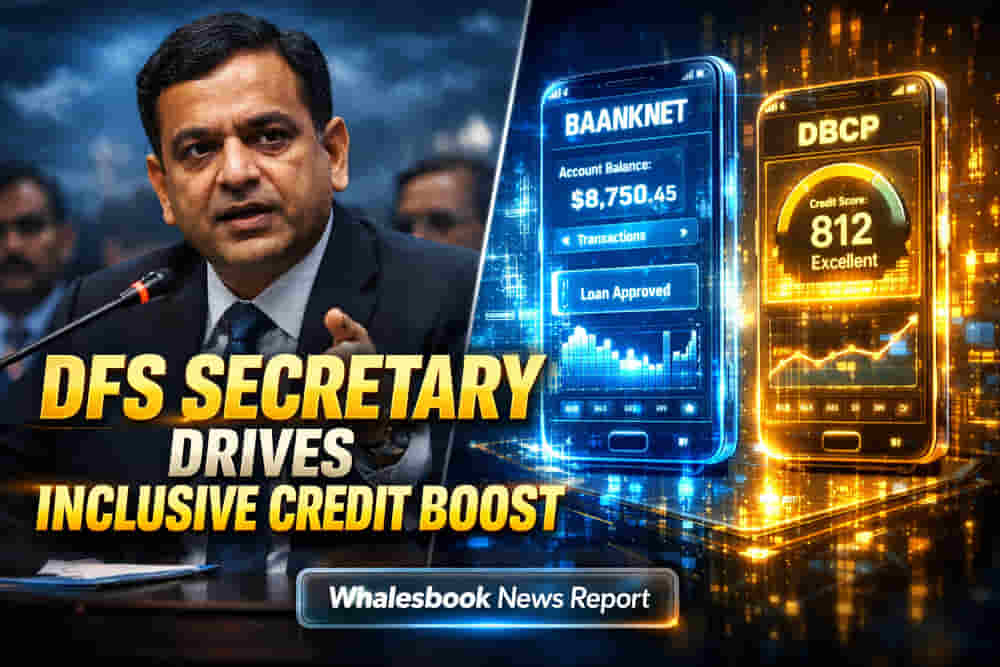
THE SEAMLESS LINK
These strategic digital unveilings and policy directives underscore a concerted effort to modernize India's financial infrastructure. The launch of BAANKNET and the Digital Balance Confirmation Platform by Secretary M. Nagaraju represents a tangible step towards enhancing transparency and operational efficiency across the banking ecosystem, particularly within public sector banks. This push for digital solutions complements the government's ongoing commitment to broadening financial access, especially for the nation's unbanked segments.
The Digital Leap Forward
The BAANKNET mobile app, introduced at the PSB Alliance Annual Strategy Meet 2026, is designed to revolutionize the auction of bank-held properties. By providing nationwide, on-the-go access to verified bank assets, it promises to inject greater structure and transparency into a traditionally complex process. This move is anticipated to accelerate asset recovery for financial institutions and empower a wider range of citizens to participate in property acquisition. Simultaneously, the Digital Balance Confirmation Platform (DBCP) aims to eliminate manual verification processes in audits, significantly enhancing efficiency and reducing the potential for error. These platforms signal a commitment to leveraging technology for operational gains across the sector.
Expanding Financial Reach and Credit Access
DFS Secretary M. Nagaraju explicitly emphasized the critical imperative of developing inclusive credit strategies targeting India's substantial unbanked population. This directive is set against the backdrop of India's comparatively low credit-to-GDP ratio, which remains a key focus area for economic expansion. The secretary also advocated for the PSB Alliance to extend its shared service ecosystem and offer common digital lending solutions to smaller banks. This strategy aims to reduce overhead costs for these institutions, fostering greater collaboration and improving their capacity to serve a broader client base. The growth potential for Non-Banking Financial Companies (NBFCs) was also acknowledged, positioning them as a vital component in mobilizing capital for a 'Viksit Bharat' by 2047.
Banking Sector Strength and Future Trajectory
Providing an optimistic assessment of the financial system, Nagaraju reported that the Indian banking sector is currently robust. He cited a notable decline in Non-Performing Assets (NPAs) to 0.47%, a significant achievement that bolsters confidence in the system's stability. This is further supported by healthy credit growth figures of approximately 12% and deposit growth around 10%. These metrics suggest a banking environment well-positioned to support economic activity and corporate financing needs. The emphasis on strengthening banks' financial capacity aligns with budgetary proposals aimed at enhancing their ability to finance large-scale corporate projects crucial for national development goals.