 Whalesbook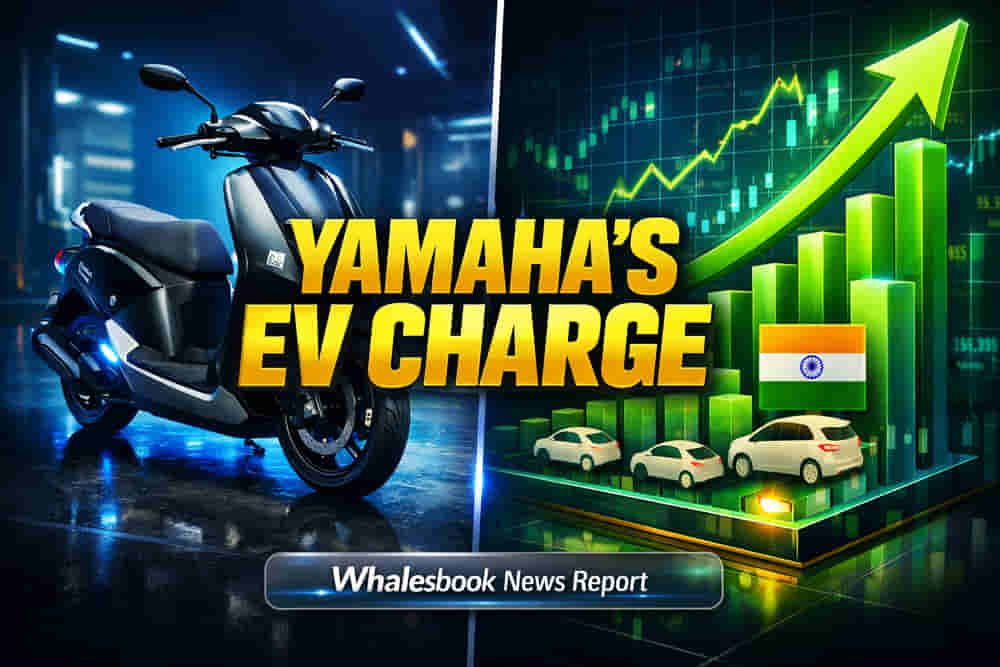
THE SEAMLESS LINK
The EC-06 launch represents Yamaha's strategic pivot into India's burgeoning electric two-wheeler market, a segment experiencing robust growth driven by environmental consciousness and supportive government policies. This introduction, however, immediately sets it apart through a premium price point, signaling a deliberate targeting of a specific consumer segment.
THE STRUCTURE
The Premium Positioning Dilemma
India Yamaha Motor has officially entered the electric two-wheeler arena with the EC-06, priced at an ex-showroom Delhi figure of ₹1,67,600. This scooter boasts a certified range of 169 kilometers on a single charge and will initially be sold exclusively through the company's premium 'Blue Square' showrooms. This strategy positions the EC-06 at a higher bracket compared to its principal competitors. For instance, the Ola S1 Pro Plus is priced around ₹1.69 lakh, the Ather 450X ranges from approximately ₹1.47 lakh to ₹1.57 lakh, and the TVS iQube ST is available from ₹1.63 lakh upwards. Even the recently updated Bajaj Chetak lineup, which introduced a sub-₹1 lakh variant, has models extending up to ₹1.34 lakh, highlighting the EC-06's elevated market placement. Yamaha's parent company, Yamaha Motor Co., Ltd. (7272:TYO), operates with a market capitalization around $6.92 billion and a P/E ratio of approximately 4.37 as of early February 2026. While the EC-06 aims to reinforce Yamaha's commitment to carbon neutrality and sustainable urban mobility, its premium pricing could create a barrier to entry for mass market adoption in a segment where price sensitivity remains a significant factor.
Navigating a Crowded and Evolving Market
The Indian electric two-wheeler segment is characterized by rapid growth and fierce competition. In FY2025, the electric two-wheeler segment saw approximately 19% year-on-year growth, with established players like Ola Electric, TVS Motors, and Bajaj collectively capturing over 70% of the market share. New-age companies and traditional manufacturers are aggressively vying for dominance, introducing a variety of models with competitive features and pricing. For example, Ola Electric offers models ranging from the S1 X at approximately ₹1.19 lakh to the Roadster Pro at ₹1.99 lakh, demonstrating a broad spectrum of market coverage. Ather Energy, a key player, recently increased prices across its range due to rising input costs, with its 450X model now starting around ₹1.53 lakh. Historically, Yamaha has had a more conservative approach to its EV strategy in India, with limited public announcements regarding its specific plans until now. This launch, therefore, signifies a more concrete step into a market that is not only expanding but also maturing, with government initiatives like the PM E-DRIVE scheme actively supporting electric vehicle adoption through demand incentives and charging infrastructure development. However, the EV penetration in the overall two-wheeler market stood at approximately 6.6% in January 2026, indicating significant room for growth but also highlighting the continued dominance of internal combustion engine (ICE) vehicles. Analyst sentiment suggests cautious optimism, acknowledging Yamaha's brand equity but questioning the scalability of a premium-only strategy against established market leaders and emerging value-focused offerings.
Future Trajectory and Market Integration
Yamaha's entry with the EC-06 appears to be a deliberate strategy to build brand presence in the premium EV segment, leveraging its reputation for quality and performance. The 169 km range is competitive, addressing range anxiety for urban commuters, and the choice to distribute through 'Blue Square' showrooms suggests an emphasis on customer experience. However, the long-term success of this strategy will depend on Yamaha's ability to expand its EV portfolio beyond this initial offering, adapt to evolving consumer preferences, and potentially introduce more accessible models. The company's alignment with India's carbon-neutral future and supportive government policies provides a favorable macro environment, but the immediate challenge lies in carving out a significant market share amidst intense competition and price-sensitive demand. The ongoing government focus on local manufacturing and R&D, as highlighted in Budget 2026 discussions, also presents opportunities for deeper localization and cost optimization in the future, which could influence Yamaha's long-term EV production plans in India.