 Whalesbook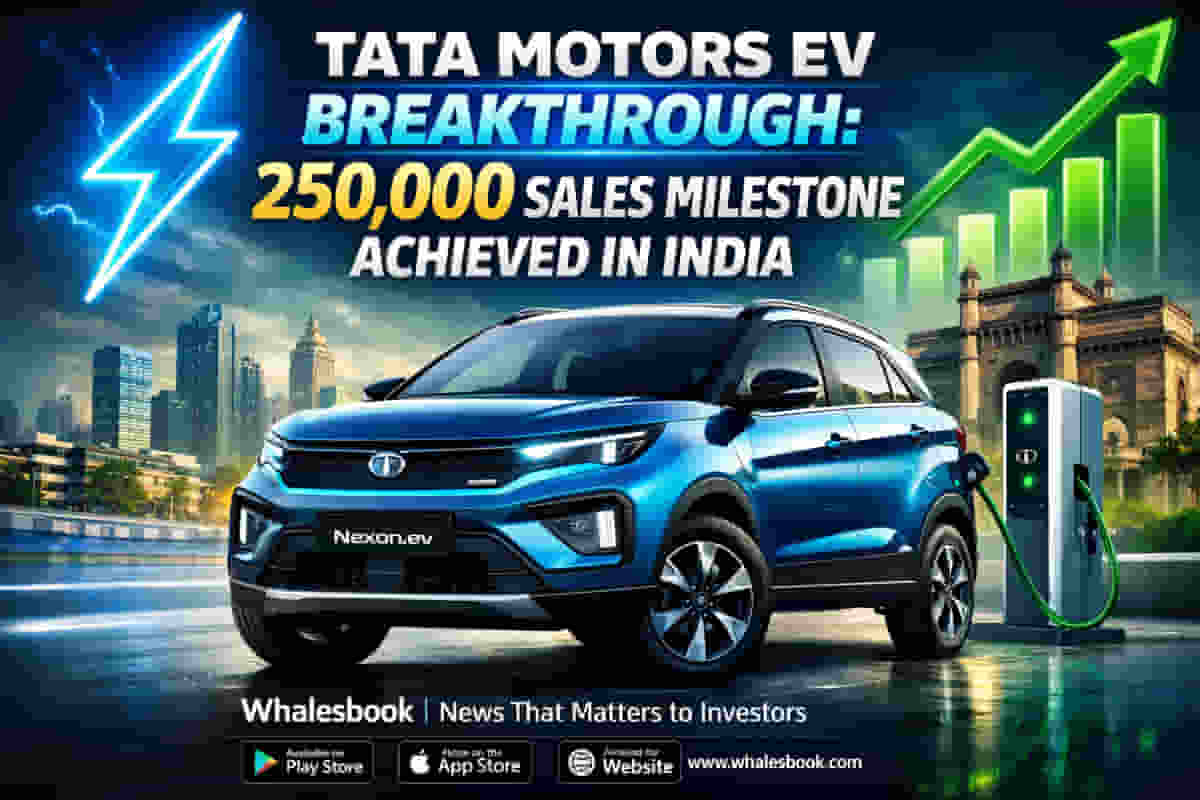
TATA.ev Surpasses 250,000 Sales Milestone
Tata Motors' electric vehicle division, TATA.ev, has reached a major milestone in India's automotive industry, surpassing 250,000 cumulative sales. This significant achievement underscores the company's leadership and the accelerating adoption of electric vehicles across the country.
According to an official release from Tata Motors, the company now holds an impressive 66% share of the total electric passenger vehicles sold in India to date. This dominance highlights a profound shift, moving electric mobility from a niche segment into the mainstream Indian market.
Nexon.ev Leads the Charge
The Nexon.ev model has been a key driver of this success, notably becoming the first electric car in India to achieve 100,000 individual sales. This milestone demonstrates strong consumer acceptance and trust in Tata's electric offerings.
The company currently manages a wide portfolio of electric cars, including the Tiago.ev, Punch.ev, Nexon.ev, Curvv.ev, and Harrier.ev. These vehicles are now utilized in more than 1,000 towns and cities across India, showcasing their widespread reach and practical application.
Shifting Gears to Mainstream Adoption
Company data reveals that 84% of these electric vehicle owners use their vehicles as their primary mode of transport, with many driving approximately 20,000 kilometers per year. This statistic indicates that EVs are increasingly seen as reliable and practical for daily commuting and longer journeys.
Shailesh Chandra, MD & CEO of Tata Motors Passenger Vehicles Ltd., commented on the achievement. "Crossing 250,000 EV sales reflects how electric mobility is fast becoming part of everyday Indian life," he stated. He reiterated the company's commitment to making electric mobility accessible across segments, strengthening the ecosystem, and investing in India-first technology and localization.
Expanding Infrastructure and Localisation
To support its growing EV fleet, Tata Motors has established a robust network of over 2 lakh charging points nationwide. This includes 100 MegaCharging Hubs designed to provide fast and efficient charging. The company has also dedicated 1,500 service bays specifically for electric vehicles, staffed by 5,000 trained technicians.
A significant aspect of Tata Motors' strategy is its focus on local manufacturing. Most of these vehicles are built with more than 50% locally made parts, reducing reliance on imports and contributing to India's manufacturing capabilities.
Future Outlook
Looking ahead, Tata Motors has ambitious plans to further expand its electric vehicle lineup. New models like the Sierra.ev and the Avinya range are planned for introduction by 2026. The company aims to launch five new electric vehicle names by 2030. Complementing this product expansion, Tata Motors intends to substantially increase its charging infrastructure, targeting one million charging points by 2030.
Impact
This sales milestone and market share reinforce Tata Motors' dominant position in India's rapidly growing EV sector. It signals strong execution and strategic foresight, potentially boosting investor confidence in the company's future prospects and its contribution to India's sustainable mobility goals. The expansion of charging infrastructure and local manufacturing also has positive implications for the broader Indian economy and automotive ecosystem.
Impact Rating: 8/10
Difficult Terms Explained
• EV (Electric Vehicle): A vehicle that is powered by electricity from a rechargeable battery. It does not use an internal combustion engine.
• Cumulative Sales: The total number of units sold by a company from the time a product was launched until a specific date.
• Market Share: The proportion of total sales in a specific market that a particular company controls.
• Mainstream: Considered normal, standard, or widely accepted and used by the general public.
• Electric Mobility: The use of electric vehicles for transportation, including the associated infrastructure and systems.
• Charging Points: Locations equipped with devices that supply electrical power for recharging electric vehicles' batteries.
• MegaCharging Hubs: Large-scale facilities that offer high-speed charging services for multiple electric vehicles.
• Localisation: The process of designing, manufacturing, and sourcing components for products within a specific country, reducing dependence on imports.