 Whalesbook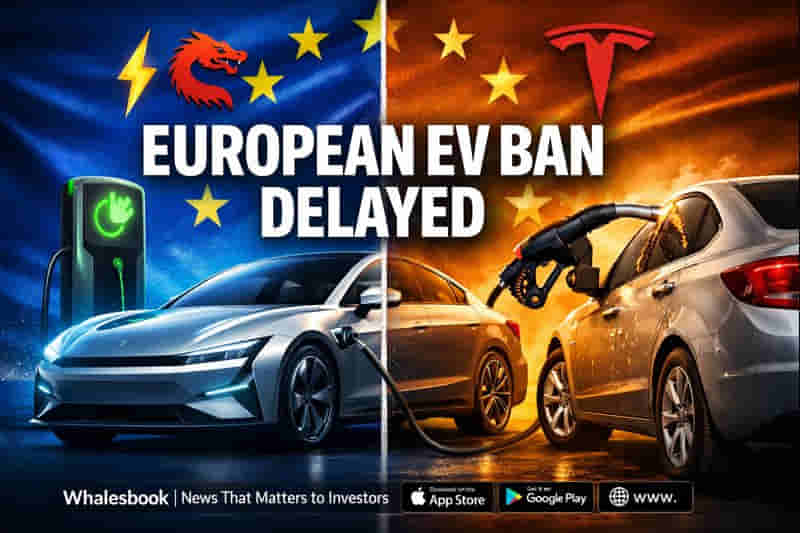
Europe Moderates 2035 Electric Vehicle Ban
The European Commission has signaled a significant shift in its climate policy, softening its ambitious plan to ban the sale of new gasoline and diesel cars by 2035. The revised proposal, part of a broader 'Automotive Package,' would now permit a portion of new car sales to be hybrid or other carbon-neutral fuels, provided manufacturers purchase carbon credits to offset emissions.
The Core Issue
Originally, the European Union aimed for 100% of new car sales to be zero-emission vehicles by 2035. This aggressive target has faced considerable pushback from established European automakers who argue they need more time to transition their fleets and remain competitive. The new proposal allows for up to 10% of new car sales to be internal combustion engine vehicles, contingent on manufacturers securing emissions credits, a move designed to offer flexibility to the industry.
Financial Implications and Industry Competition
Traditional European car manufacturers have been struggling to compete with the rapid innovation and cost-effectiveness of electric vehicles (EVs) from competitors like Tesla and a growing wave of affordable Chinese EVs. This policy adjustment is seen as an attempt to cushion the impact on these legacy companies, which are major employers and economic contributors within the European Union, representing 6.1% of total employment.
The European Commission is simultaneously attempting to bolster the continent's industrial future by investing in new technologies. As part of the 'Automotive Package,' the 'Battery Booster' initiative will allocate €1.8 billion (approximately $2.11 billion) towards developing a robust, fully European battery supply chain. This strategy aims to enhance local production and ensure supply security for future electric mobility.
Industry Split on Timeline
The policy revision has created a clear divide within the automotive and technology sectors. Many EV startups and their investors, who champion a swift transition to fully electric, view the compromise as detrimental. They warn that weakening the mandate could cede leadership in a critical global industry to China and hinder Europe's economic benefits derived from clean technology.
Senior executives from companies such as Cabify, EDF, Einride, Iberdrola, and various EV startups signed an open letter urging the Commission to uphold the original 2035 zero-emission target. However, their appeal could not outweigh the economic concerns of the broader automotive industry.
Official Statements and Responses
While specific official statements from the Commission detailing the rationale for the flexibility were not extensively elaborated, the move is framed as a measure to ensure both environmental cleanliness and industrial competitiveness. Companies like Volvo have expressed concern, with a press officer stating that backing down on long-term commitments risks undermining Europe's competitiveness. Conversely, firms like Verkor, a French battery cell producer, welcomed the Battery Booster initiative as a necessary step to scale the EU's battery industry.
Future Outlook
The debate highlights the ongoing tension between immediate economic realities and the urgent need for climate action. Decisions made now will critically shape Europe's standing in the global EV market. The United Kingdom's response to this EU policy shift also remains uncertain, as it has its own combustion engine ban planned for 2035 but has not yet imposed tariffs on Chinese EVs, despite concerns from domestic manufacturers.
Impact
This news could potentially slow the pace of full electrification in Europe, creating a more varied market landscape in the short to medium term. It impacts the strategic planning of automotive manufacturers and suppliers, influencing investment decisions in EV technology versus internal combustion engines and hybrids. For investors, it signifies continued volatility and strategic maneuvering within the global automotive sector as it navigates competition and regulatory pressures. The success of the Battery Booster will be crucial for long-term European competitiveness in EV manufacturing.
Impact Rating: 7/10
Difficult Terms Explained
- Zero-emission vehicles (ZEVs): Vehicles that produce no tailpipe emissions, such as battery-electric vehicles.
- Carbon offsets: Credits representing a reduction of one tonne of carbon dioxide equivalent emissions, used to compensate for emissions elsewhere.
- Hybrid vehicles: Vehicles that combine an internal combustion engine with an electric motor, allowing for electric-only driving for short distances or assisting the engine.
- Supply chain: The entire process of producing and delivering a product or service, from raw materials to the end customer.
- Lithium-ion battery cells: The fundamental building blocks of rechargeable batteries commonly used in electric vehicles and portable electronics.
- Internal combustion engine (ICE): A type of engine that burns fossil fuels to generate power, commonly found in traditional gasoline and diesel cars.