 Whalesbook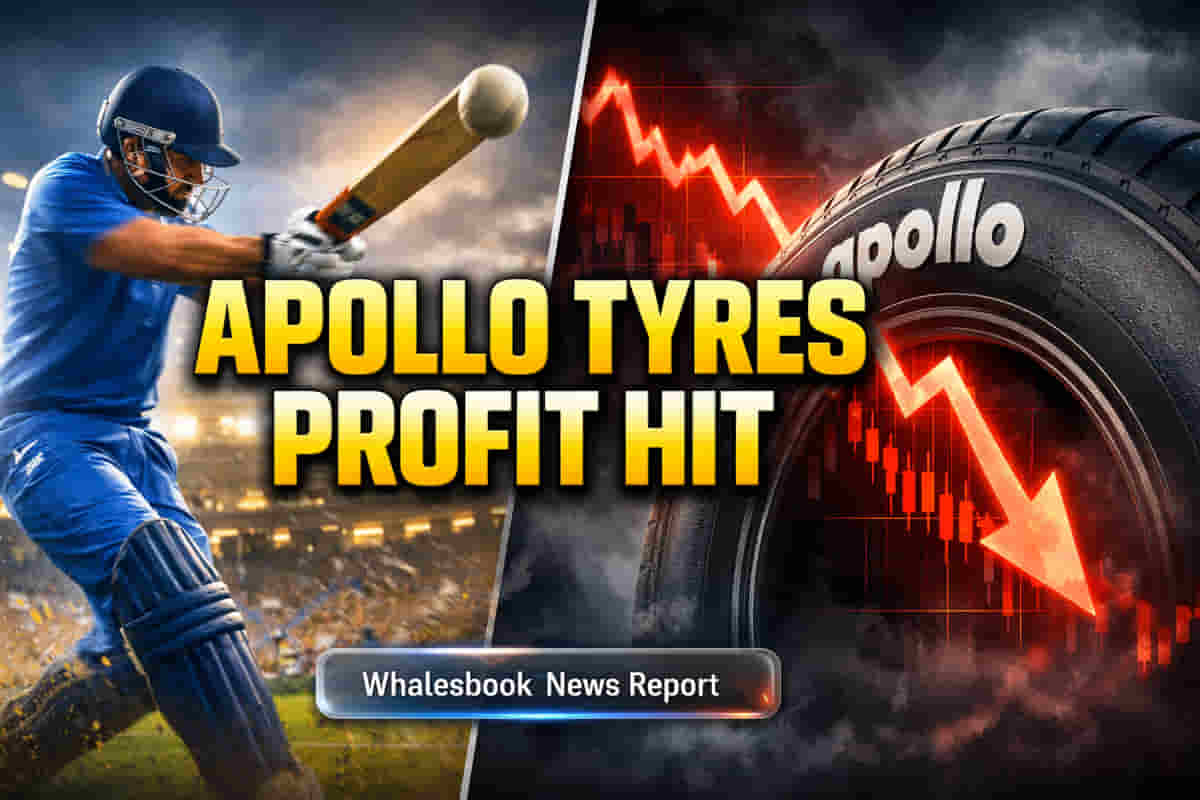
Apollo Tyres Navigates Challenges Amidst Growth Aspirations
Apollo Tyres is currently navigating a complex phase, with its Indian operations showing resilience while Europe continues to pose significant challenges. The company's management recently provided insights to analysts at Motilal Oswal Financial Services, detailing the current market dynamics and future outlook.
India Demand Remains Firm
Demand in India across most key segments has remained healthy in the third quarter (Q3). This strength is evident in both the replacement market, where consumers purchase tires for existing vehicles, and the original equipment manufacturer (OEM) channel, supplying directly to vehicle makers. The company is also benefiting from a recovery in its export markets.
European Market Woes Persist
In contrast, the European market continues to be a drag on performance. While October saw some marginal growth, demand weakened considerably in November, with momentum in core markets remaining subdued. This persistent weakness in Europe is a key concern for the company's overall financial health.
Sponsorship Costs to Impact Margins
Apollo Tyres' near-term margin expansion is likely to be constrained by a substantial new commitment: the company has been appointed as the lead sponsor of the Indian cricket team. It has committed ₹580 crore to this sponsorship, which will be spread over two and a half years. Analysts anticipate this significant expenditure will begin reflecting in the company's financials from Q3 onwards, potentially capping profit growth.
Q2 Performance and Raw Material Trends
Despite these headwinds, Apollo Tyres achieved a consolidated Ebitda margin of 14.9% in the September quarter (Q2 FY26), marking a 130 basis points year-on-year increase and reaching a six-quarter high. This improvement was partly driven by softening raw material costs. However, the outlook for input costs has shifted. While earlier guidance suggested softening in the second half of the fiscal year, current trends indicate stable quarter-on-quarter costs in Q3. This stabilization is attributed to the depreciation of the Indian Rupee (INR) and disruptions in rubber production in Thailand, impacting supply.
Market Share and Profitability Balance
The stock has experienced a decline of approximately 8% over the past year and is currently trading at about 19 times its estimated earnings for FY27, according to Bloomberg data. Elara Securities (India) highlighted in a Q2 review that Apollo Tyres continues to grapple with finding an optimal balance between market share and profitability. The company has consciously opted to avoid low-margin Passenger Car Radial (PCR) OEM tenders, which has led to a loss in market share in that specific segment. Management, however, is emphasizing a return to a profitable OEM mix rather than merely chasing volume.
Future Outlook
Looking ahead, profitability in Europe is expected to see improvement following the planned closure of the Enschede facility by the end of June. This strategic move aims to streamline operations. However, muted demand in Europe, a slow recovery in the replacement market, and the relatively soft margin outlook present near-term headwinds that the company must navigate.
Impact
The significant sponsorship expenditure poses a direct risk to Apollo Tyres' near-term profit margins, potentially affecting investor sentiment and its stock performance. The company's ability to manage these new costs effectively while continuing to grow its business in competitive markets will be crucial for its future financial health and market position.
- Impact Rating: 6/10
Difficult Terms Explained
- Ebitda: Earnings Before Interest, Taxes, Depreciation, and Amortization. It is a measure of a company's operating performance and profitability.
- Basis Points (bps): A unit of measure equal to one-hundredth of a percentage point. For example, 130 basis points is equal to 1.3%.
- OEM (Original Equipment Manufacturer): A company that manufactures parts or components that are used in another company's end product. In this context, it refers to tire sales to car manufacturers.
- INR (Indian Rupee): The official currency of India.
- QoQ: Quarter-over-Quarter, a comparison of financial metrics from one fiscal quarter to the previous one.
- H2: Refers to the second half of a fiscal year.
- TBR (Truck and Bus Radial): A specific type of tire designed for heavy-duty vehicles like trucks and buses.
- PCR (Passenger Car Radial): A type of tire designed for passenger cars.