 Whalesbook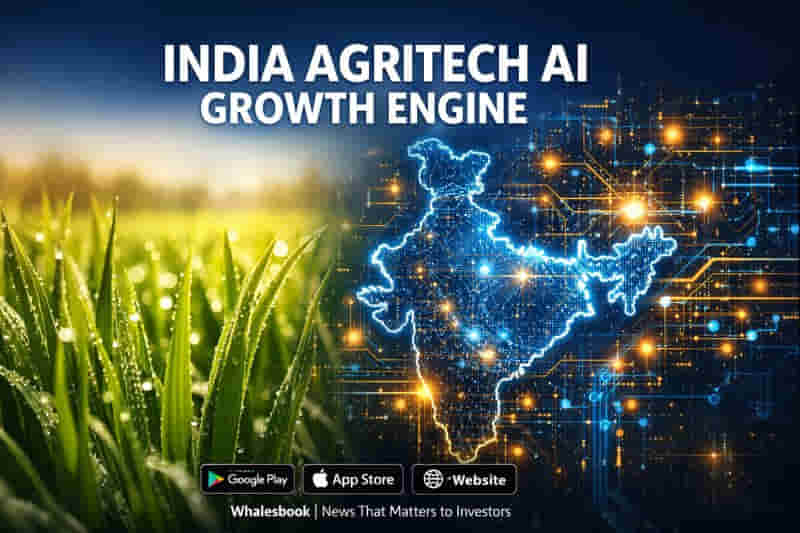
India's Agritech Sector Poised for Explosive Growth
India's economic growth is robust, and while focus often stays on tech sectors like AI and fintech, the Agritech sector is undergoing a profound transformation. Agriculture and allied activities remain crucial, employing nearly half of India's workforce and significantly contributing to the nation's Gross Value Added (GVA) and exports. Despite challenges like climate volatility, agriculture's GVA rose to $290 billion in FY25, with exports reaching nearly $49 billion. The sector is shifting from traditional practices to a more structured, technology-driven ecosystem.
The Agritech Market Landscape
The Indian Agritech market is projected to surge from $9 billion in 2025 to $28 billion by 2030, experiencing a compound annual growth rate (CAGR) of 25%. This indicates a fundamental shift from scattered, farm-level technological applications to the development of system-level infrastructure. This infrastructure encompasses crucial areas such as production, storage, financing, and market access, fundamentally reshaping how agriculture operates.
AI's Transformative Role
Artificial intelligence is emerging as a pivotal catalyst in this transformation. The AI-led agritech segment is expected to grow significantly faster than the broader market, with its size projected to expand from $900 million in 2025 to $5.6 billion by 2030, boasting a 44% CAGR. AI is being integrated across the value chain, utilizing data from sensors, drones, and satellite imagery for advanced analytics, yield forecasting, crop health monitoring, and climate risk assessment. Precision agriculture tools are achieving remarkable improvements in yield prediction and water efficiency, while digital advisory platforms leverage AI for personalized farmer guidance.
Challenges to Broader Adoption
Despite the technological advancements and growth projections, agritech adoption currently accounts for only about 2% of India's overall agriculture market, expected to reach just 5% by 2030. This limited penetration is attributed to structural challenges within Indian agriculture, including the prevalence of small landholdings (nearly 69% of farmers operate less than one hectare), seasonal and volatile farm incomes, varying levels of digital literacy, and inconsistent internet connectivity. These factors contribute to high adoption risks for farmers, making them cautious about experimenting with new technologies.
Strengthening Foundations for Growth
However, the foundations for wider adoption are steadily strengthening. Institutional credit penetration among farmers has nearly doubled over the past decade, facilitating agri-fintech players to offer bundled solutions that combine credit, insurance, warehousing, and market access. This integrated approach reduces risk for both farmers and lenders, thereby improving economic viability across the agricultural value chain. Furthermore, a demographic shift is occurring, with women now constituting a larger share of agricultural employment, influencing decision-making processes and shaping how agritech platforms design their offerings.
Future Outlook: Integration and Infrastructure
The future of Indian agritech is increasingly leaning towards integration and the establishment of robust infrastructure rather than isolated digital tools. Startups are focusing on controlling the entire seed-to-shelf process, including production intelligence, post-harvest infrastructure, financing, and demand access. This integrated approach allows platforms to better monetize data, stabilize farmer cash flows, and maintain margins in a challenging market. The next phase will see AI-native, financially embedded, and operationally grounded platforms emerge as leaders, rebuilding agriculture as an integrated economic system.
Impact
The growth and technological integration in India's agritech sector have the potential to significantly boost farmer incomes, improve agricultural productivity, enhance food security, and strengthen India's export competitiveness. For investors, it represents a substantial opportunity in a foundational sector undergoing modernization. The increasing adoption of AI promises more efficient resource management and climate resilience.
- Impact Rating: 8/10
Difficult Terms Explained
- Agritech: Technology applied to agriculture to improve efficiency, productivity, and sustainability.
- GDP (Gross Domestic Product): The total monetary or market value of all the finished goods and services produced within a country's borders in a specific time period.
- GVA (Gross Value Added): A measure of the value added to a country's economy by the production of goods and services; it is GDP minus taxes on products and plus subsidies.
- CAGR (Compound Annual Growth Rate): The mean annual growth rate of an investment over a specified period longer than one year.
- FPO (Farmer Producer Organization): An organization formed by farmers to collectively engage in farming activities, improving their bargaining power and access to resources.
- Agri-fintech: A combination of agriculture and financial technology, offering financial services tailored for the agricultural sector.
- Parametric Insurance: An insurance product that pays out a predetermined amount based on specific, objectively verifiable triggers (like rainfall levels or earthquake magnitude) rather than actual losses incurred.
- Unit Economics: The income and costs associated with a business's product or service, viewed on a per-unit basis.