 Whalesbook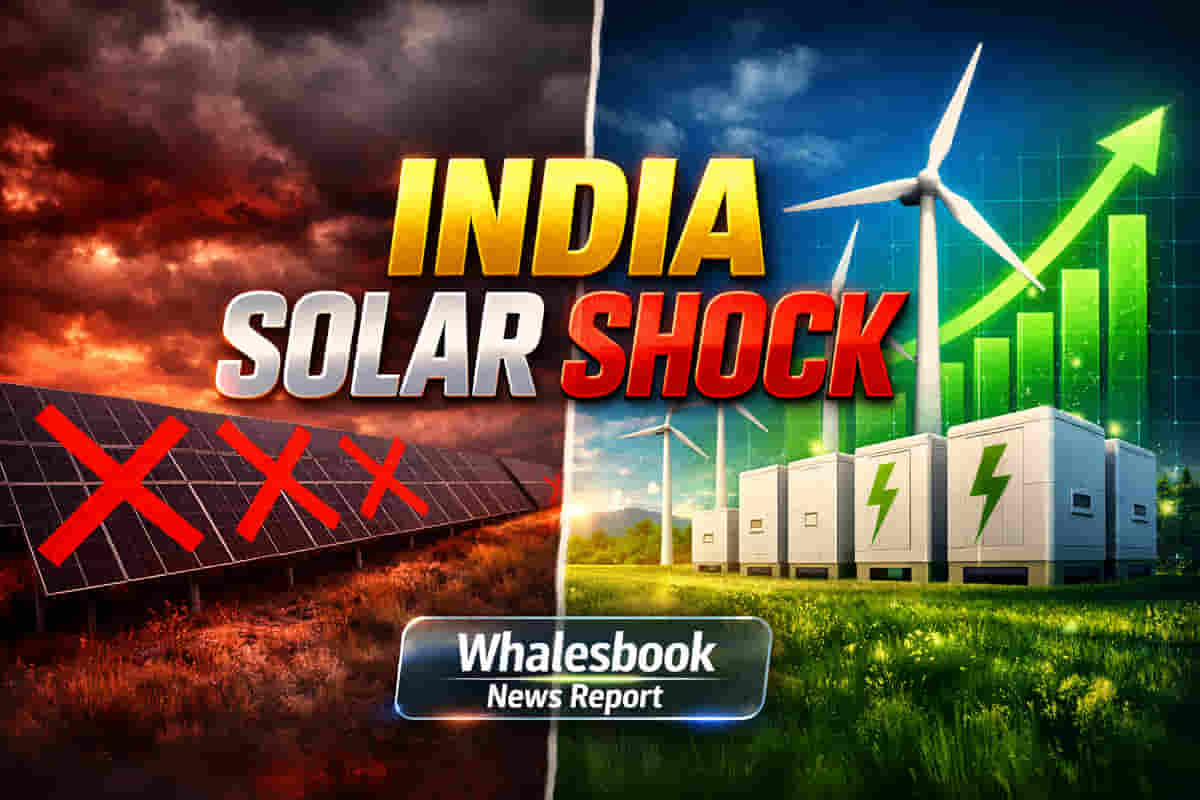
The Looming Solar Adjustment
The Indian renewable energy sector is poised for significant recalibration in 2026, driven by evolving market dynamics and policy shifts. Following a period of rapid expansion, the industry faces challenges related to oversupply in certain segments, changing buyer preferences, and increased scrutiny on project viability. These developments are set to impact project awards, financing, and the broader ecosystem of equipment suppliers.
Core Market Shifts
A key driver of this adjustment is the sharp decline in daytime electricity prices within the spot market during 2025. This was largely attributed to an overabundance of solar power generation, leading to record low prices during daylight hours. Consequently, State Electricity Boards (SEBs), crucial off-takers for renewable power, have become increasingly hesitant to sign traditional "plain vanilla" solar power sale agreements. These agreements typically cover power generated only when the sun shines, creating a surplus during the day but failing to meet demand during peak evening hours.
Government Intervention and Project Viability
With an estimated 43.9 gigawatts of green energy capacity awaiting Power Purchase Agreements (PPAs), the central government has initiated a selective cancellation process. Projects that lack committed offtake arrangements are being reviewed, signalling a stricter approach to project development. This intensified scrutiny comes as renewable energy project awards have seen a notable drop in the first eight months of the fiscal year 2026. The sector is now bracing for a potential slowdown in overall capacity additions.
The Rise of Hybrid and Dispatchable Power
The market's preference is demonstrably shifting away from standalone solar projects towards more sophisticated solutions. There is a growing emphasis on hybrid renewable energy projects and Fixed Dispatchable Renewable Energy (FDRE) systems. These advanced solutions combine various technologies, including solar and wind power generation with battery energy storage systems (BESS) and pumped hydro storage. Their primary advantage lies in their ability to provide a steady, reliable supply of electricity on demand, addressing the critical gap between daytime surplus and evening shortages.
Financial Implications and Supplier Impact
These market transformations carry significant implications for equipment suppliers, particularly in the solar module manufacturing sector. India has substantially increased its solar module manufacturing capacity, supported by government incentives and export opportunities. However, module exports to key markets like the United States are facing headwinds due to tariffs and policy changes. This situation raises concerns about a potential module supply glut within India, especially as US demand is projected to slow or remain flat in 2026.
Analysts at Kotak Institutional Equities noted that the government is recalibrating its power needs, favouring capacities that can meet peak hour requirements over plain-vanilla solar generation. Furthermore, analysts at JM Financial Institutional Securities warn that increasingly stringent performance norms, coupled with the growing difficulty in securing financing, are likely to lead to the elimination of smaller, module-only manufacturers. The Ministry of New and Renewable Energy has also advised banks and financial institutions to exercise caution when lending to new standalone solar module manufacturing facilities. This confluence of factors suggests a painful adjustment period for the module manufacturing industry.
Future Outlook
The transition to new technologies like battery energy storage systems presents its own set of challenges. India has limited experience with large-scale storage projects, and BESS units have a shorter lifespan compared to conventional energy infrastructure. The pace of capacity additions will be a critical determinant of the growth outlook for renewable energy companies and component suppliers. Investors are advised to closely monitor government policies, evolving demand patterns, and the overall market landscape.
Impact
The shift towards dispatchable power and the potential consolidation in the module manufacturing sector will have a considerable impact on the pace of India's renewable energy expansion. It could also lead to increased investment in storage technologies and potentially higher costs for consumers if reliable power cannot be consistently delivered. The industry faces a critical period of adaptation.
Impact Rating: 8
Difficult Terms Explained
- Power Purchase Agreement (PPA): A contract between a power producer and a buyer (like an electricity board) that outlines the terms and conditions for the sale of electricity, including price and duration.
- State Electricity Boards (SEBs): Government-owned entities responsible for electricity generation, transmission, and distribution within Indian states.
- Plain Vanilla Solar Power: Refers to standard solar power generation that only produces electricity when sunlight is available, without integrated storage or dispatch capabilities.
- Gigawatt (GW): A unit of power capacity, equal to one billion watts. It is used to measure the scale of electricity generation facilities.
- Fixed Dispatchable Renewable Energy (FDRE): Renewable energy projects that can reliably supply power on demand, often by integrating generation sources with energy storage solutions like batteries or pumped hydro.
- Module Manufacturing: The process of producing solar panels (modules) used to convert sunlight into electricity.
- Supply Glut: A situation where the supply of a product significantly exceeds demand, leading to falling prices and potential financial distress for producers.