

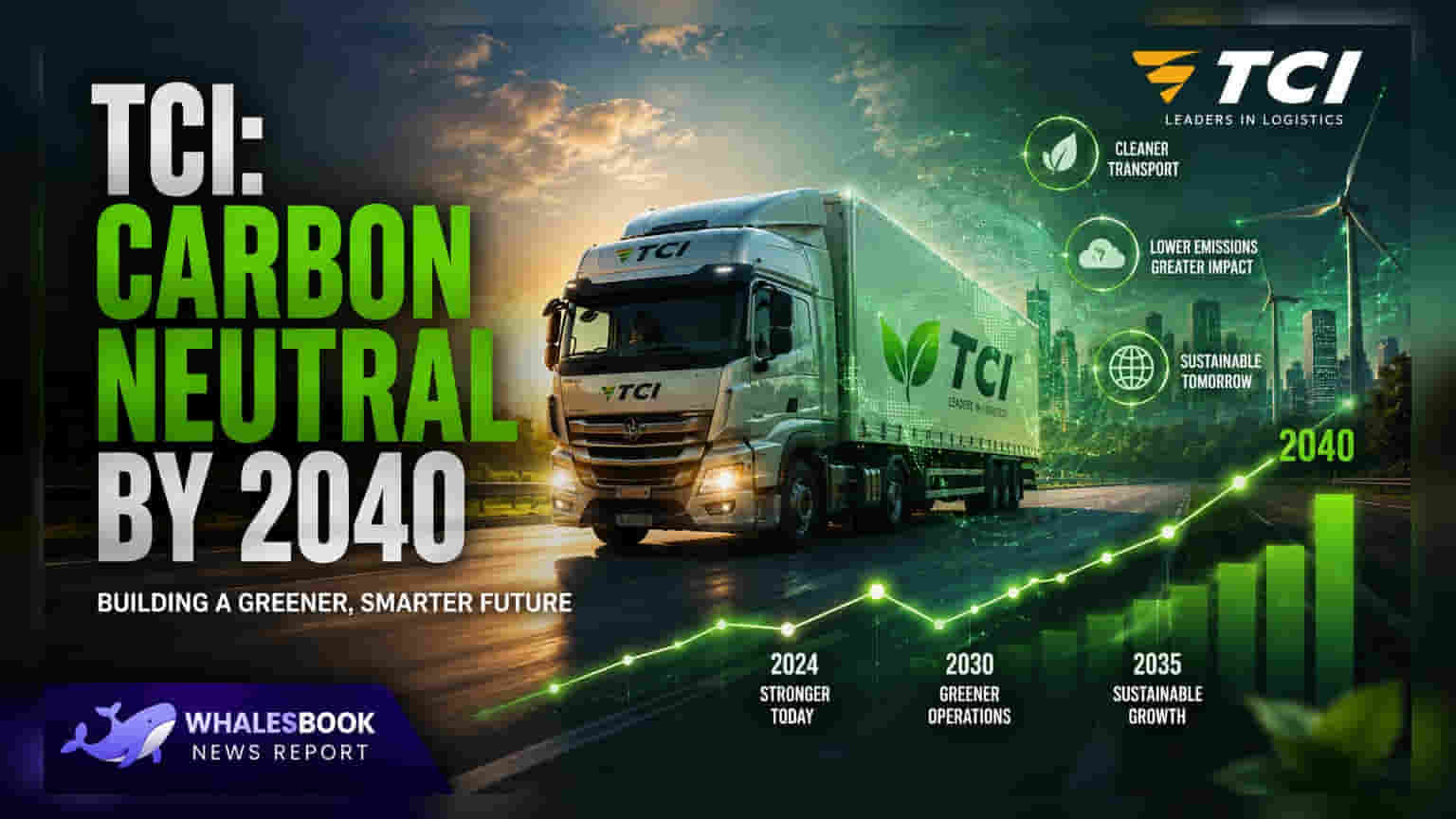
Transport Corporation of India (TCI) has set a goal to achieve carbon neutrality by FY 2040. The logistics major is focusing on multimodal transport and cleaner fuels. Key details of its sustainability strategy and operations are outlined in its latest filing.
Transport Corporation of India Ltd. Announces FY2040 Carbon Neutrality Goal
Transport Corporation of India Ltd. aims to achieve carbon neutrality by the financial year 2040. The company reported a standalone turnover of ₹4,352.6 crore and a net worth of ₹2,380.8 crore for FY 2025-26.
Reader Takeaway: Focus on long-term carbon neutrality goal; managing Scope 3 emissions remains a challenge.
What just happened
Transport Corporation of India (TCI) has officially declared its ambition to become carbon neutral by FY 2040. This announcement comes as part of its recent business responsibility and sustainability reporting (BRSR) for the financial year 2025-26. The company is strategically shifting towards multimodal logistics, adopting cleaner energy sources like LNG, CNG, and electric vehicles, and embedding Environmental, Social, and Governance (ESG) principles into its operations.
Why this matters
This forward-looking goal positions TCI as a proactive player in India's growing sustainability landscape. For investors, it signals a commitment to long-term environmental responsibility, which can enhance brand reputation and potentially attract ESG-focused capital. The transition to cleaner fuels and multimodal transport could lead to operational efficiencies and reduced regulatory risks in the future.
The backstory
TCI is a prominent integrated logistics and supply chain solutions provider. The company operates a vast network, serving diverse industries including automotive, chemicals, retail, and pharmaceuticals. Its business is diversified across Freight Transport (41.10% of turnover), Supply Chain Solutions (42.80%), and Coastal Transportation (15.00%). To support its sustainability drive, TCI has partnered with IIM Bangalore to establish a Supply Chain Sustainability Lab and uses a Transport Emissions Measurement Tool (TEMT) for carbon accounting.
What changes now
The company will intensify its efforts in adopting cleaner fuel technologies and optimizing its logistics network to incorporate more sustainable practices. This includes tracking and reducing greenhouse gas emissions across Scope 1, 2, and 3. The current emissions profile shows Scope 1 at 106,825.14 MT of CO2 equivalent, Scope 2 at 11,346.69 MT, and Scope 3 at a significant 492,516.99 MT.
Risks to watch
While the goal is ambitious, achieving carbon neutrality by 2040 requires significant investment and overcoming technological and infrastructure challenges, particularly in reducing Scope 3 emissions. The company also noted that it does not have a dedicated board committee for sustainability, with ESG aspects being reviewed at management and board levels.
Peer comparison
Many logistics companies globally and within India are increasingly focusing on sustainability initiatives. TCI's target aligns with broader industry trends towards decarbonization. Specific peer comparisons on carbon neutrality timelines and investment in green technologies would require a deeper dive into competitors' BRSR reports.
Context metrics (time-bound)
As of FY 2025-26, TCI employed 4,776 individuals and engaged 8,904 workers. The company confirmed it has an anti-corruption and anti-bribery policy within its Ethics and Whistle Blower Policy.
What to track next
Investors should monitor TCI's progress in fleet modernization, the adoption rate of cleaner fuels, and tangible reductions in its substantial Scope 3 emissions. Updates on the Supply Chain Sustainability Lab's initiatives and the effectiveness of the TEMT in driving carbon accounting will also be key indicators.