 Whalesbook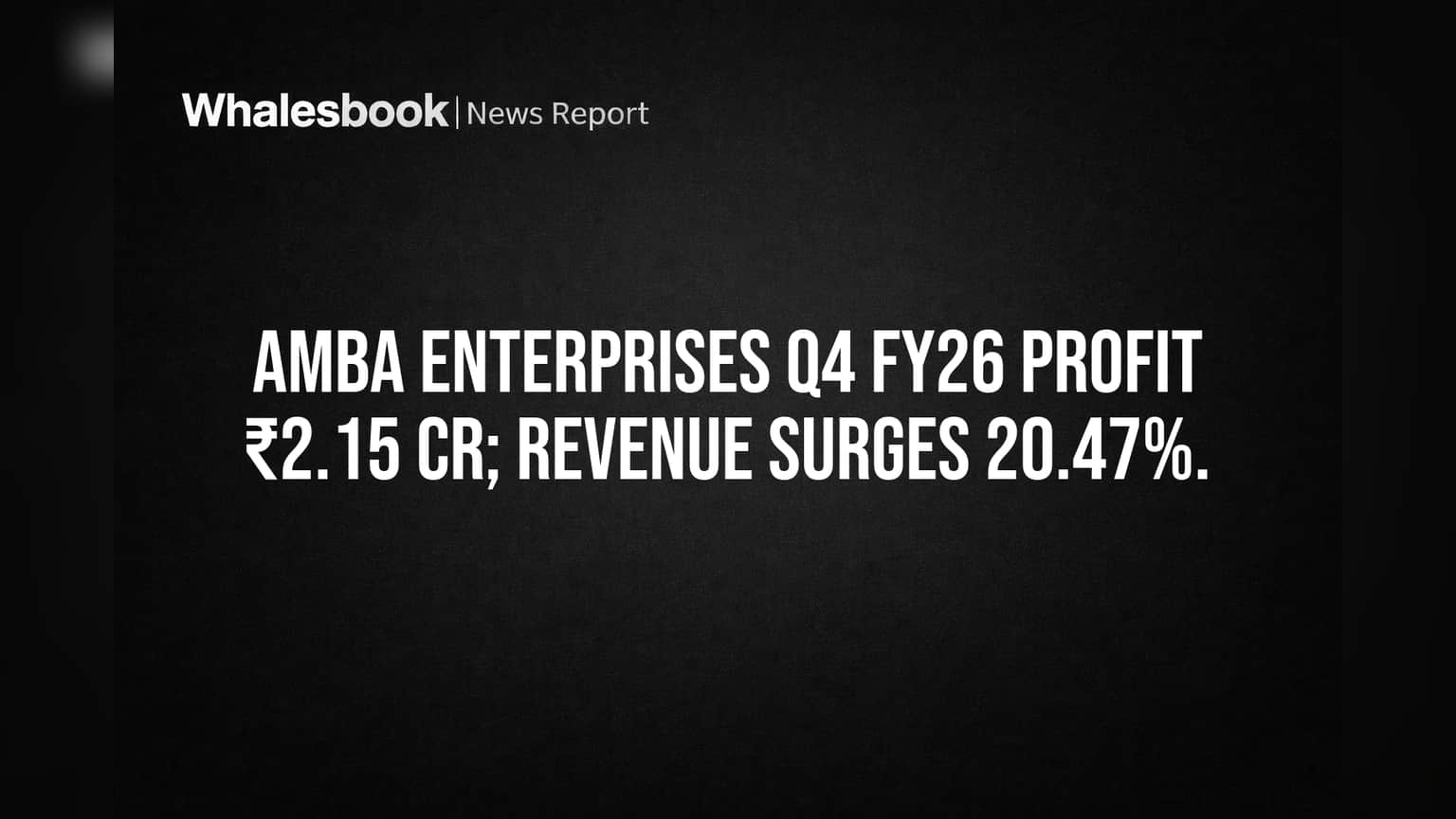


Amba Enterprises Reports Strong Revenue Growth Amid Margin Pressure
Amba Enterprises Ltd announced its financial results for the fiscal year ending March 31, 2026, reporting significant revenue growth alongside persistent challenges with profit margins.
Q4 and FY26 Performance
For the fourth quarter of FY26, the company posted standalone revenue of ₹101.08 crore, a 20.47% increase compared to the same period last year. Full-year FY26 standalone revenue reached ₹390.73 crore, marking a 15.84% rise from FY25. Net profit for FY26 grew to ₹8.17 crore, up from ₹7.41 crore in the previous fiscal year.
Financial Health Boost
Amba Enterprises significantly strengthened its financial position by reducing short-term borrowings by approximately 77.8%. This debt reduction brought short-term loans down from ₹9.69 crore in March 2025 to ₹2.15 crore in March 2026. Additionally, the company recommended a final dividend of 15%, or ₹0.75 per equity share, signalling confidence in its performance and a commitment to rewarding shareholders.
The Persistent Margin Challenge
Despite strong revenue increases, Amba Enterprises continues to grapple with thin profit margins. For FY26, net profit represented only about 2.09% of its total revenue, indicating high sensitivity to operating expenses. Total expenses consumed roughly 97.15% of revenue during FY26, leaving minimal room for cost fluctuations or unexpected expenditures.
Industry Context
Operating within the competitive Indian textile market, Amba Enterprises faces ongoing challenges from volatile raw material prices and intense competition. These industry dynamics historically pressure profit margins for companies in this sector.
Peer Landscape
Compared to peers like Raymond Ltd, Arvind Ltd, and Vardhman Textiles Ltd, Amba Enterprises' revenue growth is notable. However, competitors often benefit from more diversified revenue streams and potentially larger economies of scale.
What to Watch Next
Investors will closely monitor Amba Enterprises' strategies for cost control and margin improvement. Key factors to track include trends in raw material prices, competitive pricing pressures, and any future announcements on capacity expansion or efficiency drives.