 Whalesbook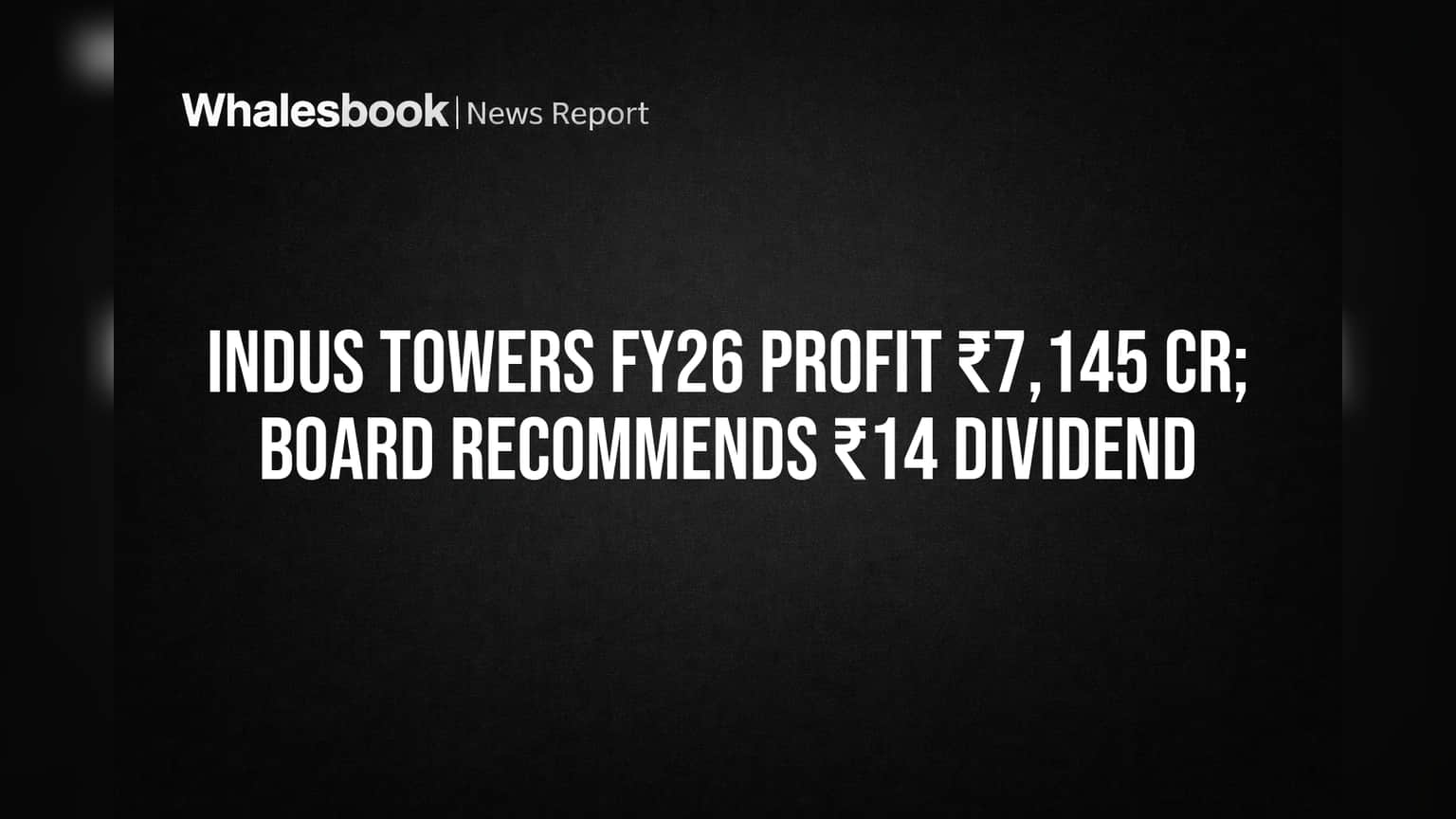


Indus Towers Fiscal Year 2026 Results
Financial Highlights
Indus Towers announced its audited financial results for the fiscal year ended March 31, 2026. The company reported consolidated revenue of ₹32,493.10 crore (₹324,931 million) and a consolidated profit after tax of ₹7,144.90 crore (₹71,449 million). Standalone profit after tax for the period was ₹7,134.80 crore (₹71,348 million).
Dividend and Board Changes
The Board of Directors has recommended a final dividend of ₹14 per equity share, an aggregate payout of ₹3,693.40 crore (₹36,934 million). This dividend is subject to necessary approvals.
In terms of board composition, Randeep Singh Sekhon has been appointed as an Additional Director, effective May 1, 2026. Gopal Vittal and Jagdish Saksena Deepak have resigned as Non-Executive Non-Independent Directors, effective April 30, 2026. These appointments and resignations will alter the board's composition.
Company Background
Indus Towers is India's largest telecom tower infrastructure provider, playing a key role in national mobile connectivity. The company operates a passive infrastructure model, leasing tower space to telecom operators. Historically, its financial stability is closely tied to the ability of major clients, like Vodafone Idea, to manage regulatory liabilities and maintain timely payments.
Key Risks and Challenges
A significant risk highlighted in the filing is the revenue concentration from a single large customer facing ongoing challenges with Adjusted Gross Revenue (AGR) matters. Indus Towers is closely monitoring this customer's financial condition and has adjusted its revenue recognition practices, including not recognizing revenue equalization on straight-lining of lease rentals, due to this customer's situation.
Industry Context
Indus Towers is the dominant player in India's telecom tower infrastructure sector. Key entities in the broader telecom ecosystem include major operators like Bharti Airtel and Vodafone Idea, and other infrastructure providers such as Bharti Hexacom. While Indus Towers focuses on passive infrastructure, the financial health and strategic decisions of these operators directly impact tower demand and tenancy.
Looking Ahead
Investors will monitor shareholder approval of the recommended final dividend. The contributions and governance approach of the new director, Randeep Singh Sekhon, will also be a focus. Ongoing developments regarding the AGR dues and financial stability of key customers, particularly Vodafone Idea, remain critical. Future announcements on capital expenditure plans or expansion strategies will also be of interest.