

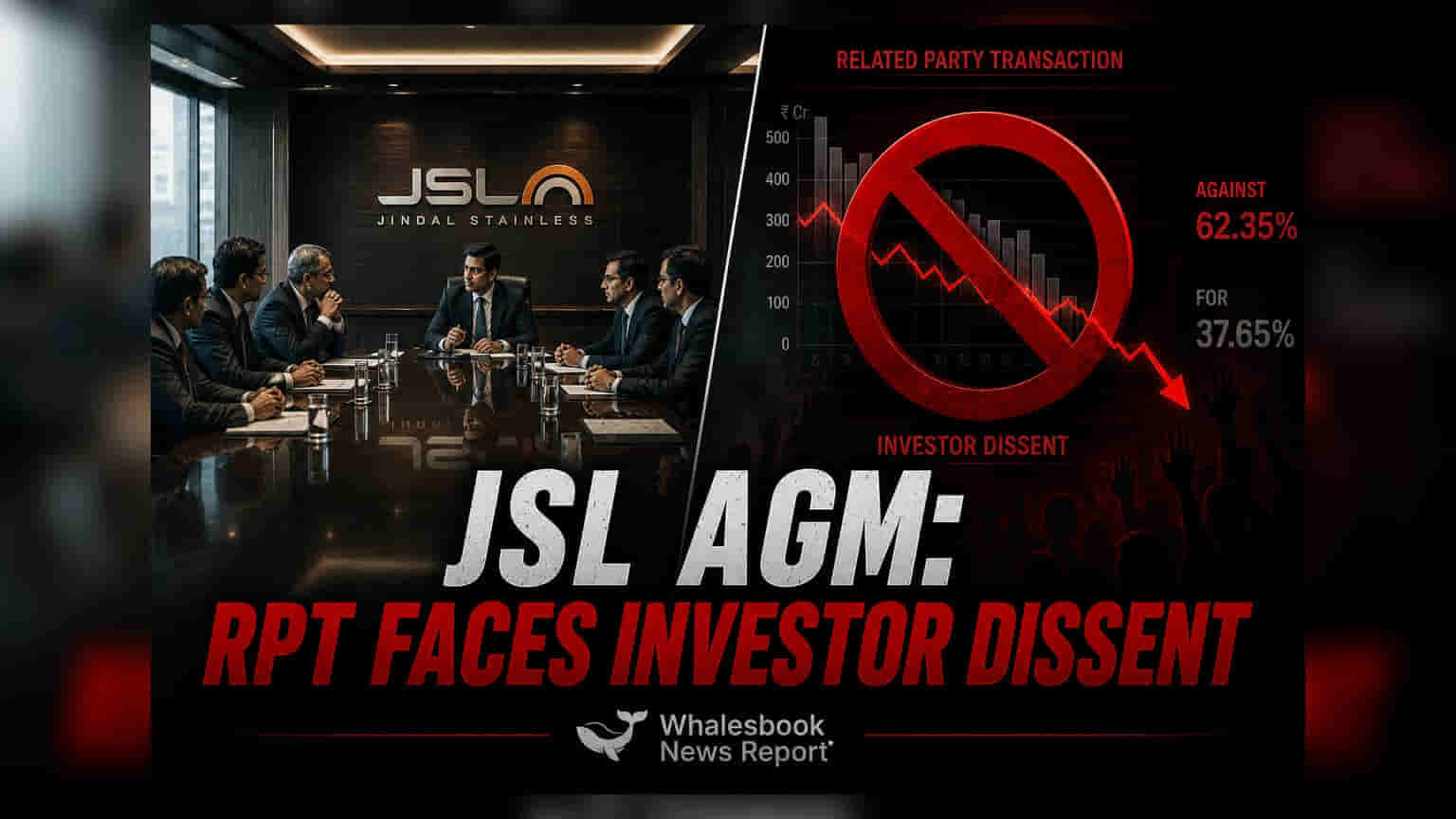
JSL Industries Ltd's 60th AGM saw shareholders approve resolutions, but a material related party transaction with a promoter group company faced significant opposition from institutional investors.
JSL Industries Ltd 60th AGM: Related Party Transaction Faces Investor Scrutiny
At JSL Industries Ltd's 60th Annual General Meeting (AGM) on July 7, 2026, shareholders approved five key resolutions. However, a material related party transaction (RPT) with Jyoti Limited, a promoter group company, garnered significant opposition from institutional investors.
What Just Happened
JSL Industries Ltd held its 60th AGM on July 7, 2026, via video conference. Shareholders voted on and approved resolutions concerning leadership re-appointments, financial statement adoption, and dividend declarations. Notably, Resolution No. 5, pertaining to a material related party transaction with Jyoti Limited, passed with 82.78% of polled votes in favour. However, this transaction faced substantial opposition, with 41.08% of institutional investor votes cast against it.
Why This Matters
While the AGM resolutions passed, the strong dissent from institutional investors on the related party transaction signals potential governance concerns. This highlights a divergence in views between the company's management and its institutional shareholders regarding the fairness and terms of transactions with related entities. Investors should closely monitor future related party dealings and transparency.
The Backstory
JSL Industries Ltd, as part of its regular corporate governance, held its 60th AGM. The company has 2,857 shareholders as of the record date. The promoter group abstained from voting on Resolution No. 5, as is standard practice for interested parties, allowing public shareholders to decide. The total shares eligible for voting were 1,173,868.
What Changes Now
The resolutions, including the RPT, have been approved by shareholders. This means the company can proceed with the approved financial statements, dividends, and the related party transaction. The key change is increased scrutiny on future RPTs from institutional investors.
Risks to Watch
The primary risk lies in potential future governance concerns and transparency issues related to related party transactions. A significant portion of institutional capital opposing such deals could influence future investment decisions and valuations.
Peer Comparison
(No peer comparison data available in the filing)
Context Metrics
- Shareholders on Record Date: 2,857
- Total Shares Eligible for Voting: 1,173,868
- Votes Polled (Resolution 5 - RPT): 232,722
- Institutional Votes Against RPT: 41.08%
What to Track Next
Investors should track the company's future disclosures and communications regarding related party transactions. Close monitoring of institutional investor sentiment and any further governance-related announcements will be crucial.