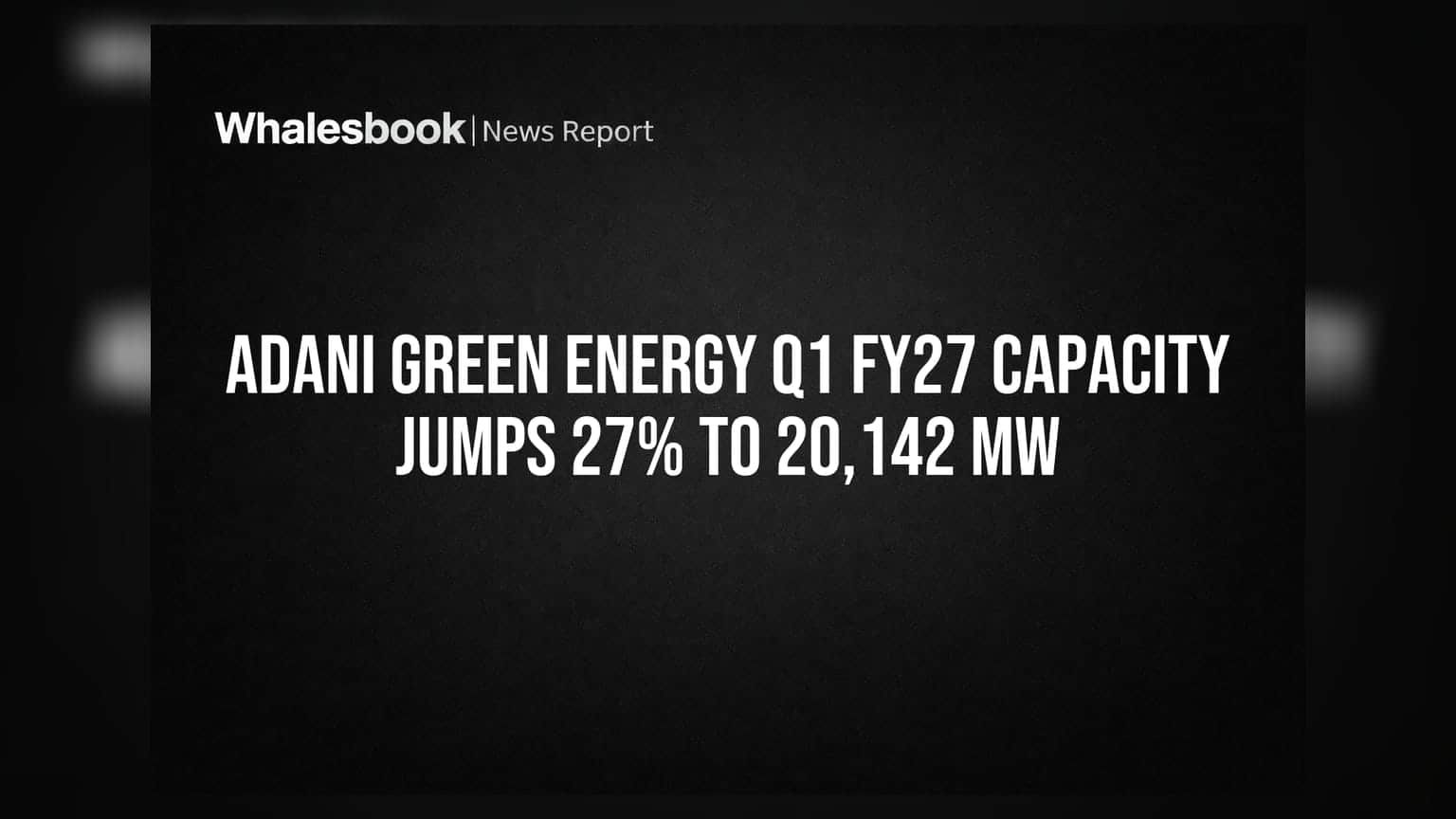
Adani Green Energy reported a 27% jump in operational capacity to 20,142 MW in Q1 FY27. Energy sales rose 30% to 13,657 million units, driven by new solar, wind, and hybrid additions. The company also expanded its Battery Energy Storage System (BESS) capacity.
Adani Green Energy: Q1 FY27 Operational Surge
20,142 MW Operational Capacity 13,657 mn Units Sale of Energy Reader Takeaway: Strong capacity and sales growth driven by new projects; grid availability remains a monitorable. ## What just happened Adani Green Energy Ltd. (AGEL) announced robust operational results for the first quarter of fiscal year 2027 (Q1 FY27). The company significantly expanded its operational capacity by 27% to 20,142 MW, compared to 15,816 MW in Q1 FY26. This expansion was fueled by greenfield additions of 4,327 MW across solar, wind, and hybrid power projects. Energy sales saw a substantial 30% increase, reaching 13,657 million units from 10,479 million units in the prior year's same quarter. This growth reflects the effective integration of new capacities into the operational portfolio. ## Why this matters This performance highlights AGEL's rapid expansion and execution capabilities in the renewable energy sector. The substantial increase in both operational capacity and energy sales directly translates to a larger revenue base and stronger market presence. The development of Battery Energy Storage System (BESS) infrastructure, with 1,972 MWh operationalized in Q1 FY27, signals AGEL's commitment to providing reliable, hybrid energy solutions, which is crucial for grid stability and meeting demand. ## The backstory As of the full-year FY26 report, Adani Green Energy had reported revenue of ₹11,602 crore and EBITDA of ₹10,865 crore, with a net debt of ₹91,252 crore. The company's growth trajectory has been marked by consistent capacity additions and strategic project developments, particularly in key renewable hubs like Khavda, Gujarat. ## What changes now The company's operational scale has demonstrably increased, positioning it for higher future revenues. The expanded BESS capacity will enhance its ability to manage intermittency and offer more consistent power supply, potentially leading to better contract terms and operational efficiency. ## Risks to watch A key watch point for investors is grid availability, which was reported at 80.6% for Q1 FY27. Transmission constraints and curtailment during peak generation periods can limit the amount of generated energy that is actually sold, impacting the realization of full revenue potential from the expanded capacity. ## Peer comparison Adani Green Energy is a leading player in India's renewable energy sector. Its capacity expansion pace and scale are significant within the industry, positioning it among the top renewable energy generators in the country. Detailed comparison requires specific data on peer capacity additions and generation figures for the same period. ## Context metrics (time-bound) * **Operational Capacity (MW):** 20,142 (Q1 FY27) vs 15,816 (Q1 FY26) - 27% growth. * **Sale of Energy (mn units):** 13,657 (Q1 FY27) vs 10,479 (Q1 FY26) - 30% growth. * **BESS Capacity (MWh):** 3,551 (as of June 30, 2026) including 1,972 MWh operationalized in Q1 FY27. * **Solar CUF:** 25.3% * **Wind CUF:** 44.4% * **Hybrid CUF:** 49.0% ## What to track next Investors will be keen to track the company's continued capacity additions, the impact of grid availability on energy sales, and the ongoing development and integration of BESS infrastructure. Financial performance in the upcoming quarters will also be crucial to assess the profitability from these expanded operations.