 Whalesbook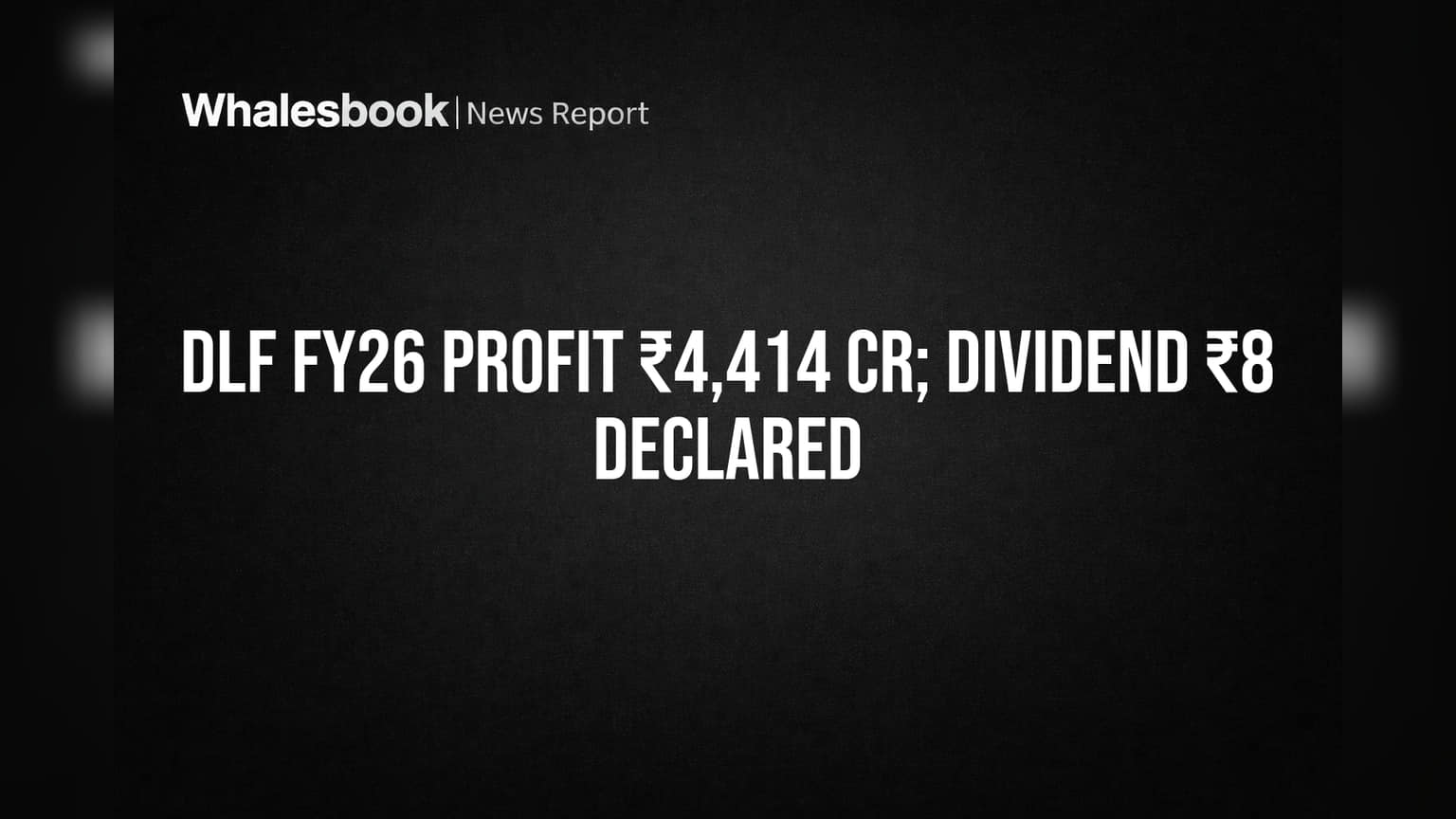


DLF Ltd Reports Robust FY26 Performance, Declares ₹8 Dividend
DLF Ltd announced a consolidated net profit of ₹4,414.68 crore for the fiscal year ended March 31, 2026. Standalone net profit stood at ₹2,400.64 crore.
Reader Takeaway: Profit surged and ratings climbed; ongoing legal cases remain a watchpoint.
What just happened (today’s filing)
DLF Limited has unveiled its audited financial results for the fiscal year 2025-26, revealing a significant consolidated net profit of ₹4,414.68 crore. The standalone net profit for the same period was ₹2,400.64 crore.
The company's Board of Directors has recommended a dividend of ₹8 per equity share (400% payout), subject to shareholder approval. This marks a positive return for investors.
In a significant development, DLF's long-term credit rating was upgraded to CRISIL AA+/Stable, with its short-term rating reaffirmed at A1+. ICRA also upgraded its long-term rating to Stable and reaffirmed its short-term rating at A1+.
Several approved schemes of amalgamation involving various group entities are also noted, indicating corporate restructuring efforts. However, the company continues to manage key litigations.
Why this matters
The robust profit figures and credit rating upgrades signal improved financial health and market confidence in DLF's business model. Enhanced credit ratings can lead to lower borrowing costs and better access to capital for future projects.
These financial milestones are crucial for investors assessing the company's growth trajectory and financial stability. The dividend payout further enhances shareholder returns.
The backstory (grounded)
DLF is India's largest real estate developer, known for its extensive portfolio spanning residential, commercial, retail, and hospitality segments across major Indian cities. The company has historically focused on strengthening its balance sheet and deleveraging its operations.
Recent years have seen DLF actively manage its debt profile. Its credit ratings have seen upgrades or affirmations from major agencies, reflecting these efforts and improved financial performance.
DLF has also engaged in strategic project launches in key growth markets to sustain its business momentum and market leadership.
What changes now
- Shareholders can anticipate a ₹8 per share dividend, pending approval, directly boosting their returns.
- The upgraded credit ratings (CRISIL AA+/Stable, ICRA A+/Stable) are expected to lower DLF's cost of capital.
- Improved credit access may facilitate easier financing for new developments and acquisitions.
- Corporate restructuring through approved amalgamation schemes could streamline operations and enhance efficiency.
Risks to watch
DLF faces ongoing legal challenges, including an appeal against a ₹630 crore penalty from the Competition Commission of India (CCI). The company is also involved in matters related to land sale deeds for IT projects and SEBI-related regulatory cases, all currently pending before higher courts.
A subsidiary has ₹259.68 crore in outstanding trade receivables from Coal India Limited and other customers, which are subject to legal proceedings. While management expresses confidence in recovery, these remain sub-judice.
Although auditors and management believe current litigations do not necessitate financial adjustments, adverse outcomes in these pending cases could potentially impact future financial performance.
Peer comparison
DLF's consolidated net profit of ₹4,414.68 crore for FY26 positions it strongly against peers. Godrej Properties reported approximately ₹1,400 crore in profit, Prestige Estates around ₹1,450 crore, and Oberoi Realty about ₹800 crore for the same period.
Context metrics (time-bound)
- DLF's Consolidated Net Profit grew from ₹4,028 Cr in FY25 to ₹4,414.68 Cr in FY26.
- Standalone Net Profit increased from ₹2,223 Cr in FY25 to ₹2,400.64 Cr in FY26.
- The company's Consolidated Debt-to-Equity Ratio stood at 0.35 as of FY26, down from 0.38 in FY25.
- The recommended dividend for FY26 is ₹8 per share, an increase from ₹7 per share in FY25.
What to track next
- Shareholder approval for the proposed ₹8 dividend payout.
- Key developments and outcomes in the ongoing litigations concerning CCI penalties, land deals, SEBI matters, and Coal India receivables.
- The finalisation of clarifications and rules related to the new Labour Codes, which could influence operational aspects.
- Management commentary on future project pipelines and market outlook during any investor calls.