 Whalesbook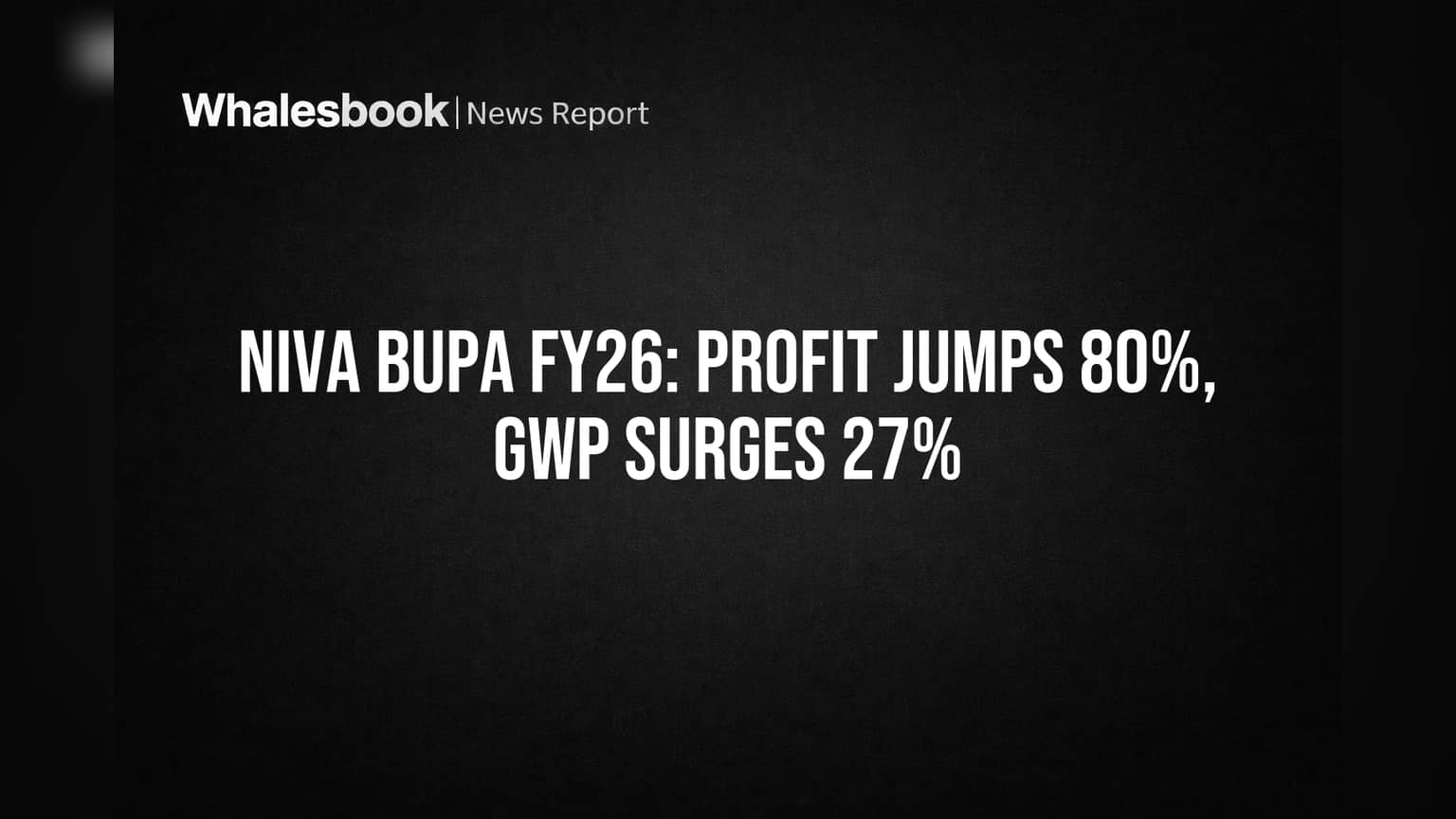


Niva Bupa Health Insurance: FY2026 Performance Review
The strong financial results for Niva Bupa Health Insurance in fiscal year 2026 underscore significant growth and strategic progress. The company reported a 27.4% year-over-year increase in Gross Written Premium (GWP), reaching ₹9,432.9 crore. Profit After Tax (PAT) saw a substantial leap of 80.4%, totaling ₹366.1 crore for the fiscal year.
Market Share Gains and Operational Improvements
Beyond top-line and bottom-line growth, Niva Bupa successfully expanded its retail health market share to 10.1%, up from 9.4% in the previous fiscal year. This expansion in a competitive segment highlights effective market penetration strategies.
The insurer's Combined Insurance Service Ratio (CISR) for FY2026 improved to 101.4%, a notable step up from 103.0% in FY2025. While the ratio remains above the break-even point of 100%, indicating ongoing pressure on underwriting profitability, the improvement suggests progress in managing claims and expenses more effectively.
Preparing for Accounting Standard Changes
A significant future development for Niva Bupa is the mandatory adoption of Indian Accounting Standards (Ind AS) by April 1, 2026. This transition is set to enhance the transparency of its financial reporting and align its practices more closely with global standards. The company is actively preparing for this shift.
Strategic Focus, Background, and Competitive Landscape
Looking ahead, Niva Bupa will continue its strategic focus on expanding its retail health offerings. Key initiatives include enhancing digital distribution channels and refining underwriting and claims management processes. The company's objective is to drive its CISR below 100% to achieve sustained underwriting profitability.
Contextually, Niva Bupa underwent a significant ownership change in May 2023, when Bupa Singapore divested its 49% stake to Indian private equity firm True North. This transition marks a new phase for the company.
In the broader market, Niva Bupa competes with established players. Star Health and Allied Insurance leads the standalone health insurer market with over 30% share, while major general insurers like ICICI Lombard and HDFC ERGO are also increasingly focusing on the health segment, intensifying competition.
Potential Risks and What to Watch
Despite the positive performance, Niva Bupa operates within a dynamic environment. Potential risks include evolving regulatory changes in the Indian insurance sector, broader economic and political conditions, and market volatility. Management acknowledges that actual results may differ from forward-looking statements due to inherent uncertainties.
Investors will closely monitor the impact of the Ind AS adoption, the company's ability to maintain GWP and market share growth, and its progress toward achieving underwriting profitability. Niva Bupa's commitment to digital innovation and its recognition as a top workplace are also key factors to observe. Further insights are expected during the earnings conference call on May 08, 2026.