 Whalesbook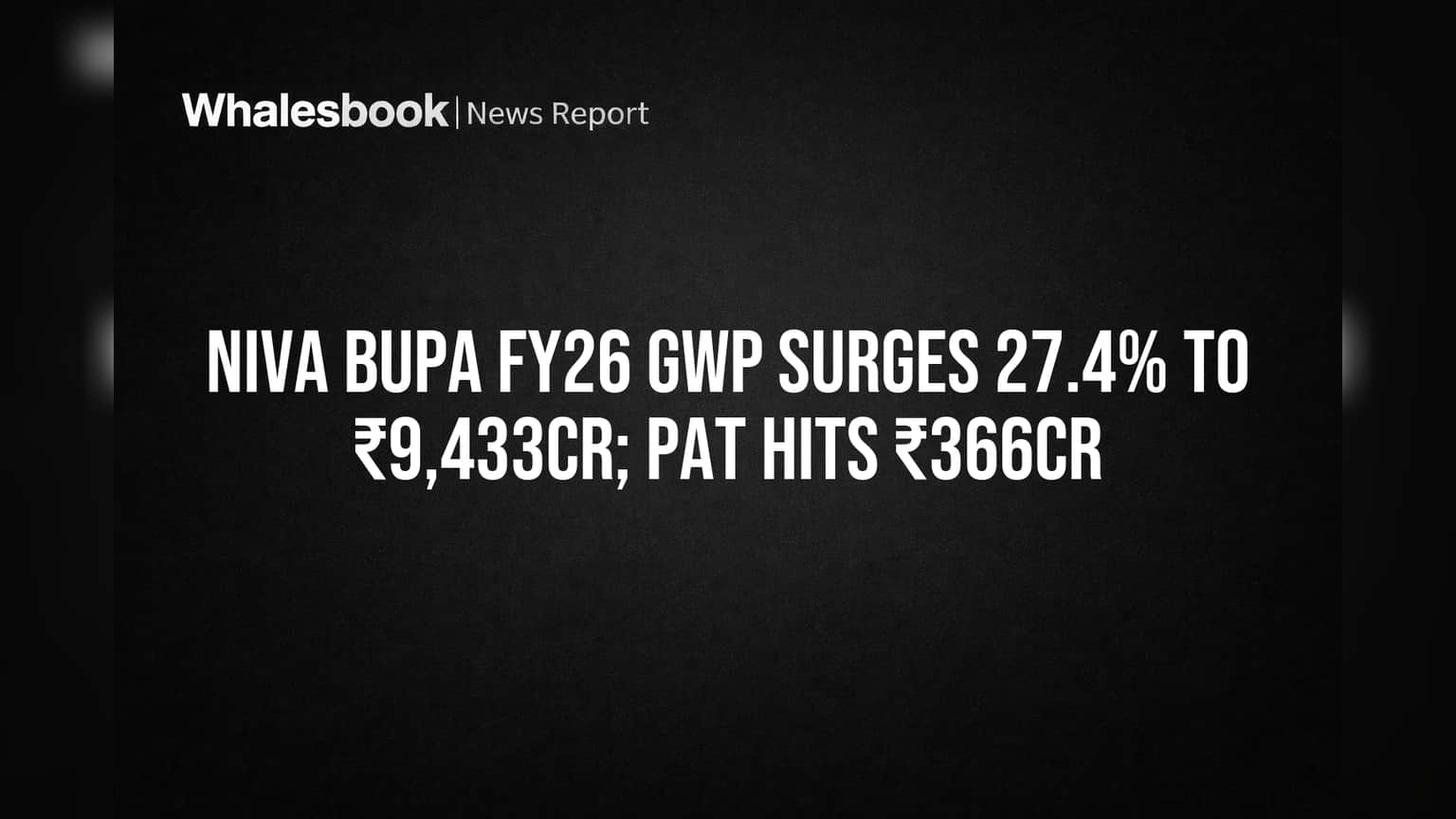


Niva Bupa Health Insurance reported a strong financial performance for the fiscal year ending March 2026. The company's Gross Written Premium (GWP) reached ₹9,433 crore, marking a significant 27.4% year-over-year increase. Profit After Tax (PAT) under Ind AS stood at ₹366 crore, with a Return on Equity (ROE) of 10.7%.
Key to this growth was improved operational efficiency. Niva Bupa successfully reduced its management expense ratio to 33.7% in FY26, down from 39.2% in the previous year. This enhanced efficiency directly contributed to profitability. The company also maintained a robust claims settlement rate, exceeding 94%.
Strategic expansion of distribution channels played a vital role. The insurer added 58,000 new agents and extended its preferred provider network to 49 cities. This focus on expanding reach, particularly in Tier 2 and Tier 3 cities through its 'Bharat' strategy, is a key element of its growth plan.
Formerly known as Max Bupa Health Insurance, the company rebranded to Niva Bupa in 2021 following an investment by private equity firm Barents (formerly True North). This marked a new phase focused on expanding its market presence.
This performance demonstrates Niva Bupa's ability to capture market share and leverage operational improvements. Shareholders can anticipate continued top-line growth driven by distribution expansion and sustained profitability from efficiency gains. The company is positioning for long-term growth, setting an ambitious target for a combined operating ratio of 99% by FY29 and mid-to-high teens ROE.
However, the company faces certain risks. An increase in the overall loss ratio by 1.1% was noted, attributed to shifts in the business mix. Industry-wide, uncertainty remains regarding final regulatory guidance on acquisition cost limits and commission structures, which could impact future acquisition costs. Additionally, new IFRS 17 rules require upfront provisioning for 'onerous contracts' on the Group side if certain thresholds are met.
Niva Bupa's 27.4% GWP growth for FY26 outpaced key listed competitors like Star Health (18.8% growth) and ICICI Lombard's general insurance business, highlighting its strong market traction.
Key factors to monitor include the finalization of regulatory guidelines on acquisition costs. The company's success in sustaining its GWP growth through network expansion and the 'Bharat' strategy will be crucial. Investors will also watch for progress towards the FY29 targets for combined operating ratio and ROE, as well as the impact of technology and AI investments on further operational efficiencies.