 Whalesbook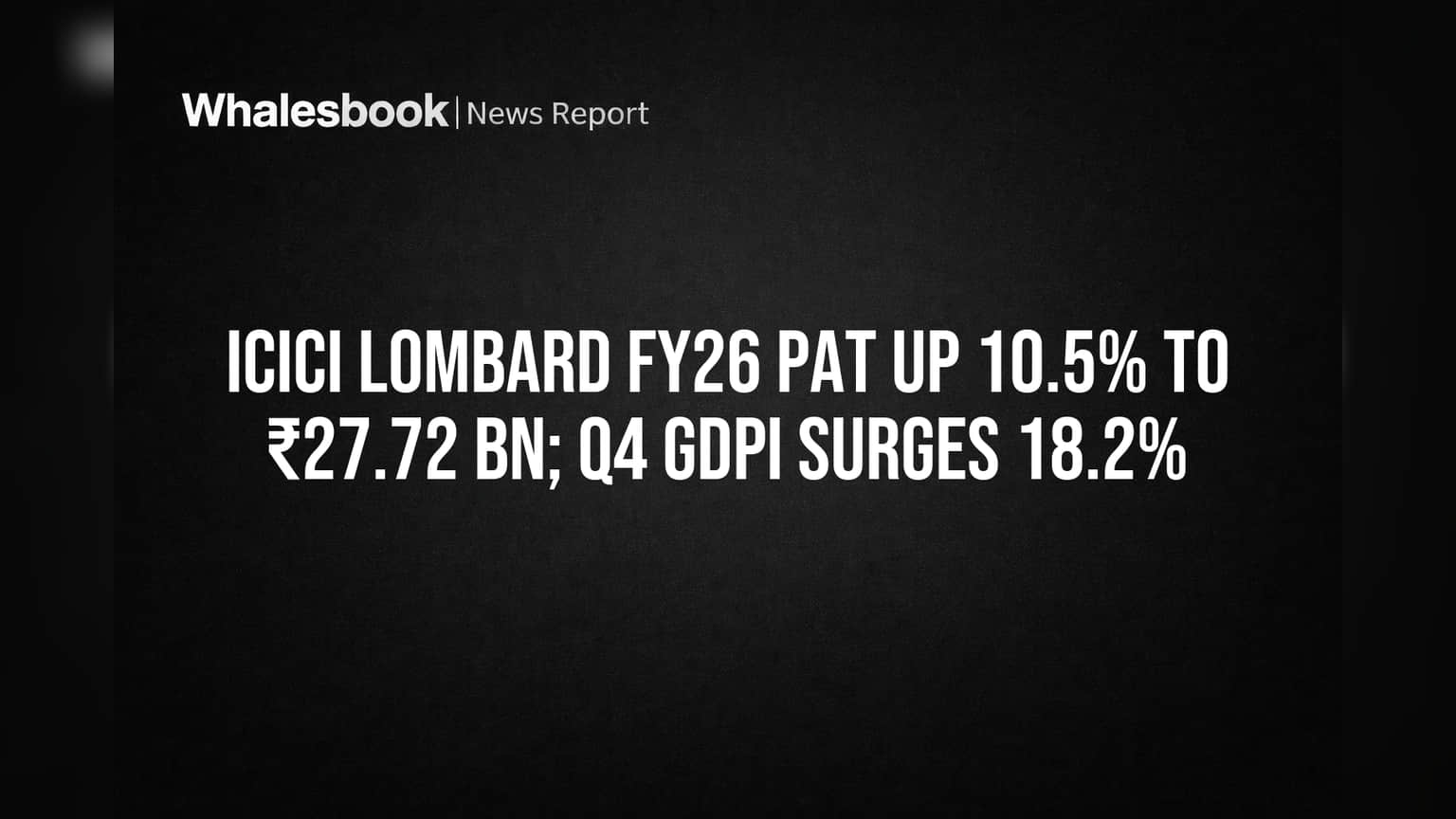


ICICI Lombard Reports 10.5% Profit Growth for FY26, Reaching ₹27.72 Billion
ICICI Lombard General Insurance Company Ltd. announced its financial results for the fiscal year ended March 31, 2026. The company posted a Profit After Tax (PAT) of ₹27.72 billion, marking a 10.5% increase compared to the previous fiscal year.
For the fourth quarter of FY2026, ICICI Lombard recorded a significant Gross Direct Premium Income (GDPI) growth of 18.2%. This performance outpaced the industry's GDPI growth of 10.9% for the same quarter.
The company's Board of Directors proposed a final dividend of ₹7.00 per share. This brings the total dividend payout for FY2026 to ₹13.50 per share, an increase from ₹12.50 in FY2025.
Profitability Driven by Premium Growth and Dividends
The strong PAT growth indicates improved profitability, driven by healthy GDPI expansion, especially in the crucial fourth quarter. The proposed higher dividend offers direct returns to shareholders, signalling the company's financial strength.
However, the results also highlight ongoing industry challenges such as competitive pressures and specific segment pressures like Motor TP, which investors will closely monitor.
Preparing for Accounting Changes and Digital Growth
ICICI Lombard has been actively preparing for the mandatory adoption of Indian Accounting Standards (Ind AS) from April 1, 2026. This transition promises greater transparency and global comparability for financial reporting, though it involves significant system and process adjustments.
The insurer has also been focusing on digital transformation, leveraging platforms like 'IL OneForce' for operational efficiency and 'IL TakeCare' for customer engagement, aiming to streamline processes and enhance user experience.
Impact on Shareholders and Reporting
Shareholders can anticipate increased returns with a proposed higher total dividend for FY2026. Following the Ind AS adoption from April 2026, financial reporting will become more aligned with global standards, potentially improving investor analysis.
The company's strategic focus on digital platforms is expected to continue driving operational efficiencies and customer reach. Sustaining profitability will depend on the insurer's ability to navigate competitive pricing pressures.
Key Risks and Challenges Ahead
Global geopolitical events can create economic uncertainty and impact financial markets, potentially spilling over to the Indian economy. Elevated competition, especially in the Fire segment, may lead to pricing pressures and discounted renewals.
The Motor Third Party (TP) segment continues to face pressure from delayed pricing reforms, impacting profitability, although management remains comfortable with the full-year loss ratio range. While the implementation of Ind AS is beneficial for transparency, it involves significant challenges related to data management, technology integration, and cross-functional collaboration.
Market Position and Competitive Landscape
While ICICI Lombard reported a 7.0% GDPI growth for FY2026, the overall industry growth was 9.2%. Its closest private peers, like HDFC ERGO and Bajaj Allianz, also compete fiercely in motor and health segments, facing similar pricing and competitive pressures. The company maintained its position as the leading private general insurer with a market share of 9.0% in FY2025.
Key Financial Ratios
Return on Average Equity (ROAE) stood at 17.8% in FY2026, down from 19.1% in FY2025. The combined ratio for FY2026 was 102.4%, a marginal improvement from 102.6% in FY2025, indicating improved operational efficiency despite expenses exceeding premiums. The solvency ratio remained robust at 2.67x as of March 31, 2026, well above the regulatory minimum of 1.50x.
Looking Ahead: What to Watch
Shareholder approval for the proposed final dividend of ₹7.00 per share is anticipated. Investors will monitor the insurer's performance and reporting transition under the new Ind AS accounting standards from FY2027. Developments related to regulatory initiatives like Expense of Management (EOM) guidelines and their impact on operational costs will also be key. Management's strategies to address competitive pressures and pricing challenges in key segments like Motor TP and Fire will be crucial.