 Whalesbook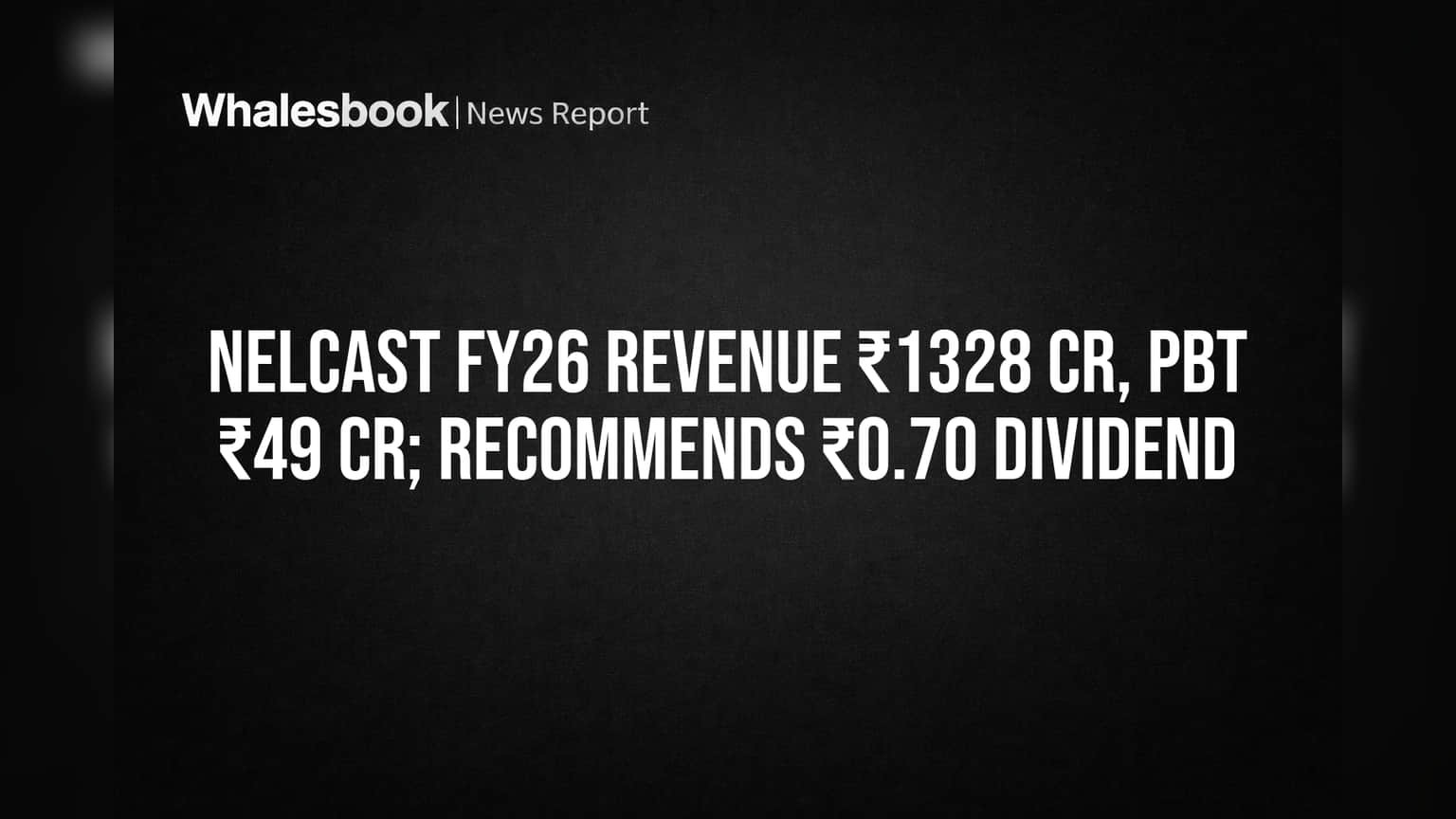


Nelcast Limited has announced its audited financial results for the fiscal year ended March 31, 2026. The company reported a consolidated revenue of ₹1328.40 crore, marking a 4.7% increase from ₹1268.79 crore in the previous fiscal year. Profit Before Tax (PBT) also saw an increase, rising by 8.3% to ₹49.30 crore in FY26, up from ₹45.54 crore in FY25. Total Comprehensive Income for the fiscal year remained steady at ₹37.18 crore.
The company's board recommended a dividend of ₹0.70 per share for FY25-26. This payout is subject to shareholder approval at the upcoming Annual General Meeting (AGM).
The revenue growth indicates sustained demand for Nelcast's products, particularly from the automotive sector, a significant client base for the company's Cast Iron (CI) castings. The improvement in PBT suggests better operational efficiency or pricing, contributing to a stronger financial performance compared to the prior year. The proposed dividend offers shareholders a direct return on their investment, reflecting management's confidence in the company's financial health and future prospects.
Shareholders will vote on the proposed ₹0.70 per share dividend at the AGM scheduled for July 27, 2026. If approved, the dividend payment will be processed. Investors will monitor Nelcast's strategic initiatives aimed at sustaining its growth momentum in the auto ancillary market.
Risks include fluctuations in the prices of key raw materials, such as iron scrap, and energy costs, which could affect profitability margins. A significant slowdown in the automotive sector could also impact the demand for Nelcast's castings.
The broader Indian auto component industry is seeing steady growth, fueled by domestic demand and increasing export opportunities. Companies like Ramakrishna Forgings operate within this automotive manufacturing segment, facing similar industry tailwinds and input cost pressures.
Investors will track shareholder approval of the dividend at the AGM, subsequent payment dates, and future quarterly results to gauge ongoing performance trends and the outlook for the automotive components industry.