 Whalesbook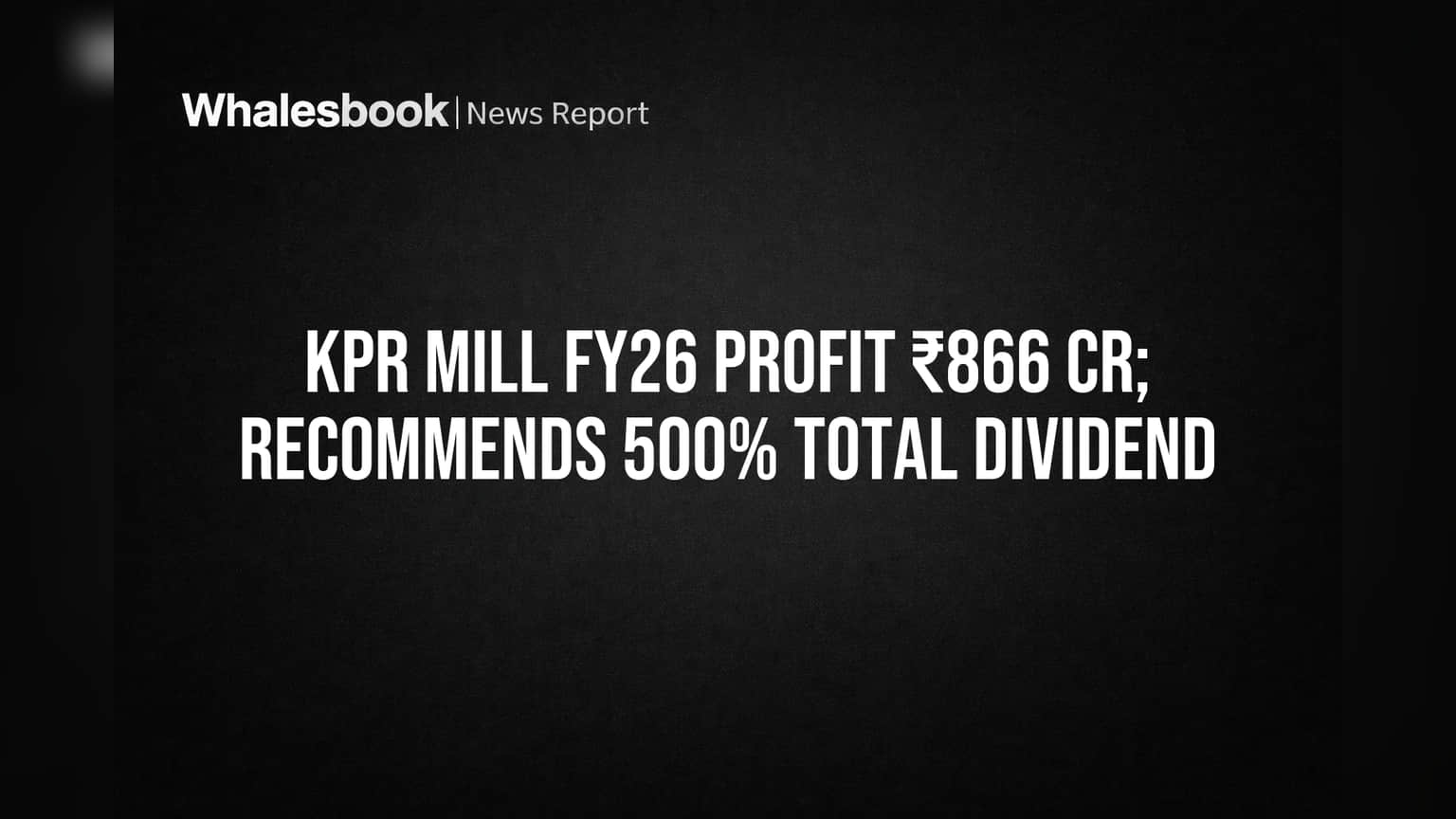


K.P.R. Mill Limited's FY26 Performance and Dividend Payout
K.P.R. Mill Limited announced robust financial results for the fiscal year ended March 31, 2026. The company posted consolidated revenues of ₹6,650.37 crore and a consolidated profit of ₹866.50 crore.
Financial Performance and Dividend
K.P.R. Mill's Board of Directors has approved the audited financial results for FY26. On a consolidated basis, profit rose to ₹866.50 crore from approximately ₹780 crore in the previous fiscal year, representing growth of about 11%. Standalone revenue from operations was reported at ₹4,504.16 crore with a profit of ₹606.02 crore.
Reflecting its strong earnings, the board recommended a final dividend of 250% (₹2.50 per share), subject to shareholder approval. This proposed payout brings the total dividend for FY 2025-26 to a significant 500%.
Company Profile and Strengths
K.P.R. Mill Limited is an established integrated textile manufacturer with operations spanning spinning, weaving, knitting, processing, and garmenting. The company has strategically diversified into the sugar and ethanol sectors, creating a multi-faceted revenue stream that enhances its business resilience.
This diversified model helps cushion the company against sector-specific market fluctuations. Historically, K.P.R. Mill has maintained a consistent record of rewarding shareholders with substantial dividend payouts.
Risks to Monitor
While the company's performance was strong, certain risks are noted. These include the standard possibility of errors or fraud affecting financial reporting and general risks that could impact its status as a going concern.
Additionally, the company is monitoring the new Labour Codes recently notified by the Government of India. While currently assessed as having no material impact, their long-term implications will be observed.
Competitive Landscape
K.P.R. Mill operates in competitive markets. Key players in the textile industry include diversified manufacturers like Arvind Ltd and integrated producers such as Vardhman Textiles. Raymond Ltd also competes in certain segments of K.P.R. Mill's business.
What to Watch Next
Investors will be tracking shareholder approval for the proposed 250% final dividend. The company's future guidance on growth strategies across its textile, sugar, and ethanol businesses will also be a key focus. Monitoring how the new Labour Codes affect operations and financials will remain important.