

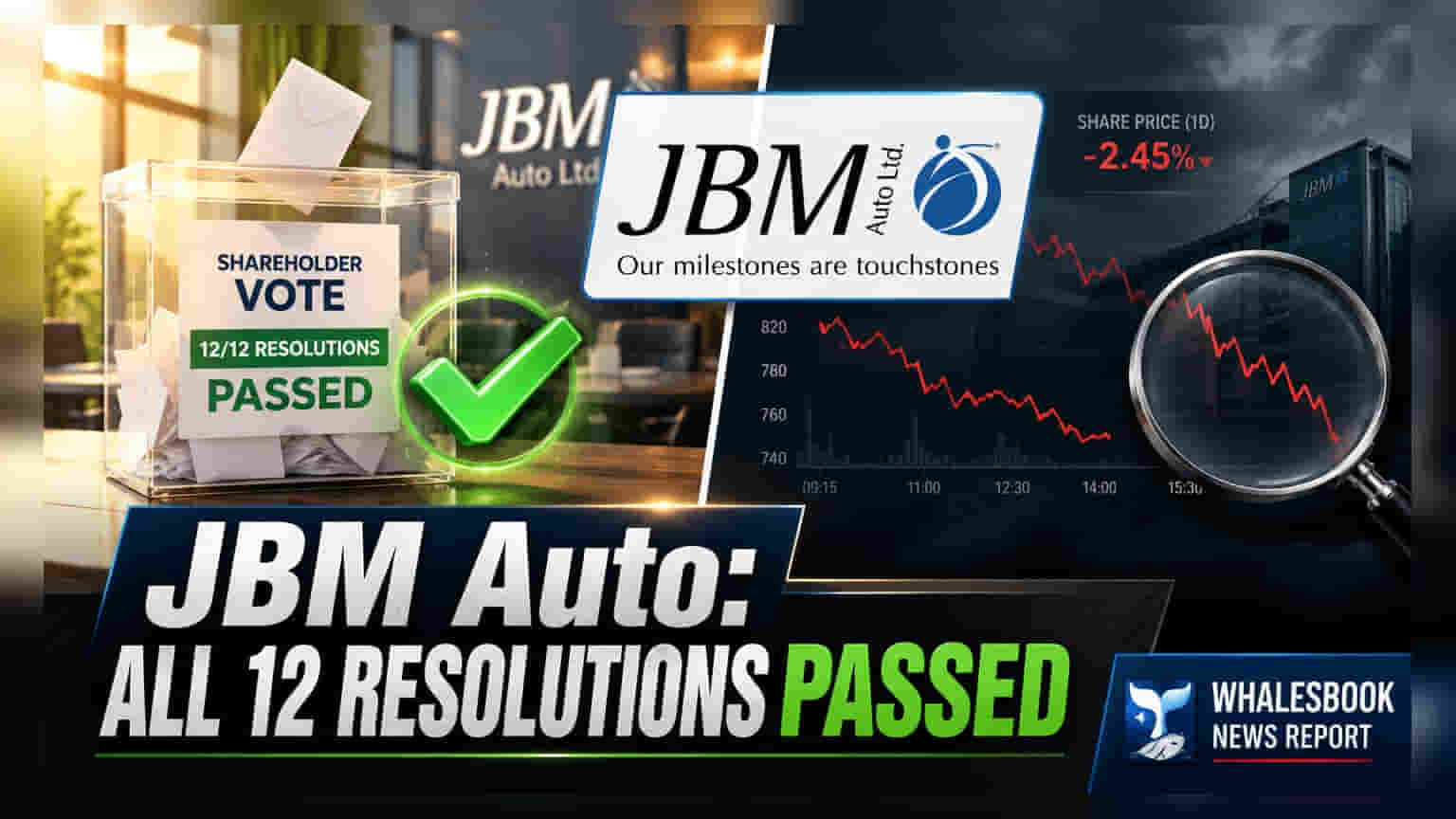
JBM Auto Limited's shareholders have approved all 12 resolutions in a postal ballot, including key corporate governance and business proposals like related party transactions and share pledges. While management secured necessary approvals, double-digit dissent from public shareholders on specific resolutions warrants attention.
JBM Auto Shareholders Back Key Resolutions Amidst Dissent
All 12 resolutions proposed by JBM Auto Limited have been approved by shareholders via remote e-voting, clearing the path for material related party transactions, pledge of subsidiary shares, and broader board authorizations. However, the voting results revealed notable dissent on specific proposals, particularly concerning related party transactions and lending powers, indicating active scrutiny from public shareholders.
What just happened
JBM Auto Limited announced the successful passage of all 12 resolutions put forth for shareholder approval through a postal ballot, which included remote e-voting. These resolutions cover critical aspects of the company's operations and governance, such as material related party transactions (RPTs) with various group entities, the pledging of shares in its material subsidiary JBM Ecolife Mobility Pvt Ltd, and authorizations for the board under Sections 180 and 185 of the Companies Act, 2013.
Why this matters
The shareholder approvals grant JBM Auto management greater flexibility in capital raising, borrowing, lending, and engaging in transactions within the group. This is crucial for the company's strategic initiatives and operational needs. The dissent on specific resolutions, however, highlights a segment of shareholders closely monitoring the company's financial dealings and corporate governance practices, which could influence future investor sentiment and engagement.
The backstory
JBM Auto is a diversified automotive component manufacturer with a significant presence in electric mobility solutions. The company regularly seeks shareholder approval for material transactions, borrowing limits, and related party dealings as part of its corporate governance framework. This postal ballot is a routine exercise to ensure alignment between management's strategic needs and shareholder oversight.
What changes now
With the resolutions passed, the company can now proceed with the authorized related party transactions, pledge the shares of JBM Ecolife Mobility Pvt Ltd, and utilize the borrowing and lending authorities granted by the board. Management has received the green light to execute these strategic financial actions.
Risks to watch
While the resolutions passed, the double-digit dissent on resolutions related to specific RPTs (Resolution 6, with ~10.63% opposition for JBM Green Energy Systems) and authorization under Section 185 (Resolution 12, with ~10.78% opposition) warrants attention. Investors will be watching the execution of these RPTs closely to ensure they are fair and beneficial to all stakeholders, and to monitor the utilization of borrowing and lending powers.
Peer comparison
Automotive component manufacturers often engage in related party transactions and require flexible borrowing limits to fund growth and working capital needs. Companies like Motherson Wiring Technologies and Sona BLW Precision Forgings also have complex group structures, and shareholder approvals for RPTs and financial authorizations are common. However, the level of dissent seen in JBM Auto's case is a factor for comparison.
Context metrics (time-bound)
- Total Shareholders: 1,88,406 (as of cut-off date 29.05.2026).
- Votes Cast (Resolution 1 example): 40,296,609 in favour vs. 258,541 against.
- Total Resolutions Passed: 12.
What to track next
Investors should monitor the execution and financial impact of the approved related party transactions. Additionally, tracking the company's debt levels and its utilization of the new borrowing and lending authorizations will be key.
Reader Takeaway: Management gains flexibility for capital and group transactions, but minority shareholder dissent on RPTs requires close monitoring.