 Whalesbook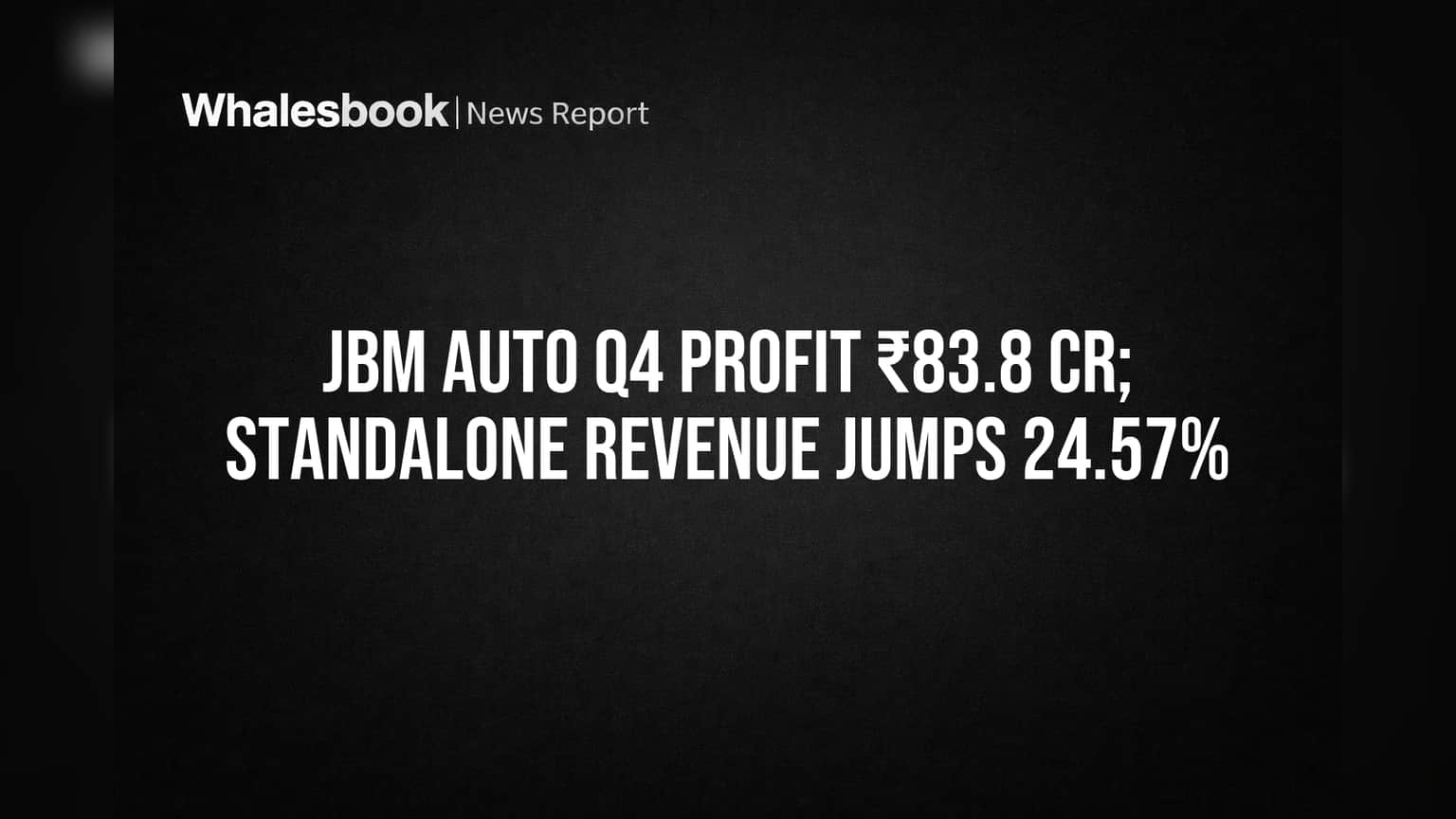


JBM Auto Q4 FY26 Financial Results
JBM Auto announced its Q4 FY26 financial results. The company reported a consolidated net profit of ₹83.82 crore on total revenues of ₹1,882.47 crore. Standalone revenues showed strong growth, surging 24.57% year-on-year to ₹1,696.61 crore. For the full fiscal year FY26, consolidated revenue reached ₹6,227.30 crore, a 12.70% increase from the previous year, with a net profit of ₹238.07 crore. The Board has recommended a dividend of ₹0.85 per share.
This strong revenue growth, particularly for standalone operations, signals consistent demand for JBM Auto's products. The company's growing presence in the electric vehicle (EV) sector, driven by its subsidiaries, is a significant contributor to its expansion. However, higher consolidated borrowings and one-time provisions recorded in Q4 FY26 affected the quarter's net profit margin.
JBM Auto is strategically expanding its footprint in the electric vehicle (EV) sector via its subsidiaries, aiming to capitalize on India's drive towards sustainable transportation. Recent investments and collaborations have concentrated on enhancing EV component production and increasing its capacity for manufacturing electric buses.
The company faces increased financial pressure due to a significant rise in consolidated current borrowings, which grew from ₹1,282.21 crore to ₹2,069.68 crore. Quarterly profitability was also impacted by one-time provisions for finance costs and exceptional items, attributed to new labour codes and operational disruptions. Effectively managing these rising debt levels and controlling costs will be crucial for JBM Auto amidst changing market conditions.
Shareholders are set to benefit from the Board's recommendation of a dividend of ₹0.85 per share, reflecting a commitment to shareholder returns.
Moving forward, operational efficiency and cost management will be key to absorbing the impact of one-time provisions. Investors will be watching new orders and production ramp-up for electric vehicles and components, as well as the company's strategy for managing its increased debt. Future announcements regarding strategic partnerships, capital expenditure for growth, and the ongoing expansion of its EV bus manufacturing capacity will also be important to monitor. The strong standalone revenue growth suggests potential market share gains in its core auto component business.
JBM Auto operates in a competitive landscape. Peers like Ashok Leyland are also expanding their EV bus offerings, highlighting the sector's growth potential. Other automotive component makers, including Motherson Sumi Systems and Tata AutoComp, face similar market trends and supply chain challenges.
Key Financials (FY26):
- Consolidated Revenue: ₹6,227.30 crore
- Consolidated Current Borrowings: ₹2,069.68 crore
- Consolidated Equity Attributable to Owners: ₹1,538.27 crore
- Dividend Recommended: ₹0.85 per share (Q4 FY26)